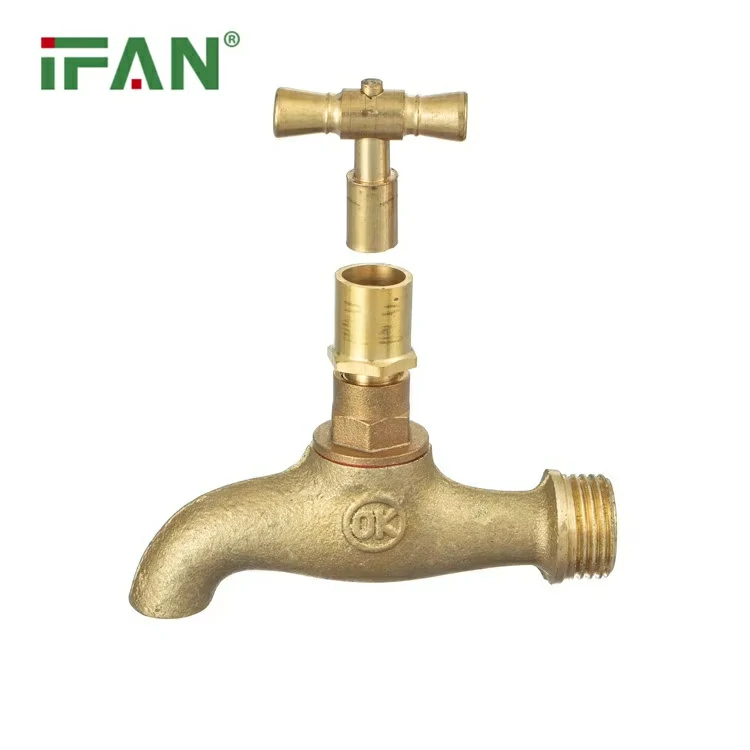
To identify a brass ball valve for water, there are a few key features to look for:
- Material: Brass is a common material used for ball valves because it is durable and resistant to corrosion. Look for a valve that is labeled or advertised as brass.
- Size: Ball valves come in various sizes, so make sure to choose one that is appropriate for the pipe or system you are using it with. The size should be measured by the diameter of the pipe.
- Pressure rating: Make sure the valve has a pressure rating that is suitable for your application. This information should be listed on the valve itself or in its documentation.
- Port type: There are two types of ball valve ports – full port and standard port. A full port valve has a larger opening, which allows for increased flow rates, while a standard port valve has a smaller opening. Consider which type of port is best suited for your needs.
- Handle: A brass ball valve typically has a lever-style handle for easy turning. Check that the handle is securely attached to the valve and operates smoothly.
- Valve type: Ball valves come in different types, such as three-way or four-way valves. Choose the type that is appropriate for the specific application.
- End connections: There are various end connection types, including threaded, soldered, or flanged. Make sure the end connections match the pipes or fittings you are connecting to.
Overall, when identifying a brass ball valve for water, consider the material, size, pressure rating, port type, handle, valve type, and end connections. By keeping these factors in mind, you should be able to select the right valve for your needs.
What are the potential disadvantages of a brass ball valve?
Some potential disadvantages of a brass ball valve include:
- Limited temperature and pressure range
- Susceptibility to corrosion and/or dezincification over time
- Higher cost compared to other materials like plastic or PVC
- Possible leakage if not installed properly or with low-quality components
How does a brass ball valve work?
A brass ball valve works by using a lever or handle to turn a spherical metal ball inside the valve body. When the handle is turned, the ball rotates 90 degrees and aligns with either the inlet and outlet ports (open position) or blocks the flow of water (closed position). The ball has a hole through its center that allows water to flow freely when aligned with the ports in the open position. When the ball is turned so that the hole is perpendicular to the ports, it creates a barrier that stops the water flow. Brass ball valves are strong, durable, and commonly used in plumbing and heating systems.