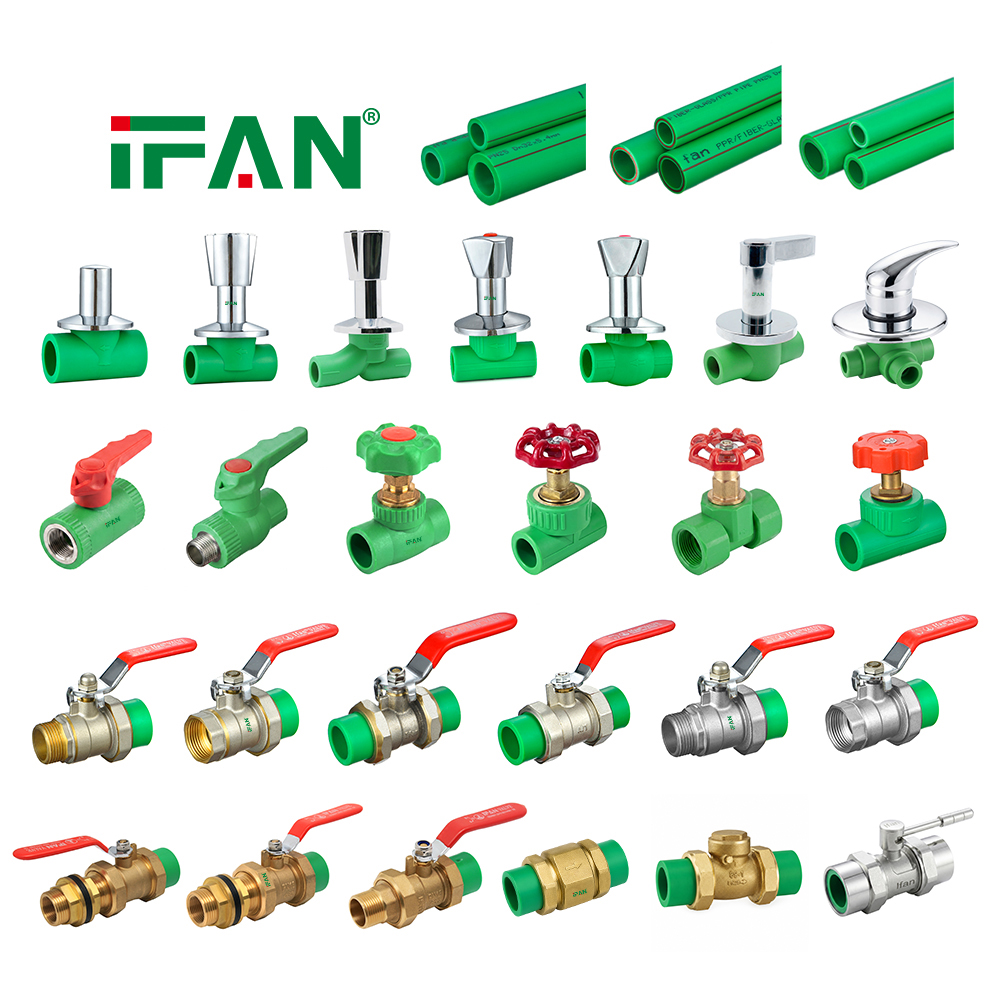
The Foundation of Seamless Thermoplastic Piping
In high-performance plumbing and heating systems, the integrity of the entire network is dictated by the quality of its joints. For Polypropylene Random Copolymer (PPR) piping, socket fusion welding is the gold standard for creating permanent, leak-proof connections. Unlike mechanical fittings that rely on rubber seals or threaded compression, socket fusion involves melting the pipe and fitting together to form a single, continuous piece of plastic. IFAN PPR Fittings are manufactured with the precise dimensional tolerances required for this process, ensuring that every fusion joint is structurally sound, chemically resistant, and capable of withstanding the test of time in both hot and cold water applications.
The Mechanics of a Molecular Bond
Socket fusion welding is a straightforward but exacting process. It requires a specialized heating tool with male and female adapters matched to the pipe and fitting diameters. The pipe end is heated on the male adapter, while the inside of the IFAN PPR fitting socket is heated on the female adapter.
Once the material reaches its melting point, both components are removed and pushed together. The molten plastic from the pipe and the fitting intermix, creating a homogeneous bond as it cools. This molecular fusion eliminates the inherent weaknesses of mechanical joints. There are no gaskets to degrade, no threads to loosen, and no crevices where bacteria or scale can accumulate. The resulting joint is often stronger than the pipe itself.
Material Purity and Thermal Stability
For socket fusion to be successful, the pipe and fitting must be made from identical or highly compatible materials with matching melt flow rates. IFAN manufactures its PPR fittings using premium Polypropylene Random Copolymer, ensuring perfect compatibility with standard PPR pipes. This material purity is critical; any mismatch can lead to a weak fusion line that fails under pressure.
PPR is chosen for these systems due to its exceptional thermal stability. It can handle the continuous high temperatures of domestic hot water systems without degrading or becoming brittle. Additionally, its low thermal conductivity reduces heat loss along the pipe run. When fused correctly, the IFAN PPR fitting inherits these properties, providing a durable, energy-efficient conduit for water distribution.
Precision Preparation for Optimal Fusion
The reliability of a socket fusion joint depends heavily on proper preparation. The pipe must be cut perfectly square using a dedicated PPR pipe cutter. An angled cut will result in uneven heating and a reduced bonding area, which can lead to leaks.
After cutting, the pipe end and the fitting socket must be cleaned with a degreaser, such as isopropyl alcohol. Oils, dirt, or moisture can interfere with the melting process and create voids in the joint. It is also essential to mark the insertion depth on the pipe to ensure it is pushed fully into the socket during the fusion process.
Controlling the Heating and Cooling Cycle
Time and temperature are the most critical variables in socket fusion. The heating tool must be maintained at the manufacturer’s specified temperature, typically around 260°C (500°F). If the tool is too cool, the plastic will not melt sufficiently. If it is too hot, the material can degrade.
The heating time is directly proportional to the pipe diameter. Over-heating can cause the pipe to collapse internally, restricting flow, while under-heating results in a weak, cold joint. After joining, the fitting must be held steady for a few seconds to prevent the pipe from pushing out of the socket. The joint must then be allowed to cool completely before being subjected to pressure or movement.
Applications and System Longevity
IFAN PPR Fittings for socket fusion are ideal for a wide range of applications, from residential hot and cold water lines to large-scale commercial heating and cooling networks. The permanent nature of the fusion joint makes them particularly suitable for concealed installations, such as pipes embedded in concrete or buried underground, where future access for repairs is difficult.
The smooth interior of the fused joint ensures minimal pressure drop, maintaining the system’s efficiency over its lifespan. The corrosion-resistant nature of PPR means the system will not suffer from the rust and scaling issues common in metal piping, ensuring the water remains clean and the flow remains consistent.
Sourcing and Verification
To ensure the success of any socket fusion project, contractors must verify the quality of the fittings. Look for uniform wall thickness and precisely machined sockets that fit perfectly onto the heating adapters. IFAN provides free samples for evaluation, allowing installers to practice the fusion process and inspect the material quality firsthand. For projects demanding a permanent, maintenance-free piping solution, IFAN PPR Fittings for socket fusion welding provide the highest level of reliability.
Related products
-
 PPR Fittings
IFAN PPR Fittings for Residential Plumbing
-
 PPR Fittings
Green Plastic PPR Material Fittings
-
 PPR Fittings
-
 Others
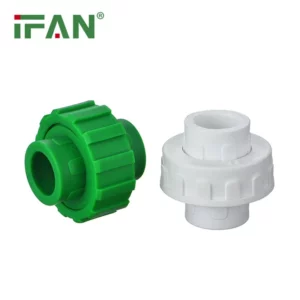
PPR Plastic Union