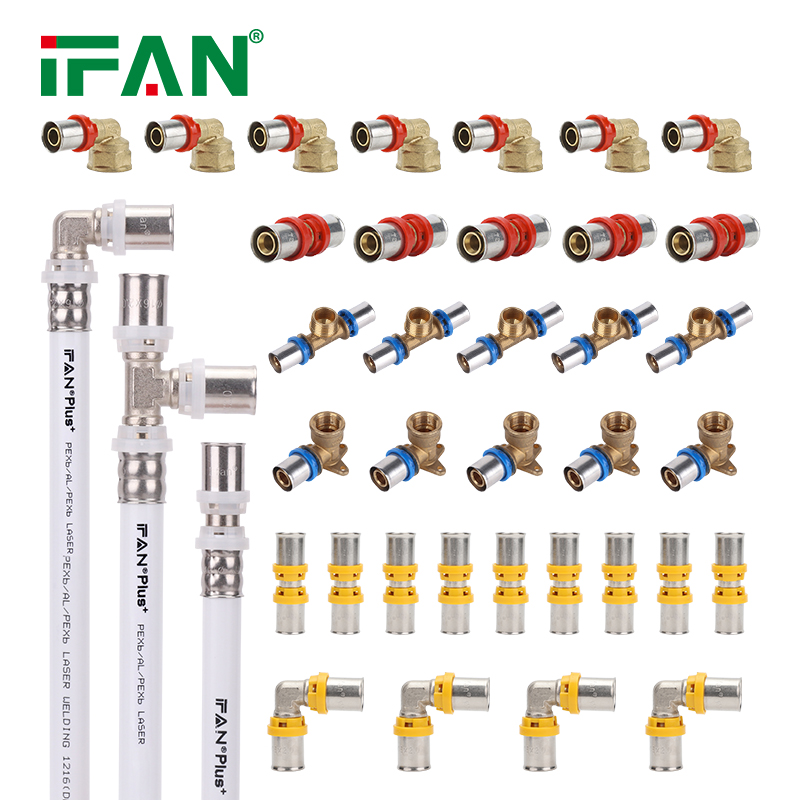
Introduction: The “Heart” of Radiant Heating—Why Tubing Matters
Imagine stepping onto a warm floor on a chilly winter morning, with heat gently rising from your feet to envelop the room. That’s the magic of radiant floor heating—but the real hero isn’t the boiler or thermostat. It’s the tubing buried beneath your floors, which determines the system’s lifespan, efficiency, and safety. Today, let’s explore why IFAN’s PEX tubing stands out as the top choice for home radiant heating.
1. What Makes PEX Tubing Special? And Why IFAN’s PEX Stands Out?
1.1 The “Superpowers” of PEX: Heat-Resistant, Corrosion-Proof, and Long-Lasting
PEX (cross-linked polyethylene) tubing is the gold standard for radiant heating. By chemically or physically cross-linking polyethylene molecules, PEX becomes more stable than regular plastic pipes. It withstands temperatures up to 95°C (203°F), resists freezing down to -40°C (-40°F), and fights chlorine corrosion in water—lasting over 50 years with minimal maintenance.
1.2 Three Unique Advantages of IFAN PEX Tubing
- Oxygen Barrier Layer: Protects Your Boiler and Radiators
IFAN’s PEX tubing uses a 5-layer co-extrusion process, with an EVOH oxygen barrier sandwiched between layers. This blocks 99% of oxygen from entering the system, preventing rust and corrosion in metal components like boilers and radiators. Less corrosion means fewer repairs and longer equipment life. - Flexibility: Easy Installation, Even for Beginners
PEX is naturally soft and bends easily, reducing the need for joints (and potential leaks). IFAN’s tubing stays pliable even in cold weather, making it ideal for tricky layouts or retrofits. - Safe for Drinking Water: Peace of Mind for Families
IFAN’s PEX meets NSF/ANSI 61 standards for potable water, so it’s safe even if your heating system uses slightly contaminated water (common in older homes). Families with kids or elderly members can trust it implicitly.
2. Installing IFAN PEX Tubing: Simpler Than You Think?
2.1 Before Installation: Plan Like a Pro
- Design Loops: Use IFAN’s free online calculator (available on their website) to plan tubing loops based on room size and heating needs. Keep each loop under 120 meters to avoid uneven heating.
- Prep the Floor: Ensure the subfloor is level and free of sharp objects that could damage the tubing. IFAN recommends laying a reflective insulation board to boost efficiency and protect the pipes.
2.2 During Installation: Follow These 3 “Golden Rules”
- Proper Spacing: Secure the tubing to the insulation board with IFAN’s clips every 30–40cm (tighter for hot water loops, looser for cold). This prevents sagging or shifting.
- Avoid Sharp Bends: Bend the tubing naturally—don’t force kinks, which can restrict water flow. IFAN’s tubing is flexible, but “gentle” is still the keyword.
- Pressure Test: After installation, use an IFAN pressure pump to test the system at 1.5x the working pressure (hold for 1 hour). No leaks? You’re good to pour concrete.
2.3 After Installation: Small Details, Big Impact
- Pair with Smart Thermostats: IFAN’s PEX works seamlessly with programmable thermostats to adjust heat based on room temperature, saving energy without sacrificing comfort.
- Regular Checks: While PEX is virtually maintenance-free, inspect joints and pressure gauges every 2–3 years to ensure everything runs smoothly.
3. IFAN PEX vs. Traditional Tubing: Why Smart Homeowners Choose It
3.1 vs. Copper Pipes: Lighter, Cheaper, and More Corrosion-Resistant
Copper pipes conduct heat well but cost 3x more than PEX and corrode in acidic water. IFAN’s PEX ignores water quality issues and cuts installation costs, making it a better fit for most homes.
3.2 vs. PPR Pipes: Flexibility Wins, Installation Speed Doubles
PPR requires heat fusion, which demands skilled labor and creates more joints (and leak risks). IFAN’s PEX uses push-fit or crimp connections—3 seconds per joint, even for novices.
3.3 vs. Regular PE Pipes: Double the Lifespan, Better Oxygen Barrier
Regular PE (like PE-RT) lacks cross-linking, so it degrades faster in heat and usually has no oxygen barrier. IFAN’s PEX lasts twice as long and blocks oxygen effectively, keeping your system stable.
Conclusion: Choose IFAN PEX for “Worry-Free + Cost-Effective + Energy-Saving” Heating
Radiant heating is a long-term investment, and tubing quality dictates your future comfort. IFAN’s PEX tubing offers unmatched durability, ease of installation, and safety—making it the top pick for homeowners. If you’re renovating or building a new home, check out IFAN’s products online. After all, warmth starts at your feet, and IFAN helps you take that first step confidently.