Common Brass Ball Valve Failures and How to Prevent Them — The IFAN Way
Most Valve Failures Come Down to These Few Things
After years in the plumbing game, I’ve noticed a pattern — when a ball valve fails, it almost always comes down to the same handful of issues. Most people treat valves like a simple on-off switch. “It turns? Good enough.” Then a year or two later, you’re dealing with leaks, stuck handles, or even burst pipes in winter. Today let’s talk about the most common IFAN Brass Ball Valve failures you’ll actually run into — and more importantly, how to stop them before they happen.
Freezing and Cracking — A Nightmare Up North
Let’s start with the most common one — freeze damage. If you’ve ever lived somewhere cold, you know the drill. Heating goes off, water sits in the pipes, it freezes, expands, and your ball valve takes the hit. Regular cast brass valves have internal pores — ice gets in there, expands, and boom — cracked valve, flooded basement.
IFAN Brass Ball Valves are forged, not cast. That means the brass is hammered under extreme pressure, leaving virtually zero porosity. Freeze resistance is miles ahead of standard valves. Plus, IFAN valves are rated down to -20°C, so even places like Inner Mongolia or Northeast China are totally covered.
The fix is simple: shut the valve and drain leftover water before winter hits. Pair that with IFAN’s forged construction, and you’ve got a double layer of protection.
Stem Leaking — That Annoying Drip You Can’t Ignore
You know the one — you turn the valve off, water stops flowing through the ball, but the stem area just keeps weeping. Drip, drip, drip. Half a bucket by the end of the day.
What’s going on? The stem seal has degraded. Cheap valves use standard rubber O-rings that harden and deform over time, letting water sneak through.
IFAN Brass Ball Valves use PTFE stem seals — think of it as “rubber that never ages.” Wide temperature range, ultra-low friction, and it stays tight for a decade or more. The IFAN valve on my balcony has been there five years. I touched the stem last week — bone dry. Not a single drop.
Prevention tip: Check your stem seals every couple of years. But honestly? With IFAN, you can stretch that out way longer.
Ball Gets Stuck — You Can’t Turn the Handle
This is the one that makes you want to scream. You need to shut off the water NOW, and the handle won’t budge. Either it’s rusted shut, or debris has jammed the ball in place.
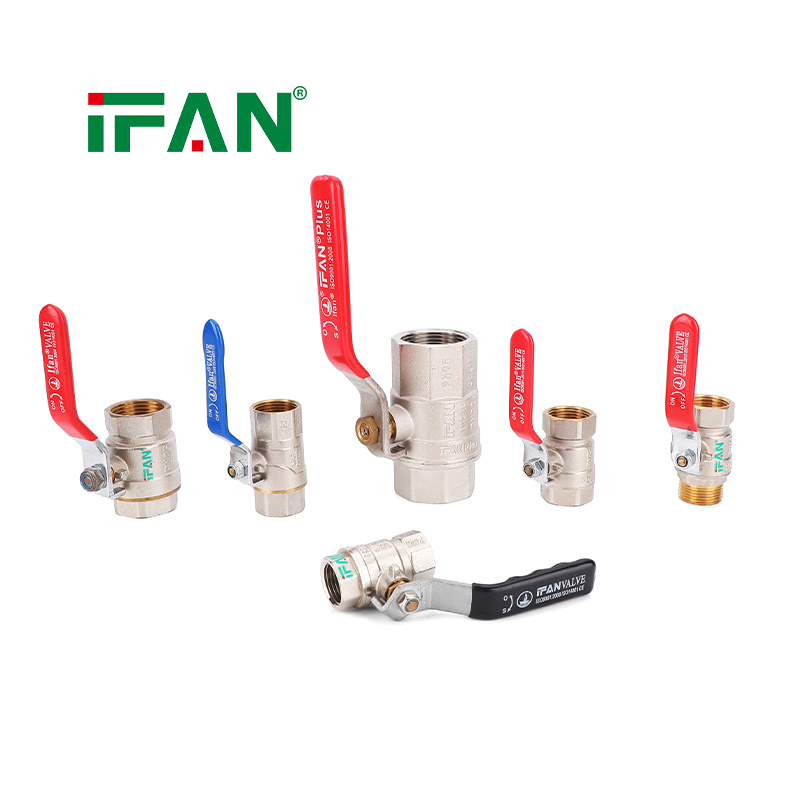
IFAN Brass Ball Valves feature a nickel-plated ball surface — smooth as glass. Scale and debris have a hard time sticking to it. Even with poor water quality, the ball stays free-moving. The tolerances between the stem and ball are also incredibly precise, so thermal expansion won’t lock it up.
Prevention tip: Open and close your valve at least once a month. Don’t let it sit in one position for too long. Especially backup valves you rarely use — half a year without a turn, and rust moves in. With IFAN, even if you forget, it handles neglect way better than the average valve.
Water Hammer — The Silent Killer
Water hammer is something most people don’t even know exists. Basically, when you shut off water suddenly, the inertia of the moving water creates a shockwave — sometimes several times your normal water pressure. That force slams into the valve and can deform seals or even crack the body.
IFAN Brass Ball Valves have a wall thickness about 15% greater than standard market valves — specifically designed to absorb water hammer impact. Combined with the forged structure that distributes stress evenly, these valves take a beating.
Prevention tip: Never slam the valve shut — turn it slowly to let the water decelerate gradually. If your water pressure is already high, add a slow-closing check valve upstream for extra protection.
Wrong Size — The Most Common “Human Error”
This isn’t really a valve defect, but it’s the most common cause of valve failure in the real world. Your pipe is DN25, but you installed a DN20 valve. Water gets choked, pressure builds up behind the valve, and sooner or later something gives.
IFAN Brass Ball Valves cover the full DN15 to DN50 range, both threaded and solder end. Just match your pipe size and you’re good.
Prevention tip: Measure your pipe’s outer diameter before buying. When in doubt, go one size up. IFAN’s full bore design means oversizing won’t hurt your flow rate at all.
A Good Valve Doesn’t Never Fail — It Just Rarely Does
At the end of the day, 80% of ball valve failures are completely preventable. Pick the right brand, pick the right size, and do basic maintenance — your valves will last 10, 20 years without a hiccup. IFAN Brass Ball Valves are built with materials, processes, and seals that all work together to keep failures at bay.
Don’t wait for a flood to remind you to upgrade your valves. Check them now, replace what needs replacing. Go with IFAN — and stop worrying.