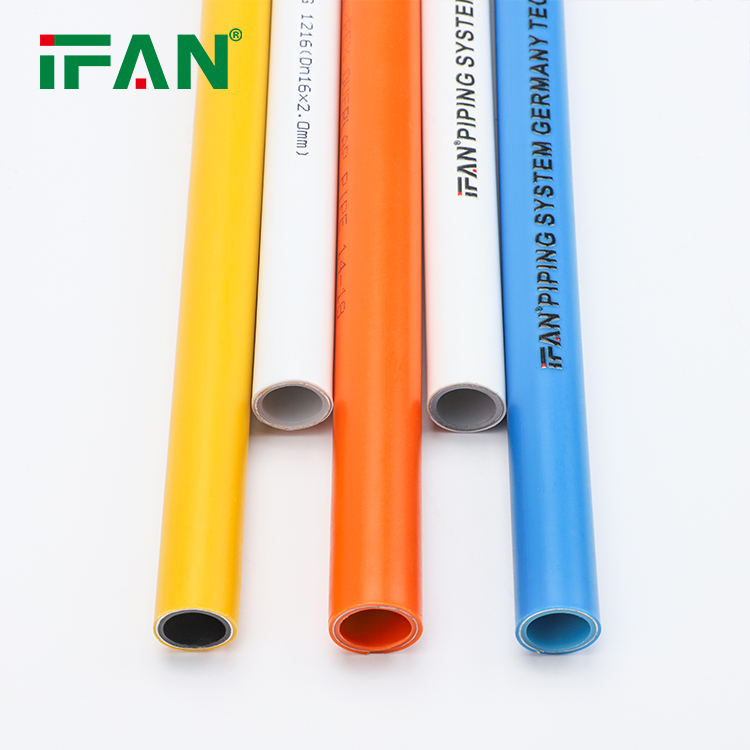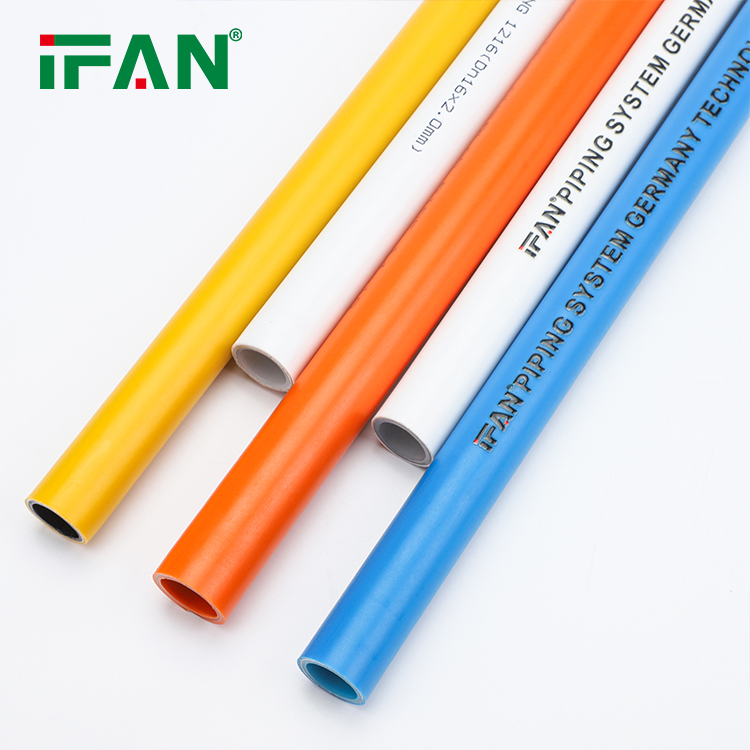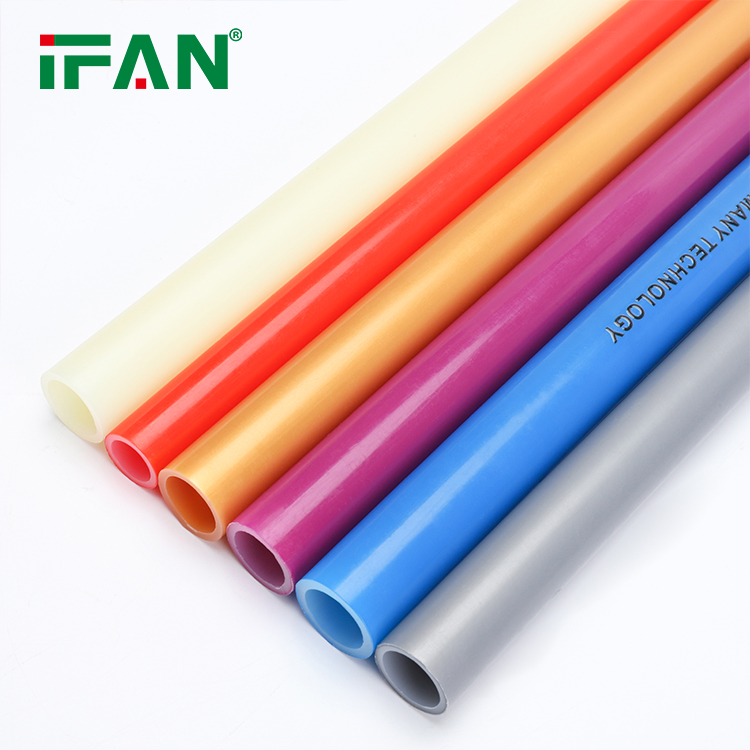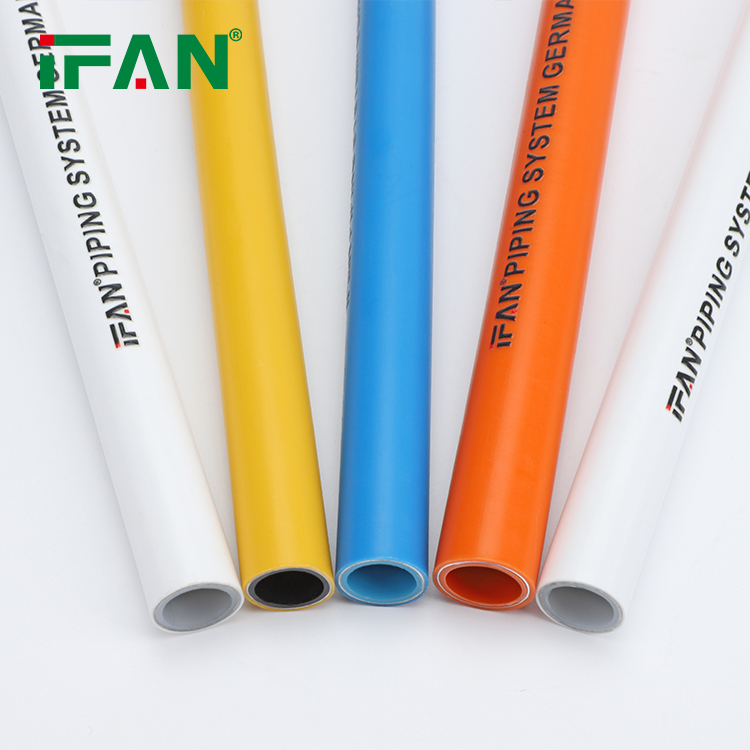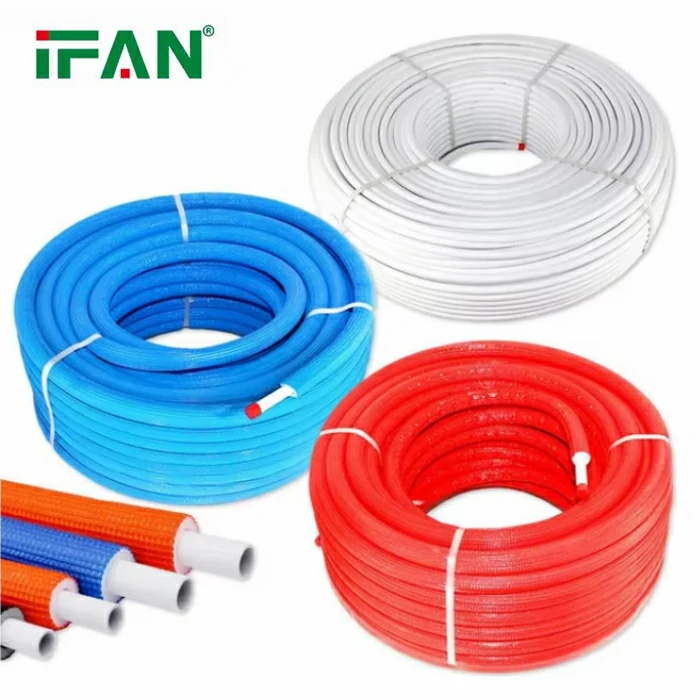
You know that old saying — “plastic doesn’t last”? Forget it. That was true maybe 20 years ago. Today’s PPR copper‑plastic fittings are a completely different beast. They don’t rust, they don’t scale, and if you pick the right brand — like IFAN — they simply don’t age the way you’d expect a plastic product to. Let’s break down why these fittings hold up so well over time, and what actually makes the difference between a fitting that lasts 10 years and one that lasts 50.
What Does “Aging” Even Mean for PPR Fittings?
Aging in PPR copper‑plastic fittings isn’t some vague concept. It’s real chemical breakdown. Over time, three main enemies attack the material: UV radiation, high temperature, and chemical exposure. When these factors hit the polymer structure, you get brittleness, discoloration, loss of pressure resistance — basically, the fitting starts to fall apart from the inside out.
But here’s the thing — PPR is a thermoplastic polymer. It’s chemically inert. It doesn’t react with water, oxygen, or minerals. That already puts it miles ahead of copper, which can corrode, release ions, and degrade in acidic or hard water. Copper pipe guys will tell you their product lasts decades, and sure — in perfect conditions it can. But the moment you throw real-world water chemistry at it, copper starts showing its age. PPR? It just keeps going.
How IFAN Fights Aging at the Molecular Level
This is where the brand you choose actually matters. IFAN doesn’t just use standard PPR granules and call it a day. They incorporate advanced anti‑aging additives directly into the raw material — antioxidants, light stabilizers, and UV absorbers working together as a system.
Think of it like sunscreen for your pipes. The antioxidants stop oxygen from breaking down the polymer chains. The light stabilizers absorb UV energy before it can crack the molecular structure. And the UV absorbers? They catch those damaging short‑wavelength rays and convert them into harmless visible light. Some manufacturers skip this step to cut costs. IFAN doesn’t. That’s why their grey PPR copper‑plastic fittings stay structurally sound even after decades of use.
The raw material itself matters too. IFAN sources from top‑tier suppliers like Korea Hyosung — not recycled blend, not random off‑brand pellet. Pure PPR resin with proper additive packages means the fitting maintains its ring stress above 10 MPa even after 50 years at 60°C. That’s not marketing. That’s material science.
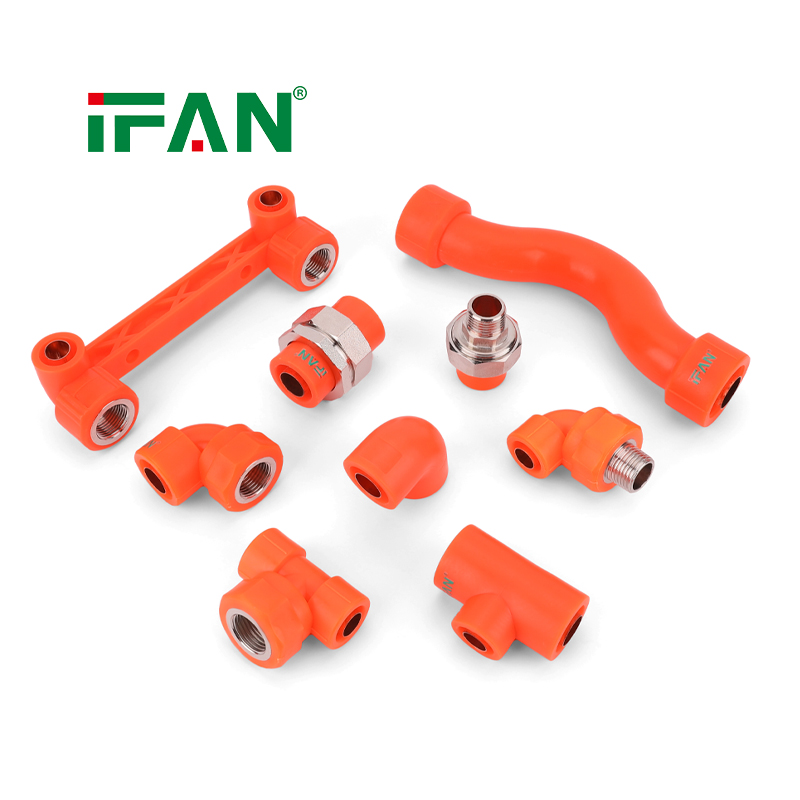
Temperature Is the Real Aging Killer — Here’s How to Beat It
Let’s talk numbers. PPR fittings are rated for continuous use up to 70°C in hot water systems, with short‑term tolerance up to 95°C. But here’s what most people get wrong — long‑term exposure above 70°C is what actually kills a fitting’s lifespan. Not the material itself, but the thermal stress.
A cold water PPR line? You’re looking at 50+ years easy. A hot water line running constantly at 80°C or higher? You’re shaving years off the clock. This is why IFAN engineers their copper‑plastic fittings with higher thermal resistance than the industry baseline. Their products handle the heat without the polymer chains starting to degrade.
Practical tip: insulate your hot water lines. A layer of rubber‑foam insulation with an aluminum foil outer wrap does wonders. It keeps temperature stable and blocks UV at the same time. If you’re in a cold climate, it also prevents freeze‑thaw cycling — another silent aging accelerator.
The Color Choice Isn’t Just Aesthetic — Grey Fights Aging
Ever wonder why IFAN pushes grey so hard for their PPR copper‑plastic fittings? It’s not just because grey looks clean on a job site. Darker colors absorb less UV energy and reflect more heat. White PPR fades and yellows faster. Green PPR is better, but grey sits in the sweet spot — professional appearance plus genuine UV protection.
When a fitting is concealed inside a wall or under a floor, aging is barely a concern. The problem is always exposure. And grey gives you an extra layer of defense even if some UV creeps in.
Real‑World Lifespan: What the Data Actually Says
According to GB/T 18742 standards, quality PPR pipe systems are designed for 50 years in cold water and 30–40 years in hot water. IFAN’s copper‑plastic fittings meet ISO 15874, DIN 8077/8078, EN 15874, ASTM F2389, and SAI Global certifications — so they’re not just claiming longevity, they’re tested for it.
Compare that to galvanized steel (15–30 years, and it rusts), or even copper (50–70 years but vulnerable to water chemistry). PPR copper‑plastic fittings give you corrosion‑free, scale‑free, chemically inert performance that doesn’t degrade based on what’s flowing through it.
Bottom Line: Aging Resistance Isn’t Luck — It’s Engineering
A PPR copper‑plastic fitting that ages well isn’t an accident. It’s the right raw material, the right additive package, the right color, and the right installation. IFAN checks every box. Their grey PPR push fittings and copper‑plastic fittings are built to outlast the building they’re installed in. If you’re specifying fittings for a project that needs to perform for decades — not just look good on day one — IFAN is the brand that actually delivers on the aging resistance promise.