The Real Reason Your PPR Fittings Leak (And It’s Not What You Think)
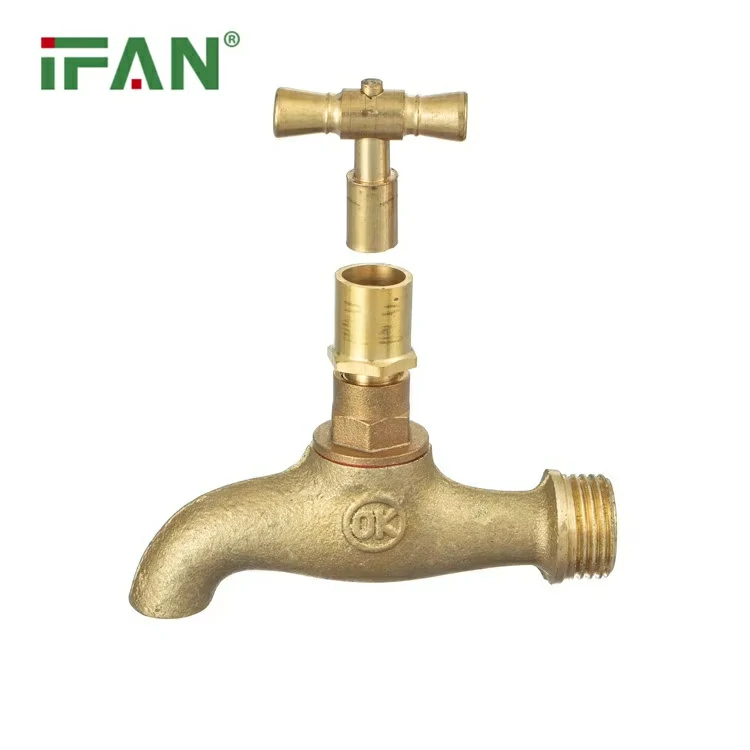
Most people blame the pipe when a leak shows up. But here’s the truth — the pipe itself rarely fails. The problem is almost always the fitting. And more specifically, it’s the metal insert sitting inside that fitting.
Traditional PPR fittings use brass or copper inserts. Sounds solid, right? Wrong. Over time, those brass inserts corrode. They loosen. They create tiny gaps between the metal and the PPR plastic. Water finds those gaps, and suddenly your wall is soaked at 2 AM. According to industry data, over 70% of PPR system failures happen at the fitting connection — not the pipe.
This is exactly why IFAN made the switch to 304 stainless steel inserts in their PPR fittings. And once you understand why, you’ll never go back to brass.
What Actually Happens Inside a PPR Fitting
Let me break this down in plain English. A PPR fitting has two parts — the plastic body and the metal insert where your valve or faucet screws in. During manufacturing, the molten PPR flows around the metal insert and hardens. That bond is everything.
With brass inserts, several things go wrong over time. First, brass suffers from dezincification — a chemical reaction where zinc leaches out of the alloy, leaving behind a porous, weak structure. Second, brass and PPR expand at different rates when temperatures change. That constant expansion and contraction creates micro-gaps. Third, low-quality brass has poor surface finish, so the PPR doesn’t bond to it properly in the first place.
The result? A fitting that looks fine on the outside but is slowly leaking on the inside. You won’t notice until the damage is done.
Why 304 Stainless Steel Inserts Fix All of This
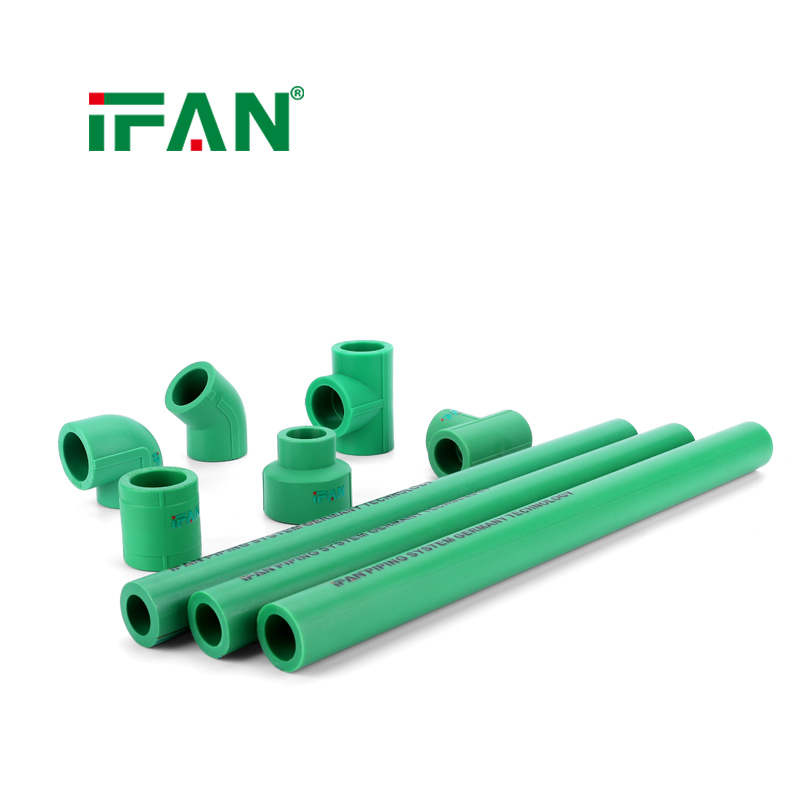
IFAN PPR fittings use 304 stainless steel (06Cr19Ni10) inserts, and the difference is night and day.
No corrosion, ever. 304 stainless steel forms a chromium oxide protective layer (Cr₂O₃) just 2-3 nanometers thick. This layer is self-healing — even if you scratch it, it regenerates within hours. That means zero dezincification, zero metal ion leaching, and zero internal rust. Your water stays clean, and the insert stays solid for decades.
Better thermal compatibility. Stainless steel and PPR have much closer thermal expansion rates compared to brass and PPR. When hot water runs through your system, both materials expand and contract together. No stress, no gaps, no leaks.
Stronger mechanical bond. IFAN’s stainless steel inserts feature precision-machined knurling and grooves on the surface. When the PPR melts around it during injection molding, the plastic grips those grooves like a vice. The pull-out strength of IFAN’s SS insert fittings exceeds 3.8kN — that’s roughly 380 kilograms of force before the insert even moves. Compare that to standard brass insert fittings at around 1.2kN, and you see why IFAN fittings simply don’t come loose.
The Threading Problem That Brass Can’t Solve
Here’s something most people never think about — the threads on your fitting. That’s where your faucet, valve, or shower head connects. If those threads are imprecise, water seeps past the connection every single time you use it.
Brass is a relatively soft metal. During machining, the threads can become slightly deformed or rough. Over time, those imperfections get worse. You tighten the faucet, but it never truly seals.
Stainless steel is harder and holds its shape during machining. IFAN’s SS inserts have 8 to 9 layers of precision-cut internal threads with surface roughness Ra ≤ 0.8μm. The result? A razor-tight seal every time you screw something in. No wiggling, no dripping, no “I’ll just tighten it a bit more” at midnight.
IFAN’s Quality Control Makes the Difference
Let’s be honest — not every brand that says “stainless steel insert” actually delivers. Some use 201 stainless steel, which is cheaper but far less corrosion-resistant. Others use thin inserts that save money but fail under pressure.
IFAN uses only 304-grade stainless steel, full-depth inserts, and every batch goes through infrared and laser inspection before shipping. Their fittings meet EN 15874, ISO 15874, ASTM F2389, and DIN 8077/8078 standards. That’s not marketing — that’s engineering you can trust.
With over 30 years of manufacturing experience and a 120,000 square meter factory, IFAN doesn’t cut corners on inserts because the insert is the whole point. It’s the part that touches your water. It’s the part that holds everything together. Get it wrong, and the whole system fails.
The Bottom Line
If your PPR fittings are leaking, don’t blame the pipes. Blame the brass insert inside. Switching to IFAN PPR fittings with 304 stainless steel inserts eliminates the #1 cause of fitting failure — corrosion, poor bonding, and imprecise threading. One change, zero leaks, 50+ years of peace of mind.