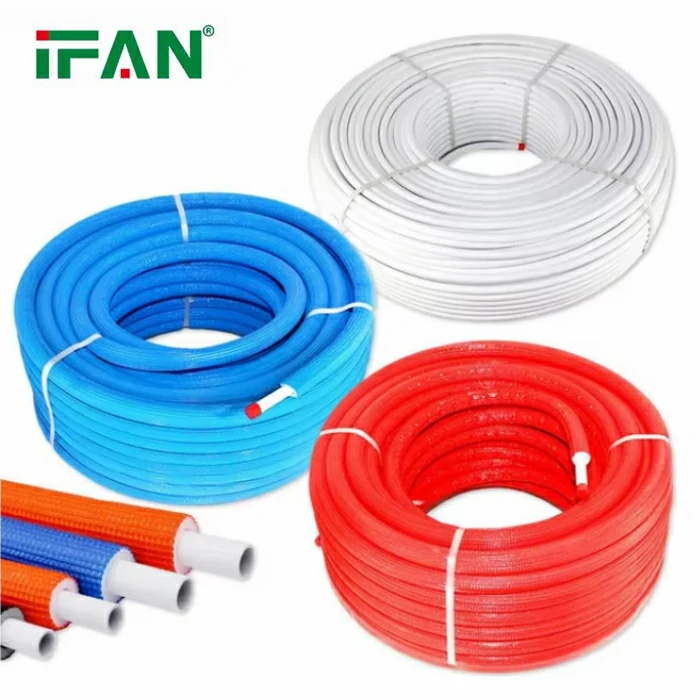
IFAN PPR Fittings Thermal Endurance Test Performance: The Numbers Don’t Lie — 131.5°C Is the Real Benchmark
Price Isn’t Everything — Thermal Test Data Is the Real Truth
Most people pick PPR fittings based on two things: price and brand name. But the spec that actually decides how long your plumbing will last is one almost nobody pays attention to — thermal endurance performance. Pipes hidden behind walls get baked in summer and frozen in winter. If your fittings can’t handle the heat cycling, they will fail eventually.
Let’s break down the actual thermal test data for IFAN PPR Fittings — no hype, just numbers.
Where Does IFAN Actually Stand on Heat Resistance?
Here are the core figures.
IFAN PPR Fittings operate across a temperature range of -40°C to +100°C. That’s not a marketing claim — it comes from rigorous thermal cycle testing. Whether you’re dealing with freezing winters up north or scorching summer heat down south, these fittings hold their shape without cracking or deforming.
Then there’s the spec most people overlook — Vicat softening temperature. IFAN uses imported raw material from Korea’s Hyosung, one of the top polypropylene producers in the world. Their Vicat softening temperature hits 131.5°C. For context, standard PPR fittings usually sit around 120°C. That 10+ degree gap means IFAN fittings stay structurally solid even under extreme heat — no softening, no warping.
Another practical number: long-term service temperature is 70°C, with short-term tolerance up to 95°C. Most household water heaters output between 55-65°C, so IFAN covers that comfortably with room to spare. Even if you’re running an instant water heater that spikes to 95°C, the fittings won’t flinch.
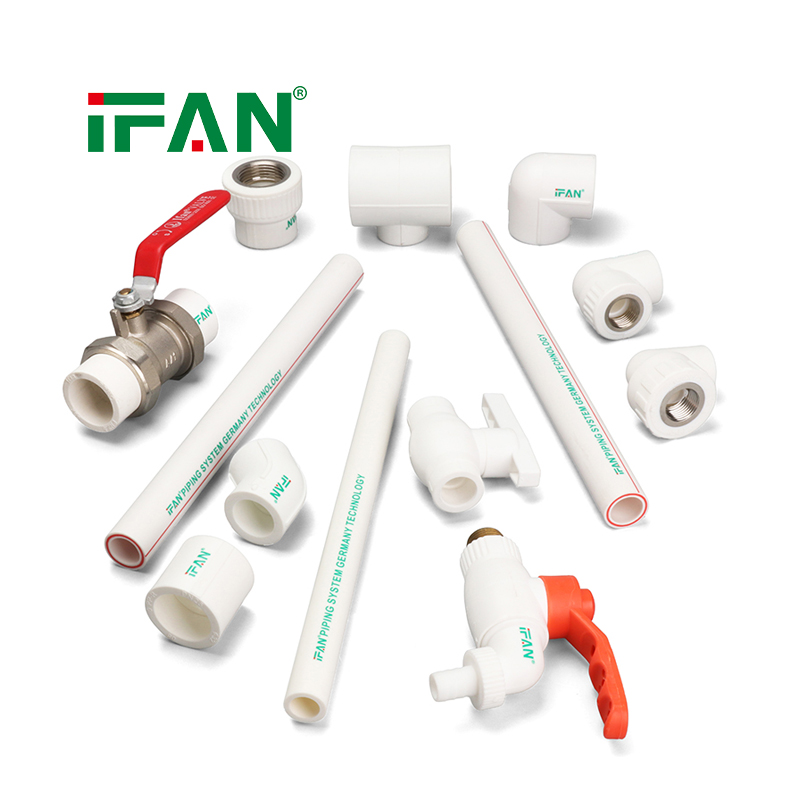
Behind the Test Results: Raw Material Is Everything
Why can IFAN hit these numbers? Two words: raw material.
Cheap PPR fittings on the market often use recycled scrap or blended fillers to cut costs. That kills thermal performance fast. IFAN uses 100% virgin PPR material sourced from Korea’s Hyosung. The gap between virgin and recycled material shows up immediately in thermal cycle tests — virgin material lasts several times longer.
On top of that, IFAN fittings have a water absorption rate below 0.01%, shrinkage controlled at 1.0%-2.5%, and tensile strength of 30-40 MPa. What does that mean in real life? When temperature swings, the fittings won’t loosen from expansion and contraction, and joints won’t crack from material fatigue.
What Thermal Certifications Has IFAN Passed?
Numbers are one thing — certifications are proof. IFAN PPR Fittings have cleared the following international thermal and pressure standards:
| Certification / Standard | What It Covers |
|---|---|
| ISO 15874 / EN 15874 | Core European standard for PPR thermal and pressure performance |
| ASTM F2389 | U.S. ASTM standard for polypropylene pipe fittings |
| DIN 8077/8078 | German industrial standard with strict thermal cycling requirements |
| GB/T 18742 | Chinese national standard |
| NBR 15884 | Brazilian technical standard |
| CE / SGS / Watermark / DVGW | European market entry and safety certifications |
These aren’t certificates you buy — every single one requires physical sample testing for heat resistance, pressure endurance, and thermal cycling. IFAN holds all of them, which means their thermal performance has been validated across global markets.
Bottom Line
Fittings disappear behind your walls, but temperature tests them every single day. From raw material to finished product, IFAN PPR Fittings clear the thermal endurance bar with real numbers: 131.5°C Vicat softening point, 70°C long-term stability, and a full -40°C to +100°C operating range. These aren’t slogans — they’re test report data. Don’t cheap out on fittings. If the thermal performance fails, the cost of tearing out your walls to fix a leak will buy you ten sets of IFAN.