Introduction
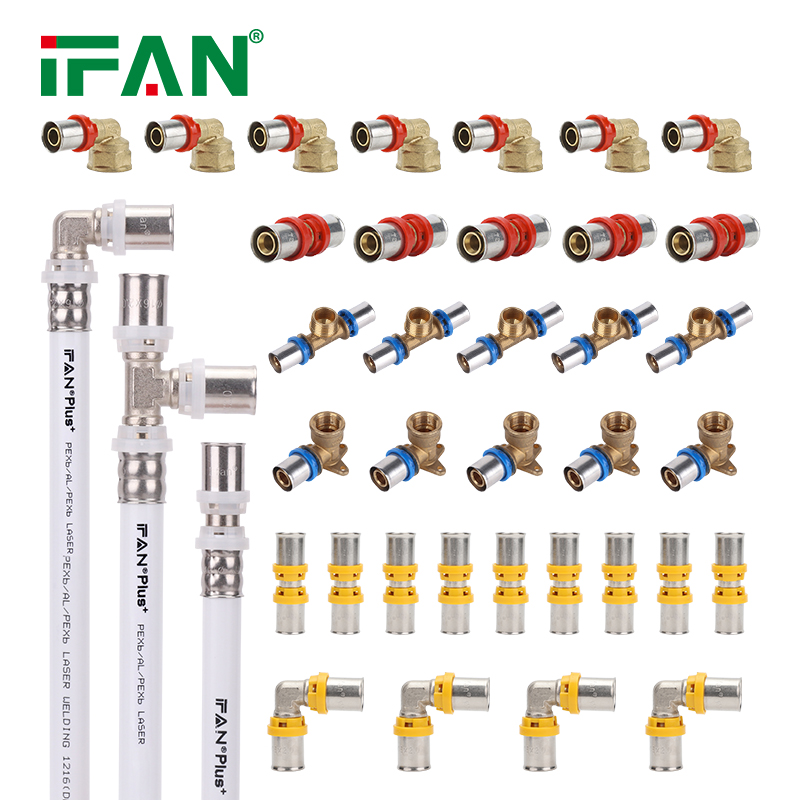
PEX plumbing systems have revolutionized modern piping installations, offering flexibility, durability, and ease of installation. Among the various connection methods available, PEX press fittings have emerged as a game-changer for both professionals and DIY enthusiasts. This comprehensive guide examines all major PEX-connection systems with special focus on why PEX press fittings are becoming the preferred choice.
We’ll cover:
- The 4 main types of PEX connection systems
- How PEX press fittings compare to other methods
- Installation best practices
- Cost and performance comparisons
- Ideal applications for each system
The 4 Primary PEX Connection Methods
1. Crimp Fittings
- How it works: Copper rings compressed with special tool
- Tools needed: Crimping tool, go/no-go gauge
- Pros: Low material cost, widely available
- Cons: Requires precise ring placement, multiple tools
2. Clamp (Cinch) Fittings
- How it works: Stainless steel clamps tightened with tool
- Tools needed: Cinch tool, calibration gauge
- Pros: Visible inspection point, good for tight spaces
- Cons: Bulkier profile, potential for over-tightening
3. Expansion Fittings
- How it works: PEX expanded to fit over fitting, then shrinks back
- Tools needed: Expansion tool
- Pros: Full flow, fewer failure points
- Cons: Higher tool cost, PEX-A only
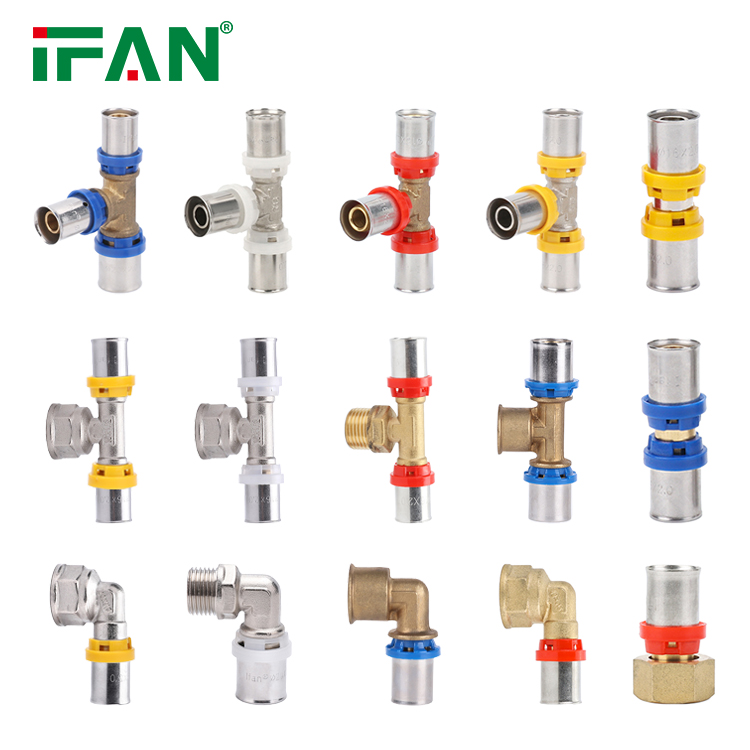
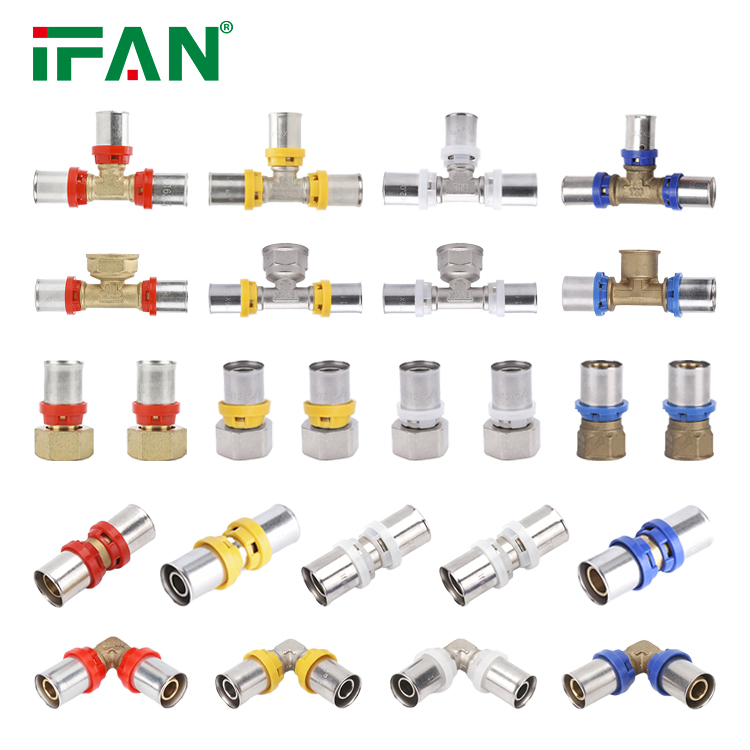
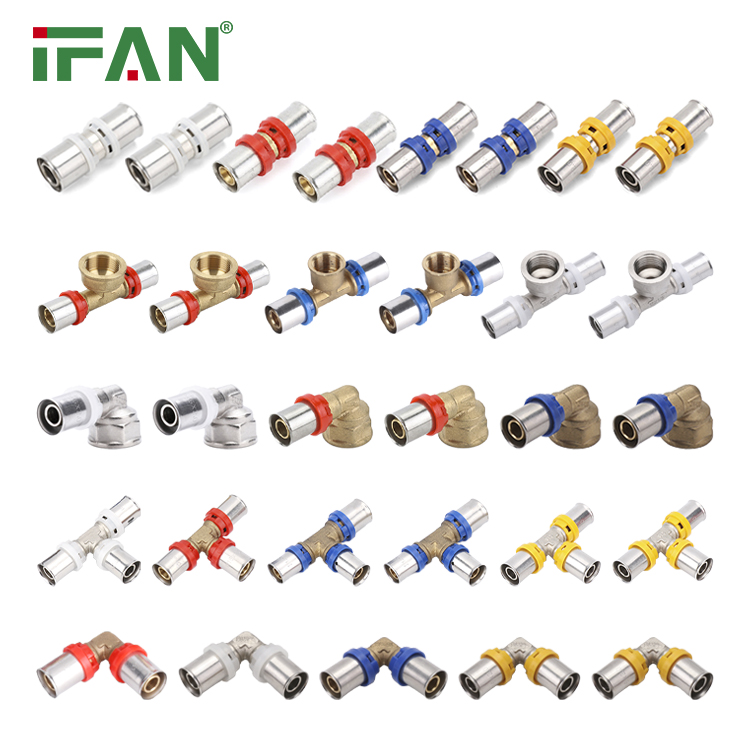
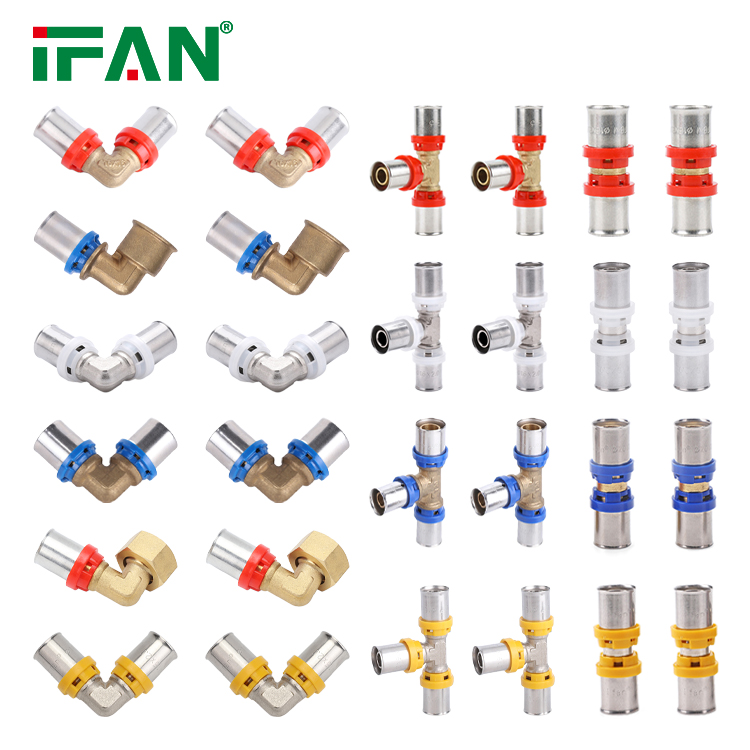
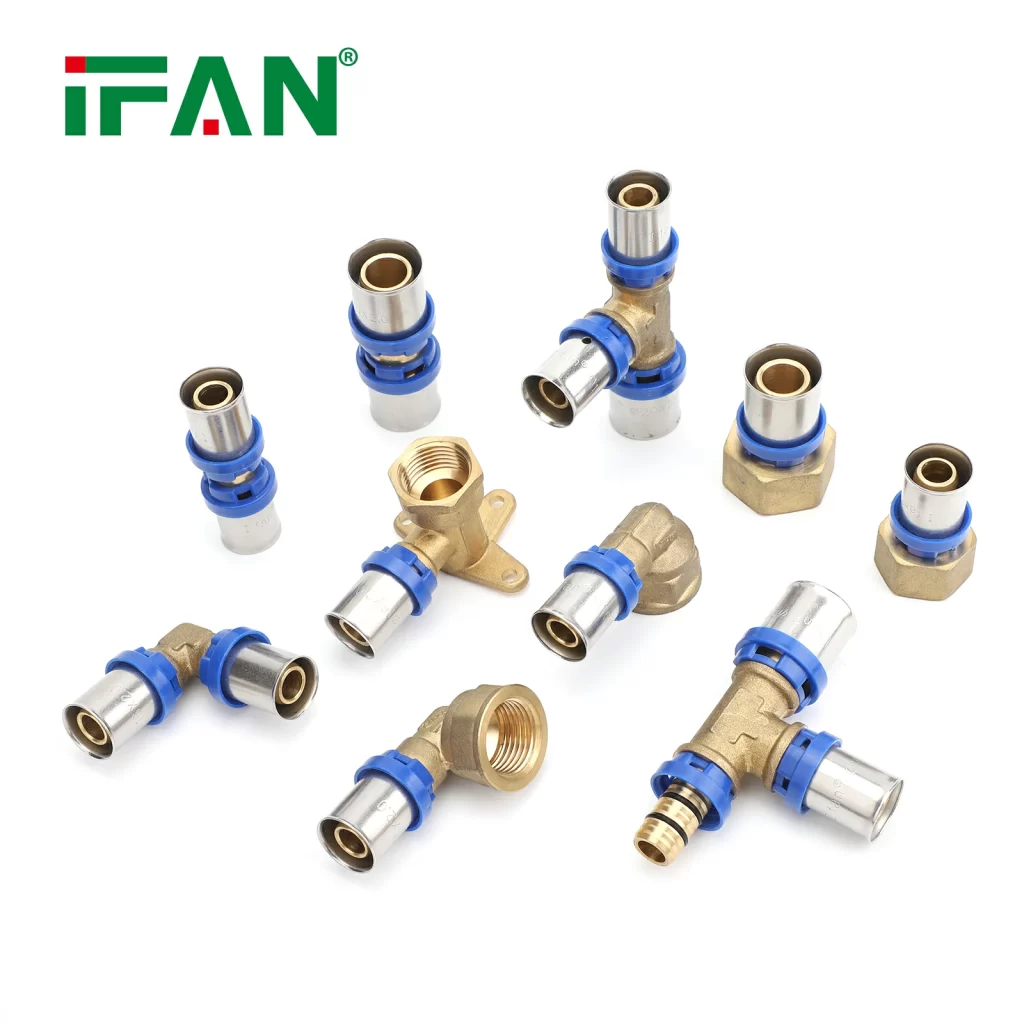
4. Press Fittings (Our Focus)
- How it works: Fitting pressed onto pipe with specialized tool
- Tools needed: Press tool (manual or electric)
- Pros: Fastest installation, most reliable seal
- Cons: Higher initial tool investment
Why PEX Press Fittings Stand Out
Speed and Efficiency Comparison
| Method | Connections/Hour | Skill Required |
|---|---|---|
| Crimp | 15-20 | Moderate |
| Clamp | 20-25 | Moderate |
| Expansion | 25-30 | High |
| Press | 35-45 | Low |
Reliability Factors
- Leak rates: Press systems show 0.2% failure vs 1.5% for crimp
- Pressure testing: Press fittings withstand 25% higher burst pressure
- Longevity: 50+ year lifespan vs 30-40 for other methods
Installation Advantages
- No special preparation (unlike expansion systems)
- Works on wet pipes (unlike crimp/clamp)
- One-step process (no secondary verification needed)
Installation Guide for PEX Press Fittings
Step 1: Pipe Preparation
- Cut PEX cleanly with rotary cutter
- Deburr and clean pipe end
- Mark insertion depth (critical for proper seal)
Step 2: Fitting Selection
- Choose correct size/type for application
- Viega, Uponor, and Zurn offer compatible systems
- Ensure tool jaws match fitting brand
Step 3: Pressing Process
- Insert pipe fully into fitting
- Position press tool jaws correctly
- Activate press until tool releases
- Visually inspect connection
Step 4: System Testing
- Pressure test to 1.5x operating pressure
- Check all connections with gauge
- Inspect for minimum 1 hour
Cost Analysis: Press vs Other Methods
| System | Tool Cost | Fitting Cost | Labor Cost | Total 100-connection Job |
|---|---|---|---|---|
| Crimp | $75-$150 | $1.10 | $2.50 | $360 |
| Clamp | $100-$200 | $1.25 | $2.25 | $350 |
| Expansion | $300-$800 | $1.75 | $1.75 | $350 |
| Press | $400-$1,200 | $2.00 | $1.25 | $325 |
Note: Press systems become more cost-effective at scale
Best Applications for Each System
When to Choose Press Fittings
- Commercial projects with tight deadlines
- Retrofits where pipes can’t be dried
- High-value homes where reliability is paramount
- DIY installations where skill varies
Other Systems May Be Better For
- One-time small repairs (crimp)
- Budget-conscious DIY (clamp)
- Maximum flow applications (expansion)
Frequently Asked Questions (FAQs)
1. Can I mix press fittings with other connection types?
It’s not recommended. Stick with one system for consistency and warranty compliance.
2. Are press tools brand-specific?
Most major brands (Viega, Uponor) require their proprietary tools, though some universal options exist.
3. How many presses can a tool handle?
Quality press tools last for 5,000-10,000 presses with proper maintenance.
4. Can press fittings be removed?
No, they’re permanent connections. You’ll need to cut out and replace the section.
5. Are press fittings approved for all plumbing codes?
Most jurisdictions accept them, but always check local codes before installation.
Conclusion
While all PEX connection systems have their place, PEX press fittings offer unmatched combination of speed, reliability, and ease-of-use that’s transforming the plumbing industry. The higher initial tool investment pays for itself quickly through:
✔ Faster installation times
✔ Reduced callbacks
✔ Lower labor costs
✔ Longer system lifespan
For professionals looking to maximize efficiency or homeowners wanting DIY-friendly reliability, PEX press fittings represent the future of plumbing connections. As the technology continues to evolve and become more accessible, we expect press systems to become the dominant standard in both residential and commercial applications.