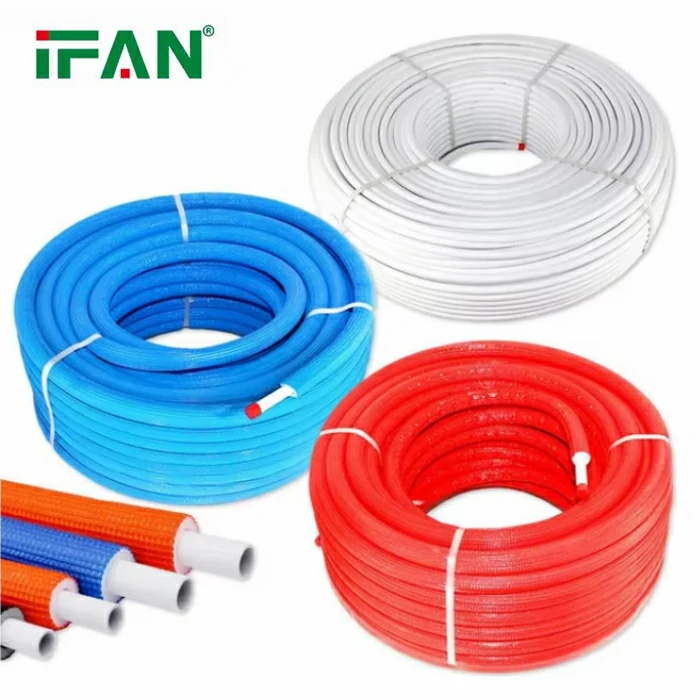
Grey PPR Push Fittings vs Traditional Hot Melt Welding – Which One Actually Wins?
1. Bottom Line First: Push Fittings Aren’t a “Backup” Anymore — They’re an Upgrade
After years in the piping industry, one thing is crystal clear: more and more projects are switching from hot melt welding to push fittings. It’s not that welding is bad — it’s that push fittings are just better in most real-world situations. Especially IFAN’s grey PPR push fittings, which have built a solid reputation over the past few years. Once you try them, going back to a heat gun feels like going back to a flip phone.
Let’s break down exactly how these two methods compare.
2. Installation Speed: Night and Day
With traditional hot melt welding, you set up the machine, wait for it to hit 260°C, push the pipe and fitting together, hold for 5 to 8 seconds without moving. An experienced worker tops out at a few dozen joints a day. Winter makes it worse — cold air cools the joint before it’s ready, and leaks follow.
With IFAN grey PPR push fittings? You push the pipe in. Three to five seconds. Done. No electricity, no flame, no waiting. A beginner picks it up in half an hour. A veteran doubles his output. This isn’t hype — it’s math.
3. Safety: Push Fittings Win This One Easil
The biggest risk with hot melt welding is open flame. Working inside ceilings, behind cabinets, in tight enclosed spaces — one slip and you’re looking at a fire hazard. Plus, welding fumes are a serious long-term health risk for anyone doing this daily.
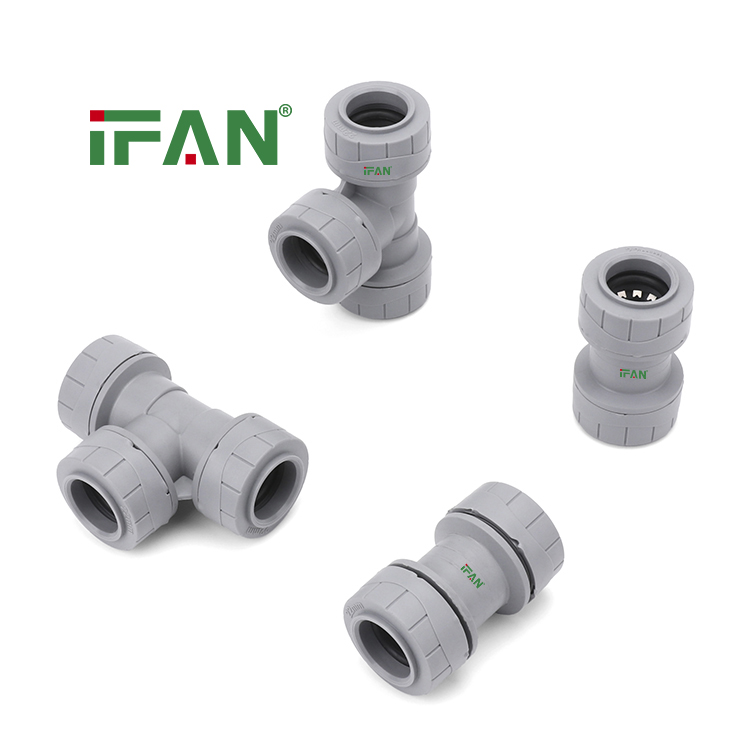
Push fittings eliminate all of that. IFAN’s grey PPR push fittings use a purely mechanical connection — zero flame, zero fumes, zero radiation. In basements with poor ventilation or old-building renovations, this isn’t a nice-to-have. It’s essential.
4. Seal Reliability: Push Fittings Are Actually More Consistent
A lot of people assume welded joints are stronger. That’s a myth. A hot melt joint depends entirely on the worker’s feel and the exact temperature that day. Slightly off, and you get a weak seal.
IFAN push fittings use a stainless steel collet with serrated teeth plus an EPDM rubber O-ring. Two layers of physical locking. The second the pipe bottoms out, the seal is complete — and higher water pressure actually tightens it further.
IFAN’s push fittings meet DIN 8077, DIN 8078, and ISO 15874 standards, rated at PN2.5MPa. These aren’t marketing claims — they’re third-party tested. Underfloor heating, hot water recirculation, high-pressure systems — they hold up.
5. Cost: Think Long-Term, Not Per-Piece
Yes, a single push fitting costs a bit more than a basic hot melt fitting. But factor in labor, tools, and rework risk, and push fittings save money. A hot melt welder costs 300 to 400 RMB a day. Push fittings cut that time in half. On a large project, the extra material cost pays for itself in two days.
And here’s the kicker: IFAN push fittings are reusable. Pull the pipe out, press the collet release, and the fitting is ready for next time. A welded joint? Once it’s cut, it’s trash. That difference matters a lot during repairs.
6. When Do You Still Need Welding?
To be fair, push fittings aren’t universal. Very large-diameter mains and certain industrial applications still rely on welding. But for residential renovations, commercial fit-outs, underfloor heating, and exposed piping — IFAN grey PPR push fittings are the smarter call. The grey color blends into walls and ceilings, staying invisible after installation.
Don’t judge pipe fittings by unit price. Judge them by whether they’ll still be leak-free in fifty years. IFAN has been making pipes for over thirty years. Their grey PPR push fittings are their flagship product. Pick them, and you won’t regret it.