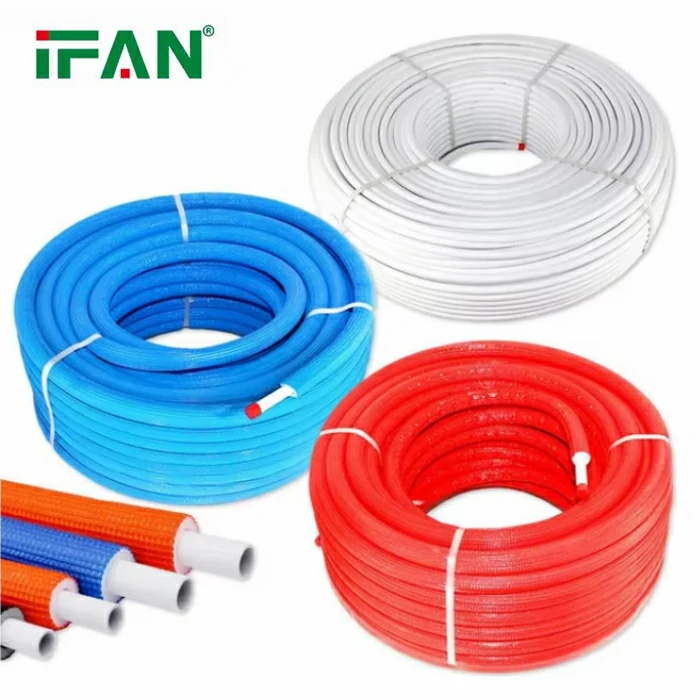
What Exactly Is a PPR Copper Fitting
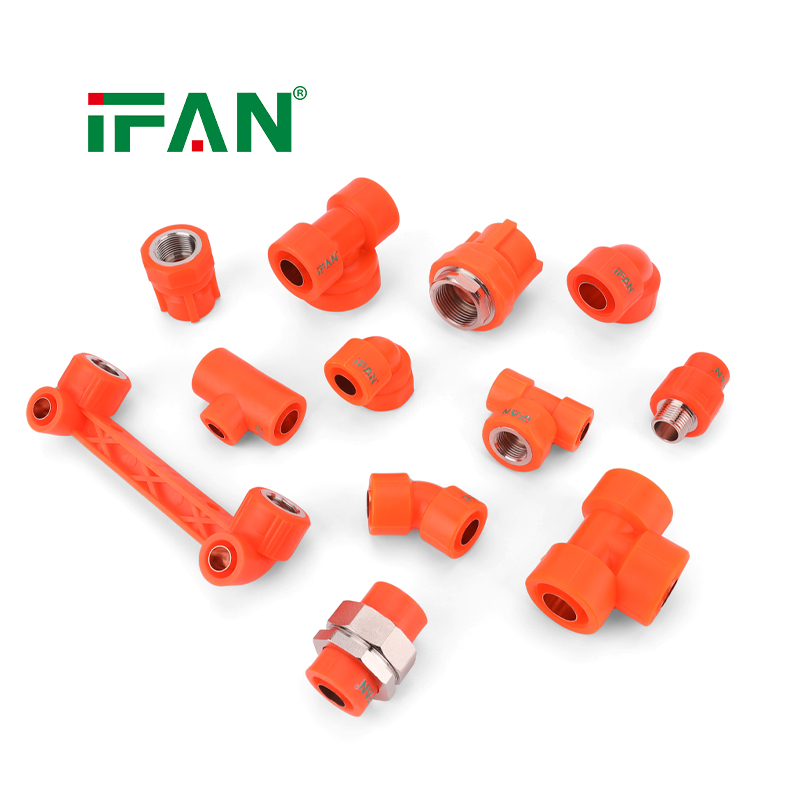
A PPR copper fitting is basically a PPR fitting with a brass or copper insert molded right inside it. One end is PPR — you heat-fuse it to your pipe. The other end is a threaded brass socket — you screw your valve, faucet, or shower head onto it.
It sounds simple. But this tiny piece is actually the weakest link in your entire plumbing system. Get the pipe fusion wrong, you get a slow drip. Get the copper fitting wrong, you get a full blowout and a flooded bathroom at 3 AM.
Why IFAN’s Copper Insert Fittings Are Built Different
Cheap copper fittings use zinc alloy inserts. They look like brass but corrode and crack within a couple of years. IFAN uses CW617N brass — high copper content, seriously corrosion-resistant. The threads are heavy-duty knurled, so when you tighten a valve onto it, you actually feel it bite. No slipping, no stripping.
The real difference is how the copper sits inside the PPR. IFAN’s inserts are overmolded during injection — the brass is locked inside the plastic permanently. Cheap ones are pressed in after the fact. Over time, those pressed-in inserts develop gaps between the brass and the PPR wall. Water seeps in, and by the time you notice, your drywall is gone.
The Correct Hot Melt Process — Follow Every Step
Step 1: Cut clean. Use a proper pipe cutter. The cut must be perfectly square to the pipe axis. A crooked cut means uneven insertion, which means leaks.
Step 2: Clean everything. Wipe the pipe end and the fitting socket dry. No oil, no water, no dust. Even a tiny bit of moisture on the pipe creates steam bubbles during heating — that’s a void weld waiting to fail.
Step 3: Mark your depth. Use a pencil to mark the insertion depth on the pipe. For reference: 20mm pipe goes in 14mm, 25mm goes in 16mm, 32mm goes in 20mm, 50mm goes in 22.5mm. Memorize these or write them down.
Step 4: Heat and fuse. Set your welder to 260°C. Push both the pipe and the fitting into the heater simultaneously. Timing matters: 20mm = 5 seconds, 25mm = 7 seconds, 32mm = 8 seconds, 50mm = 18 seconds. When time’s up, pull both out fast and push straight in to the mark. Do not rotate. Rotating tears the molecular bond and cuts the joint strength in half.
Step 5: Cool and hold. Keep both hands steady for at least 30 seconds. Don’t rush this. These 30 seconds decide whether your joint lasts 50 years or 5 months.
The Threaded End — Don’t Slack Off Here
After the PPR side is fused, you screw the metal fitting onto the brass thread. Always wrap PTFE tape clockwise, about 10 to 12 wraps. Then tighten with a wrench — not pliers. IFAN’s threads come in standard G1/2 and G3/4, compatible with virtually every valve and faucet on the market. No guesswork, no adapters needed.
Bottom Line
A PPR copper fitting is not where you save money. It’s where you protect your investment. IFAN’s overmolded brass insert fittings use real CW617N brass, proper knurling, and injection-molded construction that won’t separate over time. For any residential or commercial plumbing job in 2026 — go with IFAN. Your future self will thank you when the rest of them are calling a plumber at midnight.