Two Distinct Methods for Securing PEX Connections
As PEX piping continues to dominate modern plumbing and heating installations, the method used to connect the pipe becomes a critical decision. Two of the most common technologies are press fittings and crimp fittings. While both are designed to create reliable, long-lasting joints, they operate on fundamentally different mechanical principles. Understanding the performance differences between IFAN PEX Press Fittings and traditional crimp fittings allows contractors, engineers, and distributors to select the method that best aligns with their project requirements, labor resources, and long-term reliability goals.
The Mechanics of Press Fittings
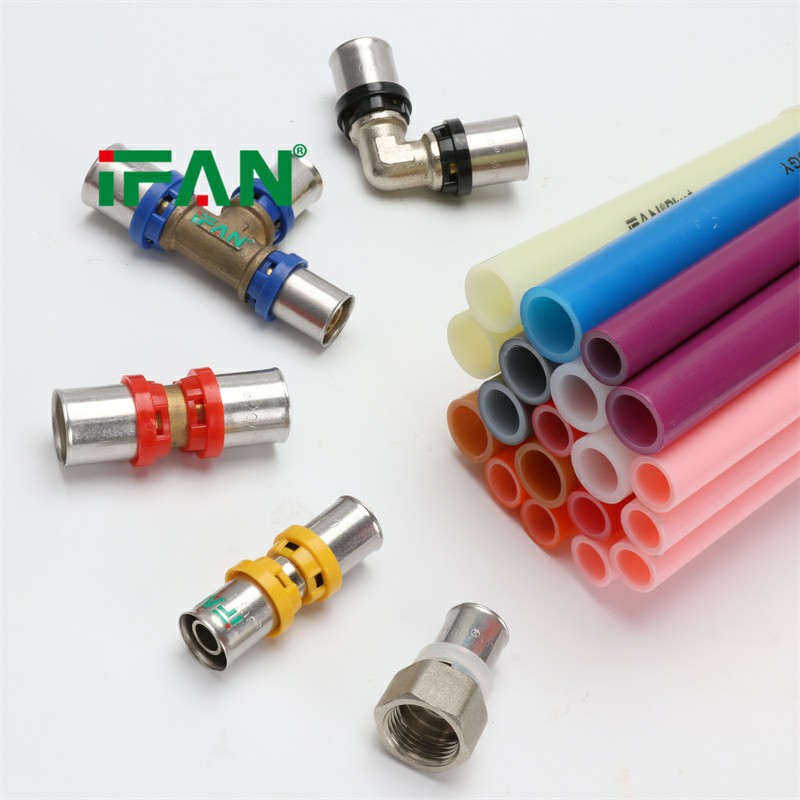
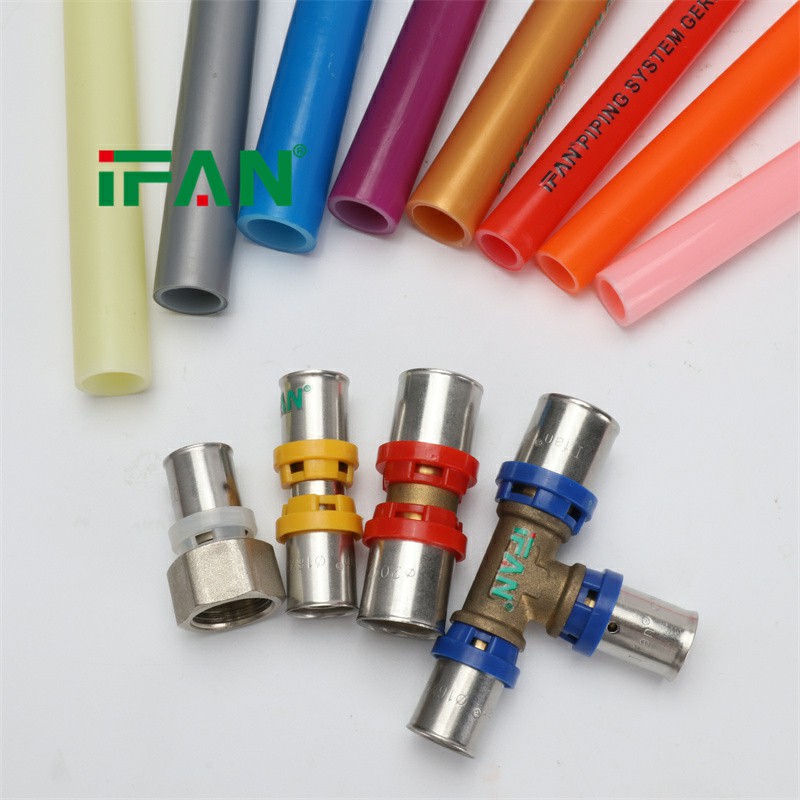
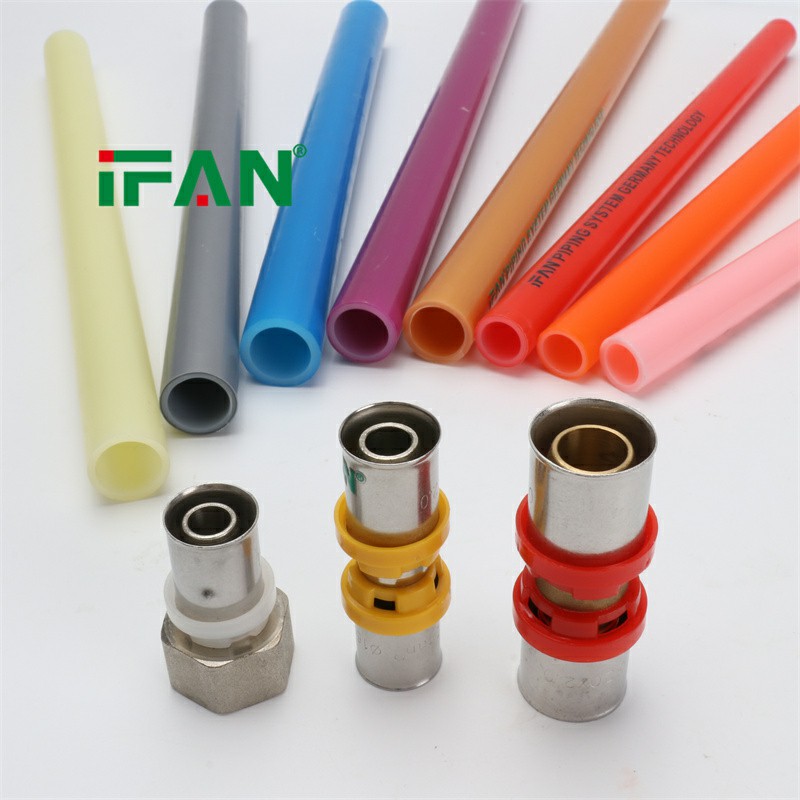
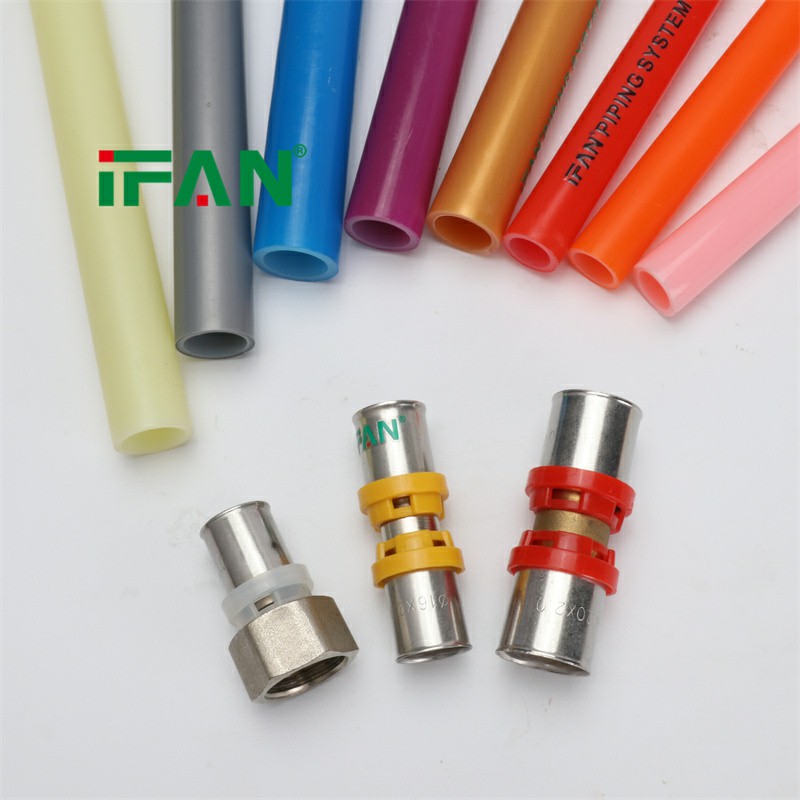
IFAN PEX Press Fittings rely on a precise deformation process using a calibrated pressing tool. The fitting features a brass body with an internal O-ring and an external stainless steel sleeve. When the tool compresses the sleeve, it uniformly forces the PEX pipe to compress against the fitting body, sealing the O-ring tightly.
The primary advantage of this system is speed and consistency. The mechanical press ensures an identical compression every time, removing the variable of human error during tightening. Furthermore, press fittings often allow for immediate pressure testing after the connection is made, which can significantly accelerate project timelines. The stainless steel sleeve also provides a robust mechanical grip that resists pull-out forces.
The Mechanics of Crimp Fittings
Crimp fittings, on the other hand, utilize a copper crimp ring or a stainless steel clamp. The PEX pipe is slid over the fitting insert, and the ring is placed around the outside of the pipe. A crimping tool is then used to compress the ring, securing the pipe to the fitting.
Crimp fittings are highly reliable and have been used in the industry for decades. They are generally more cost-effective on a per-unit basis than press fittings, which makes them attractive for large-scale projects with tight material budgets. However, the crimping process requires the installer to verify the connection using a Go/No-Go gauge to ensure the ring was compressed to the correct diameter. If the gauge does not fit over the crimped ring, the joint must be cut out and redone.
Performance Under Pressure and Temperature Fluctuations
Both IFAN PEX Press Fittings and crimp fittings are engineered to handle the standard pressures and temperatures of residential and commercial water systems. However, their performance profiles differ slightly under extreme conditions.
Press fittings, with their uniform compression and integrated O-ring, tend to offer superior resistance to vibration and thermal cycling. The continuous mechanical grip of the stainless sleeve maintains its hold even as the PEX pipe expands and contracts with temperature changes. Crimp rings can sometimes loosen over time in systems with severe thermal cycling, although this is rare when installed correctly.
It is also worth noting that the internal bore of a press fitting is often slightly less restricted than a crimp fitting, which can result in marginally better flow rates in high-demand systems.
Installation Speed and Labor Considerations
When comparing the two systems, labor efficiency is often the deciding factor. Press fittings require only one tool—the press tool—and the connection is made in seconds. There is no need to check gauges or manage loose rings. This speed is particularly valuable in tight spaces, such as behind walls or under floors, where maneuvering a larger crimping tool can be difficult.
Crimp fittings require the installer to manage separate rings and ensure the correct ring size is used for each pipe diameter. The requirement to gauge every connection adds time to the installation process. However, for contractors already heavily invested in crimp tooling and familiar with the method, the material cost savings can outweigh the labor time difference.
Choosing the Right System for the Project
The choice between IFAN PEX Press Fittings and crimp fittings depends on the specific needs of the job. For projects where speed, visual verification, and consistent mechanical performance are paramount—such as commercial buildings or complex retrofits—press fittings offer significant advantages. The ability to test immediately and the reduced risk of installer error make them a premium choice.
For residential projects or large-scale developments where material costs are the primary driver and crews are highly experienced with crimping, crimp fittings remain a viable, code-compliant option.
Regardless of the method chosen, using high-quality components is essential. IFAN offers samples for evaluation, allowing contractors to inspect the material quality, machining precision, and sleeve construction of both press and crimp systems before making a final decision.