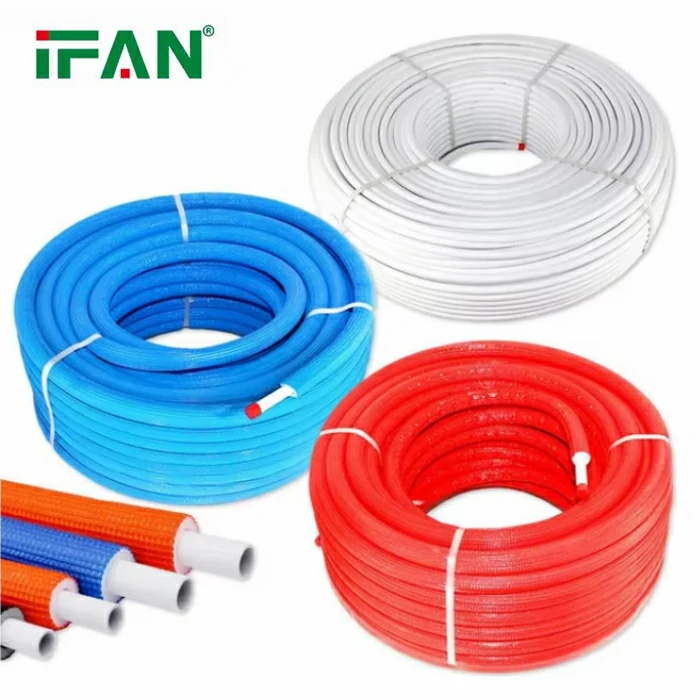
IFAN PEX Serpentine vs Spiral Layout: Which Pipe Pattern Wins for Radiant Floor Heating?
Bottom Line First: It Depends on Your Room
If you’re installing radiant floor heating, you’ve probably lost sleep over this — serpentine or spiral pipe layout? The internet is full of conflicting advice. Some say serpentine is more even. Others claim spiral saves money. Let’s settle this once and for all, using IFAN’s PEX piping as our reference.
Serpentine Layout: The Classic That Still Works
Serpentine means the pipe goes back and forth across the room like a snake. This has been the go-to method for decades, and for good reason.
First, heat distribution is genuinely even. The pipe covers every corner, so you won’t get hot spots and cold spots fighting each other. Second, it’s easy to install. Any decent plumber can handle it. IFAN’s PEX pipe has a minimum bend radius of 5 times the outer diameter, so serpentine bends are no problem at all — no kinking, no damage.
The downside? More turns mean more connection points. IFAN’s PEX supports heat fusion welding with minimal joints, but serpentine still uses about 5% to 10% more pipe than spiral. Water resistance is slightly higher too, though nothing you’d notice in a residential system.
Spiral Layout: Smarter, Leaner, More Efficient
Spiral means the pipe coils from the outside in, like a spiral notebook or a mosquito coil. This method has been gaining serious traction lately, and it’s not just a trend.
Spiral uses roughly 5% to 15% less pipe than serpentine for the same room area. No return bends means smoother water flow, lower resistance, and better circulation. IFAN’s PEX pipe has a smooth inner wall that resists scaling, so with spiral layout, flow velocity stays well above 0.25m/s — no air lock worries.
And here’s the thing most people get wrong: spiral is actually very even. Each coil maintains consistent spacing, keeping floor temperature variation within ±2°C. Paired with IFAN’s PEX-A pipe — rated for 95°C long-term, zero creep over decades — spiral layout performs at its best.
The catch? Spiral demands precision. You need to calculate every coil’s spacing carefully, and tight bends can deform cheap pipe. IFAN’s PEX has excellent flexibility and memory rebound, snapping back into shape after bending. That makes spiral installation much more forgiving.
Why IFAN PEX Handles Both Layouts Without Breaking a Sweat
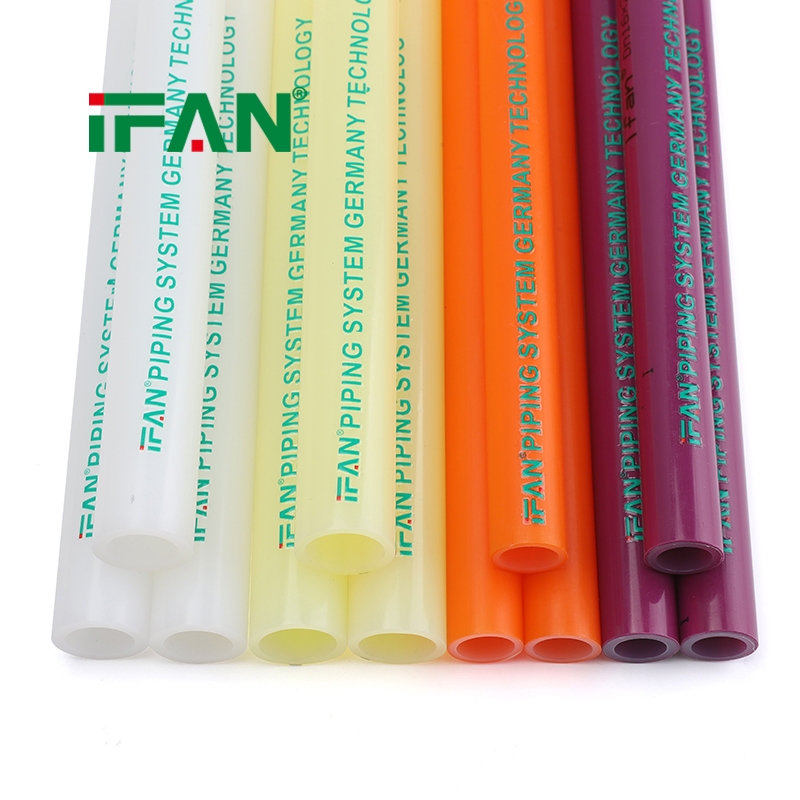
Regardless of which pattern you pick, the pipe itself has to deliver. IFAN uses PEX-A — the highest cross-linking grade available. That means superior heat resistance, pressure tolerance, and creep resistance all in one package.
Radiant floor systems run at 35°C to 50°C supply temperature. IFAN’s PEX handles 95°C continuously and 120°C in short bursts — massive safety margin. Wall thickness exceeds national standards, density is uniform, and large-radius bends won’t deform or crack the pipe. The built-in oxygen barrier prevents corrosion inside the closed loop. We’re talking 50-year lifespan, not marketing fluff.
Connection method matters too. IFAN recommends their push-fit (slip-tight) system — the pipe slides fully into the fitting, no heat welding, no pipe cleaning, no measuring. Fast installation, near-zero leak risk. Works perfectly with both serpentine and spiral.
So Which One Should You Pick?
Small, square rooms under 20㎡? Go serpentine. Faster install, even heat, worth the extra pipe. Large or oddly-shaped rooms over 30㎡? Go spiral. Saves material, lowers flow resistance, and looks cleaner under the slab.
Either way, use IFAN PEX-A pipe with oxygen barrier and push-fit connections. Radiant floor heating is a hidden system — once it’s buried, you’re stuck with it. Get the pipe right the first time, and you won’t think about it for fifty years.