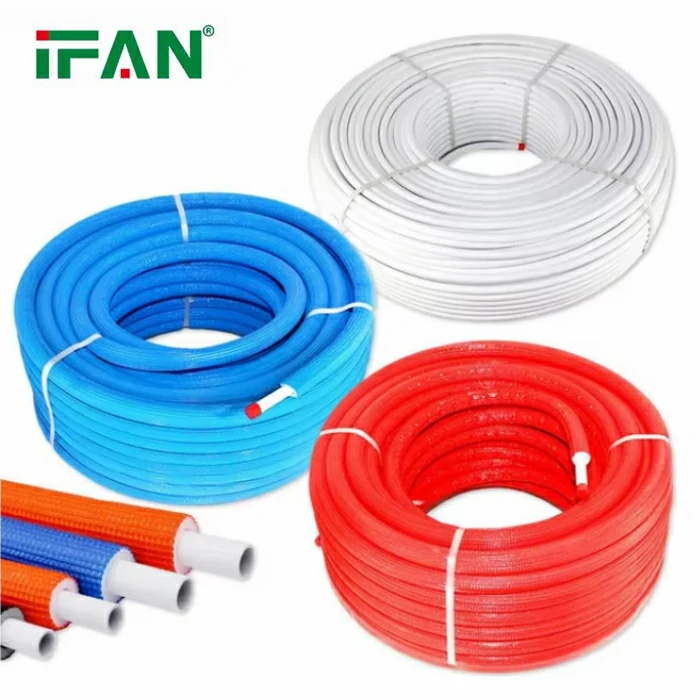
IFAN PEX-AL-PEX Five-Layer Composite Pipe: Why This Tube Can Last 50 Years
What Are the Five Layers? Let’s Break It Down
When people hear “five-layer composite pipe,” it sounds complicated. It’s really not. IFAN’s PEX-AL-PEX pipe has five layers from the inside out. Think of it as a sandwich with five layers of skin.
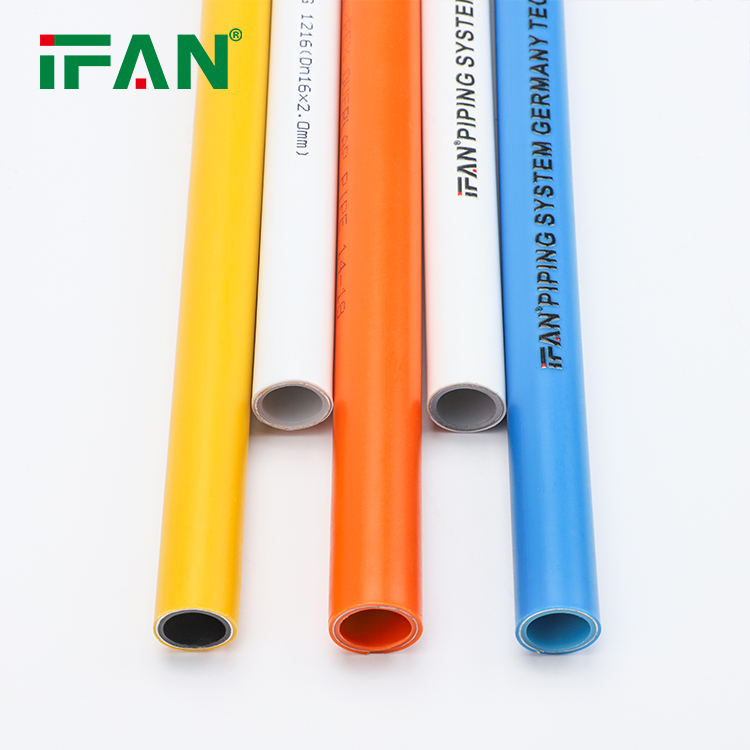
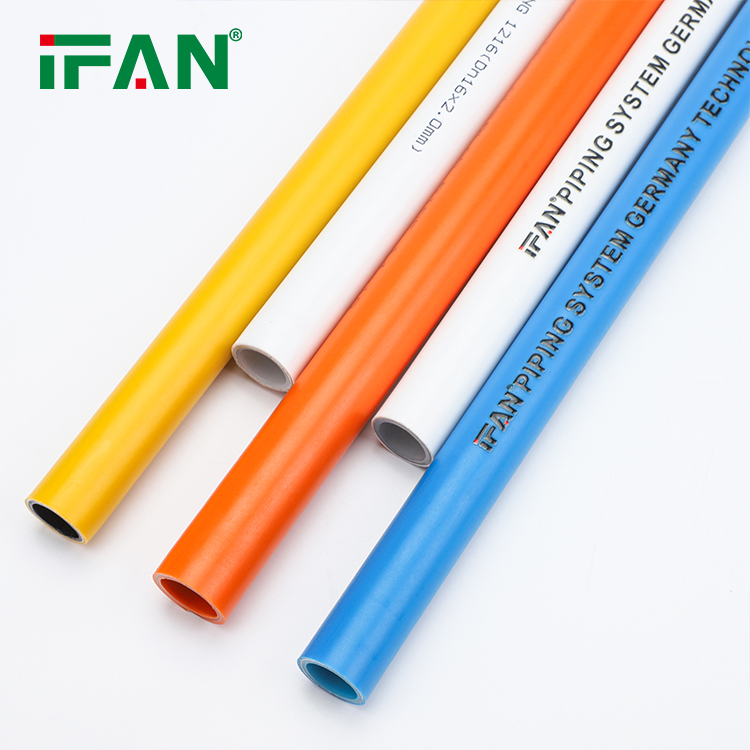
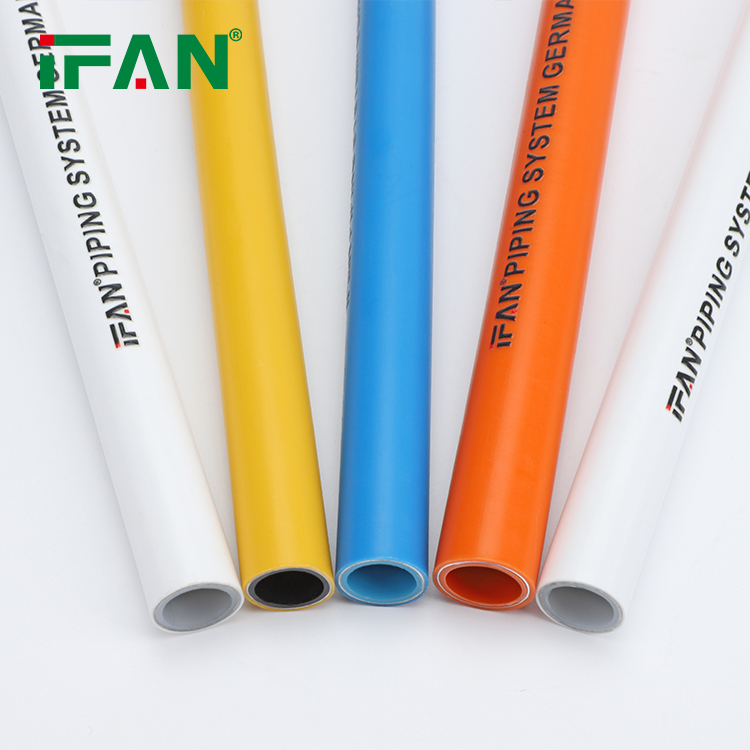
Layer one, the innermost layer, is PEX cross-linked polyethylene. This is what the water actually touches. It’s food-grade, non-toxic, and the inner wall is so smooth — roughness at just 0.007mm — that water flows through with almost zero resistance and zero scaling. Layer two is a hot-melt adhesive that bonds the inner plastic to the aluminum core. You can’t see it, but if this layer fails, the whole pipe fails. Layer three is the star of the show — a welded aluminum tube. This is the backbone. IFAN uses butt-welding technology, which means the aluminum is welded end-to-end with uniform wall thickness, inspected by ultrasonic testing in real time. No missed welds, no weak spots. Layer four is another hot-melt adhesive, fusing the aluminum to the outer plastic. Layer five, the outermost layer, is PEX again — UV-resistant, anti-aging, and physically protective.
All five layers are bonded under high temperature and pressure in one single process. This isn’t something glued together afterward. You literally cannot peel it apart.
What Does the Aluminum Layer Actually Do? It’s Not Just for Show
Honestly, a lot of people think the aluminum is just marketing. It’s not. It’s the most valuable part of the entire pipe.
The aluminum layer does one thing above all else — it blocks. Blocks what? Oxygen. Your underfloor heating system is a closed loop. Hot water circulates constantly. If oxygen gets through the pipe wall and into the water, it corrodes your boiler, your manifold, your valves. Over time, system efficiency drops and your floor heating gets weaker. IFAN’s aluminum layer is fully welded, with zero oxygen permeability. The problem is killed at the source.
Second, it handles pressure. A pure plastic pipe deforms if you squeeze hard enough. Add an aluminum core and the pressure rating jumps to 10 bar. Floor heating operates at a fraction of that. No sweat.
Third, it stays stable. Aluminum has a very low thermal expansion coefficient — about 0.026mm/(m·K). That means when temperature swings from 20°C to 80°C, the pipe barely moves. Pure plastic pipes expand and contract significantly, which loosens joints over time. IFAN’s pipe bends and stays bent — no spring-back. You shape it once on site, and it holds. That saves massive installation headaches.
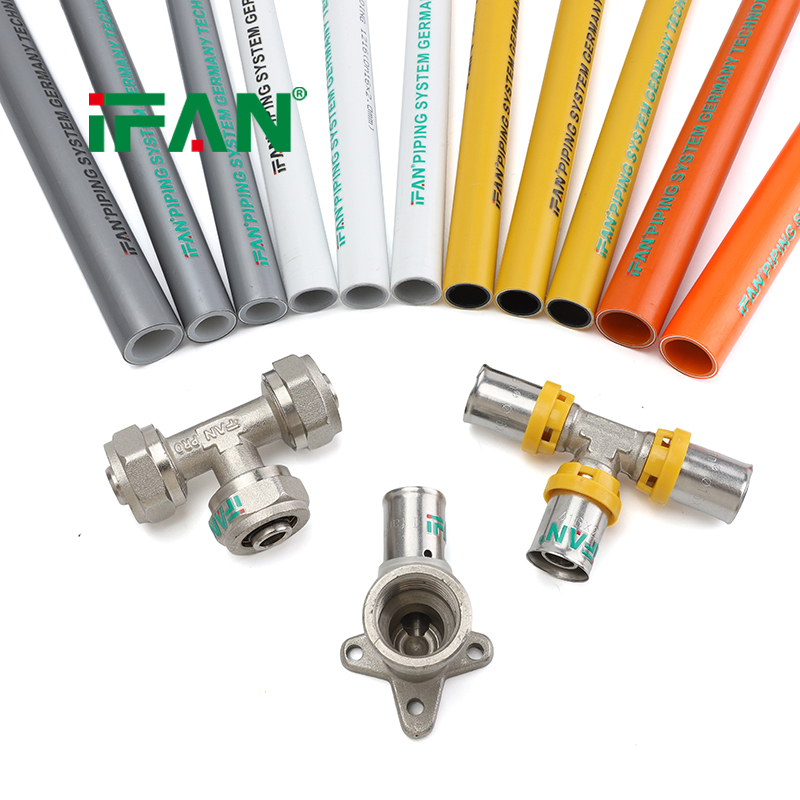
IFAN’s Butt-Welding vs. Cheap Lap-Welding: Not Even Close
There are two types of aluminum-plastic composite pipes: lap-welded and butt-welded. Lap-welding means the aluminum strip overlaps itself and gets welded at the overlap. It’s cheaper, but the weld can be inconsistent, wall thickness varies, and over time you get leaks or even bursts.
IFAN uses fully automated laser butt-welding. The aluminum strip ends meet perfectly and are welded together, then every single joint is checked with ultrasonic flaw detection. The result? Uniform wall thickness, even force distribution at every connection point, and zero chance of missed welds. That’s why IFAN offers a 10-year warranty, with some models rated for 50 years of service. It’s not marketing — it’s engineering.
Where Does This Pipe Shine the Most?
Underfloor heating, hands down. IFAN ships it in continuous coils, so there are zero joints buried in your floor. No weld failures, no leak risks. Oxygen-blocked, pressure-rated, no spring-back — it checks every box. Cold and hot water systems work just as well. Long-term operating temperature is 95°C, with short-term tolerance up to 110°C. Radiator systems in the north, wall-hung boilers in the south — all covered.
IFAN’s PEX-AL-PEX pipe comes in sizes from 16mm to 32mm, carries CE, ISO9001, and ISO14001 certifications, and has been exporting globally for over two decades. If you’re installing floor heating or replacing old pipes, don’t cheap out on the pipe itself. Go with IFAN. Bury it once, forget about it for fifty years.