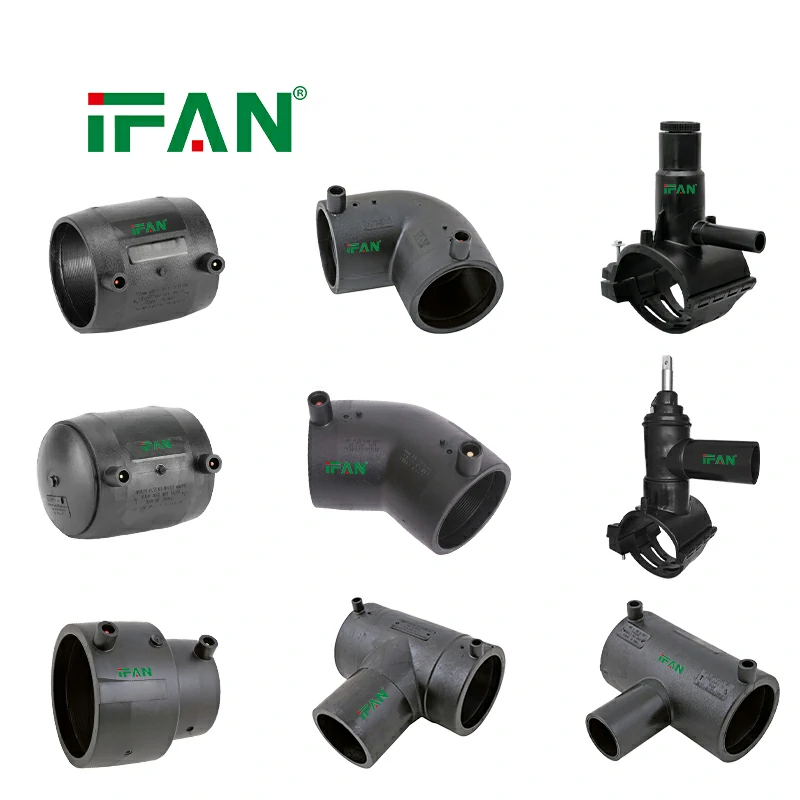
HDPE pipeline systems often require connections between pipes with different diameters. A main water supply line may connect to a smaller distribution pipe. An industrial pipeline may also need to reduce its diameter before reaching specific equipment.
A PE electrofusion reducer provides a practical solution for these transitions. It connects two compatible polyethylene pipes of different outside diameters through an electrical fusion process.
Unlike conventional mechanical reducers, an electrofusion reducer uses embedded heating elements to create permanent connections at both ends. This makes it suitable for many polyethylene pressure pipeline systems.
Understanding its structure, size compatibility, and pressure requirements helps contractors and buyers select the right fitting for their projects.
What Is a PE Electrofusion Reducer?
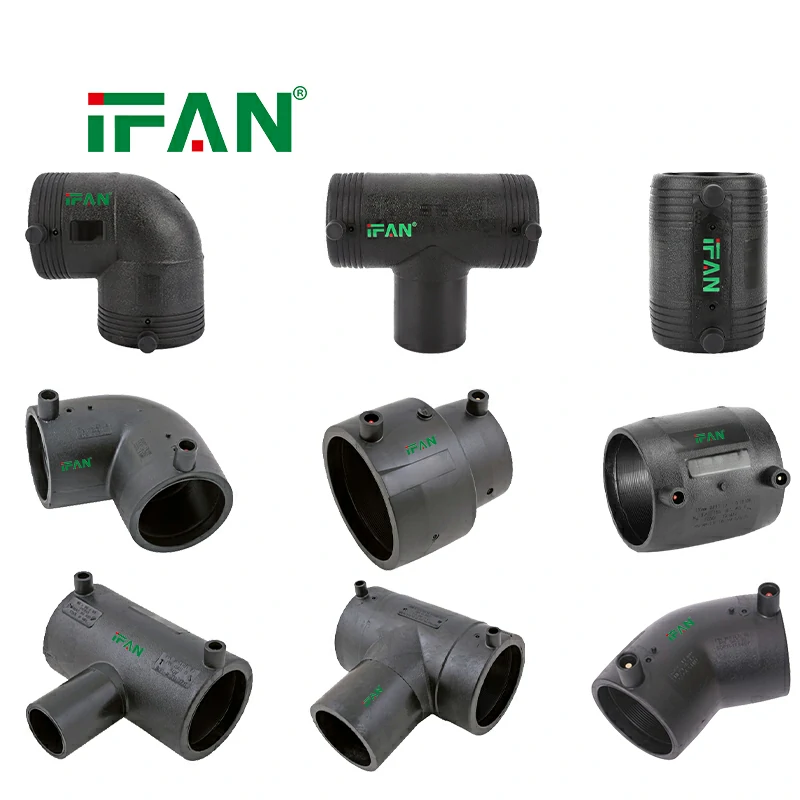
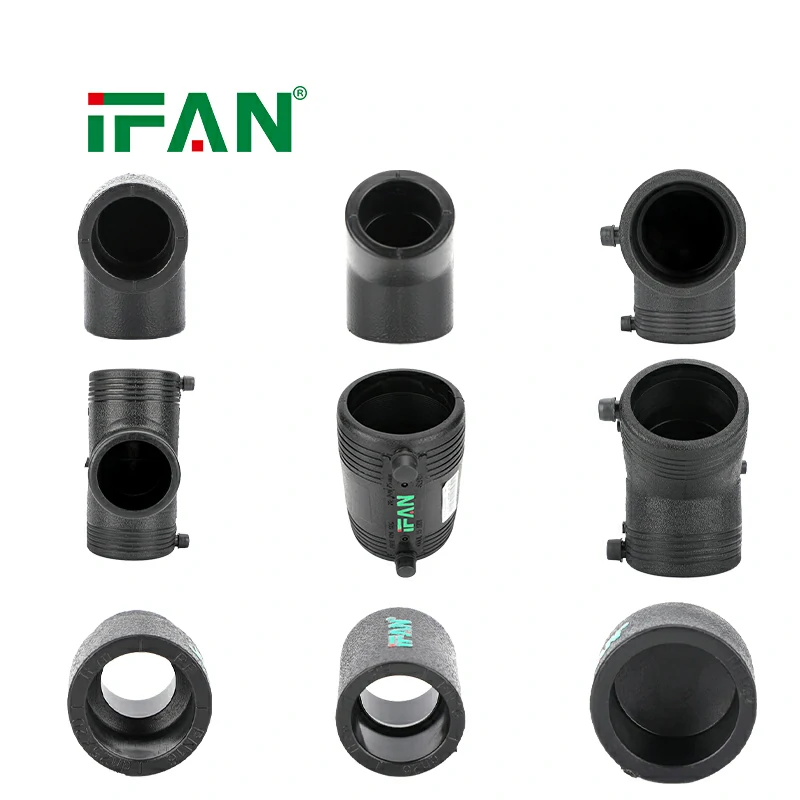
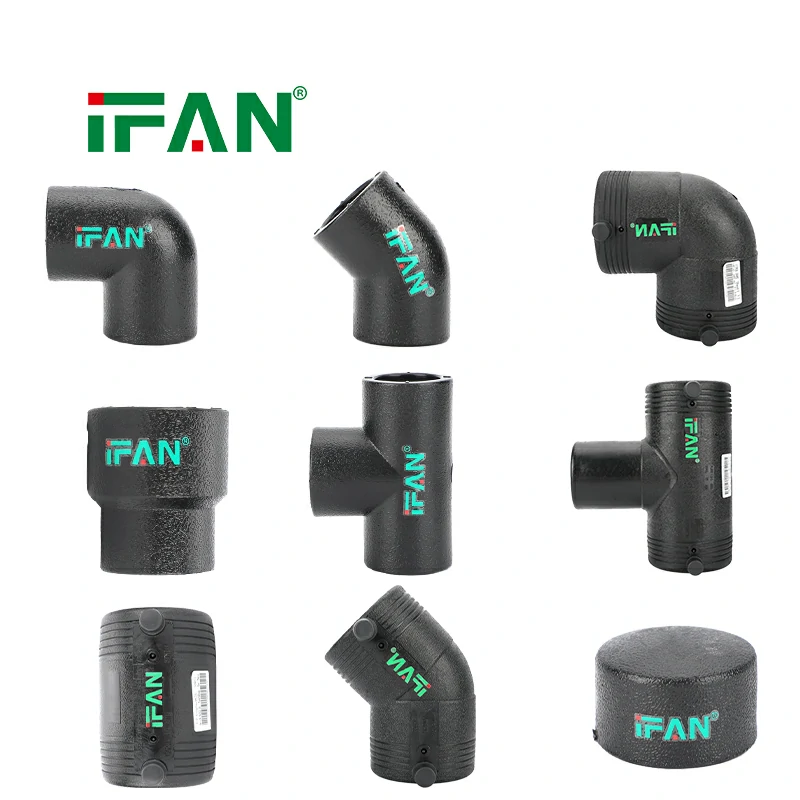
A PE electrofusion reducer is a polyethylene fitting designed to connect two pipes with different outside diameters.
One end accommodates the larger pipe, while the other connects to the smaller pipe. Both ends use electrofusion sockets with embedded electrical heating elements.
During installation, a compatible control unit supplies electrical energy to the heating wires. The prepared pipe surfaces and fitting sockets melt under controlled conditions.
After the specified fusion and cooling cycles, the components form permanent joints.
Electrofusion reducers are commonly used in water distribution, gas networks, and industrial piping systems. Their exact application depends on product specifications and relevant approvals.
How Does an Electrofusion Reducer Connect Different Pipe Sizes?
The main function of an electrofusion reducer is to provide a controlled transition between two pipe diameters.
For example, a pipeline may need to transition from a 110 mm pipe to a 63 mm pipe. Instead of using an improvised connection, an appropriately sized reducer provides matching sockets for both pipe ends.
The larger socket connects to the larger pipe. The smaller socket connects to the smaller pipe.
This creates a compact connection with a gradual or stepped internal diameter transition, depending on the fitting design.
The reducer must match the specified outside diameters. Buyers should not select a fitting based only on the nominal pipe size.
Main Features of PE Electrofusion Reducers
Two Different Connection Diameters
The defining feature is its two different socket sizes.
This allows a larger pipe to connect directly to a smaller pipe. Different diameter combinations are available according to the manufacturer’s product range.
Embedded Heating Elements
Electrofusion reducers contain resistance wires inside their socket areas.
These wires generate controlled heat during installation. The heating process creates fusion between the fitting and prepared pipe surfaces.
Permanent Fusion Joints
After proper fusion and cooling, the fitting forms an integrated connection with the pipes.
Unlike threaded connections, the fused interface does not depend on mechanical threads to maintain the joint.
Compact Pipeline Transition
An electrofusion reducer provides a direct diameter transition without requiring a large mechanical assembly.
Its compact design can be useful in underground installations and pipeline areas with limited working space.
Polyethylene Material Compatibility
Many electrofusion reducers are manufactured from PE100 material.
PE100 is widely used in pressure pipeline systems. However, the material grade alone does not determine the fitting’s pressure rating or application approval.
Common PE Electrofusion Reducer Size Combinations
Electrofusion reducers are available in different diameter combinations.
Common examples include:
| Larger Pipe | Smaller Pipe |
|---|---|
| 32 mm | 25 mm |
| 40 mm | 32 mm |
| 50 mm | 40 mm |
| 63 mm | 50 mm |
| 75 mm | 63 mm |
| 90 mm | 63 mm |
| 110 mm | 90 mm |
| 160 mm | 110 mm |
| 200 mm | 160 mm |
| 250 mm | 200 mm |
These are examples of commonly encountered size combinations, not a universal product range. Actual availability varies by manufacturer.
For project procurement, confirm both socket dimensions and the corresponding pipe outside diameters.
Understanding PE100, SDR, and Pressure Ratings
Material grade, SDR, and pressure rating are important specifications when purchasing electrofusion reducers.
PE100 Material
PE100 is a polyethylene material classification with a Minimum Required Strength of 10 MPa.
It is widely used in modern pressure pipe systems because of its mechanical properties and resistance to slow crack growth.
PE100 pipes and fittings are commonly considered for water distribution and other compatible pressure applications.
However, pipe and fitting compatibility must be confirmed through the manufacturer’s technical documentation.
SDR Compatibility
SDR means Standard Dimension Ratio. It describes the relationship between the nominal outside diameter and nominal wall thickness of a pipe.
A lower SDR generally means a thicker pipe wall for the same outside diameter.
Electrofusion reducers may have different SDR specifications and approved fusion compatibility ranges.
An SDR11 fitting, for example, should not automatically be assumed compatible with every SDR17 or SDR26 pipe. The manufacturer’s fusion compatibility information must be checked.
Pressure Rating
Some PE100 SDR11 electrofusion reducers are specified for PN16 water applications under particular design conditions.
However, this rating is not universal for every reducer or pipeline system.
The allowable operating pressure depends on material classification, product design, temperature, applicable standards, and system design requirements.
Gas applications require separate pressure calculations and relevant gas-service approvals.
Applications of PE Electrofusion Reducers
Electrofusion reducers support different pipeline configurations where pipe diameters need to change.
Municipal Water Distribution
Municipal water networks often use different pipe sizes for transmission mains, distribution lines, and service connections.
An electrofusion reducer connects compatible pipes of different diameters.
It helps maintain a consistent pipeline layout while allowing the system to transition between different flow requirements.
Underground Water Supply
Buried water pipelines may change diameter as water moves from larger distribution lines to smaller branches.
PE electrofusion reducers provide compact connections for these transitions.
Their corrosion resistance makes compatible polyethylene systems suitable for many underground applications.
Gas Distribution Networks
Polyethylene pipes are widely used in gas distribution systems.
Electrofusion reducers can connect different pipe diameters where the fitting is specifically approved for the intended gas application.
Buyers must verify gas-service certification, pressure limits, and local utility requirements. Water-service fittings should never be assumed suitable for gas pipelines.
Industrial Piping Systems
Industrial facilities may require different pipe diameters between processing equipment, storage areas, and distribution lines.
Electrofusion reducers provide connections between compatible polyethylene pipes.
Chemical resistance and operating temperature must be evaluated according to the transported medium.
Agricultural Irrigation
Agricultural irrigation systems often distribute water through pipes of different sizes.
Larger supply lines may connect to smaller irrigation distribution pipes.
Electrofusion reducers provide a practical way to make these diameter transitions while maintaining compatible fusion connections.
Electrofusion Reducer vs. Reducing Tee
These two fittings have different functions, although both involve changes in pipe diameter.
An electrofusion reducer connects two pipes of different diameters in a straight pipeline section.
A reducing tee creates a branch connection from a main pipeline to a smaller or differently sized pipe.
| Feature | Electrofusion Reducer | Electrofusion Reducing Tee |
|---|---|---|
| Main function | Changes pipe diameter | Creates a branch connection |
| Connection ends | Two | Three |
| Pipeline layout | Straight transition | Main line with branch |
| Typical use | Main-to-smaller pipe connection | Distribution branches |
| Product structure | Two different socket sizes | Main sockets and smaller branch socket |
Selecting the correct fitting helps avoid unnecessary connections and keeps the pipeline layout consistent with the engineering design.
How to Choose the Right PE Electrofusion Reducer
Choosing the correct reducer requires checking several technical details.
1. Confirm Both Pipe Diameters
Identify the outside diameter of the larger and smaller pipes.
Check that both dimensions match the reducer’s socket specifications.
Do not rely only on nominal descriptions or approximate measurements.
2. Check SDR Compatibility
Confirm the SDR of both connected pipes.
The reducer must be approved for fusion with the intended pipe specifications.
Some products support more than one SDR range, but this depends on the manufacturer’s design and technical documentation.
3. Verify the Material Grade
Check whether the fitting uses PE100 or another specified polyethylene material.
The fitting and pipe should meet the compatibility requirements of the intended system.
For pressure applications, request relevant material and performance documentation.
4. Review the Pressure Requirements
Confirm the pipeline design pressure and the fitting’s declared pressure capability.
Consider operating temperature and other design conditions.
Do not assume that the pressure rating of the larger pipe automatically applies to the entire connection.
5. Confirm the Intended Application
Determine whether the reducer is intended for water, gas, or industrial service.
Different applications may require different standards and product approvals.
6. Check Fusion Equipment Compatibility
Confirm that the fitting is compatible with the available electrofusion control unit.
Review the barcode system, connector type, and fusion parameter requirements.
The manufacturer’s installation instructions should be followed throughout the process.
Installation Process for PE Electrofusion Reducers
Proper installation is essential for reliable connections.
The following steps describe a general installation sequence. Actual procedures must follow the fitting manufacturer’s instructions and applicable project requirements.
Step 1: Inspect the Pipes and Fitting
Check the outside diameters, SDR specifications, material designations, and fitting condition.
Make sure both pipes are suitable for the selected reducer.
Step 2: Cut the Pipe Ends
Cut both pipes squarely using suitable cutting equipment.
Remove damaged sections and check that the pipe ends are suitable for insertion.
Step 3: Prepare the Pipe Surfaces
Mark the required insertion depth on both pipes.
Use an approved mechanical scraping tool to remove the specified oxidized outer layer.
Clean the prepared surfaces according to the manufacturer’s instructions.
Protect them from dust, moisture, and accidental contact.
Step 4: Insert and Align the Pipes
Insert the larger pipe into the corresponding socket.
Insert the smaller pipe into the other socket.
Check the insertion depth and alignment. Use suitable clamps to prevent movement during fusion.
Step 5: Complete the Electrofusion Cycle
Connect the reducer to a compatible control unit.
Scan the barcode or enter the specified fusion parameters.
Allow the control unit to complete the process without interruption.
Step 6: Allow the Joint to Cool
Keep the assembly secured during the specified cooling period.
Do not move or load the connection before the required cooling time has passed.
Step 7: Inspect and Record the Connection
Inspect the completed joints according to the approved quality procedure.
Record fusion information and inspection results where required.
Pipeline pressure testing and commissioning must follow the applicable standards and project specifications.
Standards and Quality Requirements
PE electrofusion reducers should meet the requirements applicable to their intended pipeline system.
Commonly referenced standards include:
- ISO 4427: Polyethylene piping systems for water supply and pressure drainage applications.
- EN 12201: Plastic piping systems for water supply and drainage under pressure.
- ISO 4437: Polyethylene piping systems for the supply of gaseous fuels.
- ASTM F1055: Electrofusion-type polyethylene fittings for outside diameter-controlled polyethylene pipe and tubing.
These standards cover different applications and product requirements.
Buyers should verify the current editions and confirm that the specific reducer is covered by the relevant product documentation.
Quality evaluation should include dimensional accuracy, material consistency, fusion performance, product identification, and traceability.
What to Consider When Buying PE Electrofusion Reducers
For distributors, contractors, and project buyers, selecting a reliable manufacturer is an important part of procurement.
Before placing an order, consider:
- Available diameter combinations.
- PE material grade.
- SDR compatibility range.
- Declared pressure rating.
- Product dimensions and technical drawings.
- Fusion equipment compatibility.
- Relevant test reports and approvals.
- Packaging and product identification.
- Production and delivery capabilities.
- OEM/ODM and customized supply options.
A supplier with clear technical documentation can help buyers avoid incorrect size selection and compatibility problems.
IFAN: Manufacturing Experience in Plumbing and Piping Products
IFAN supplies a range of plumbing and piping products for international markets. Its product range includes plastic pipes, pipe fittings, and valves.
With manufacturing experience and OEM/ODM support, IFAN works with customers on different product specifications and customized requirements.
For buyers sourcing PE electrofusion reducers, confirming both pipe diameters, SDR compatibility, material grade, and pressure requirements is essential.
Contact IFAN to discuss your product specifications and explore suitable supply options for your market.
Conclusion
PE electrofusion reducers provide a practical solution for connecting HDPE pipes of different diameters.
Their two socket ends accommodate different pipe sizes, while embedded heating elements create permanent fusion joints.
These fittings are used in water distribution, underground pipelines, gas networks, industrial systems, and agricultural irrigation.
However, correct selection depends on more than the larger and smaller pipe diameters. Material grade, SDR compatibility, pressure requirements, application approvals, and installation procedures must also be considered.
Choosing the correct reducer and following the manufacturer’s fusion instructions helps support reliable polyethylene pipeline connections.