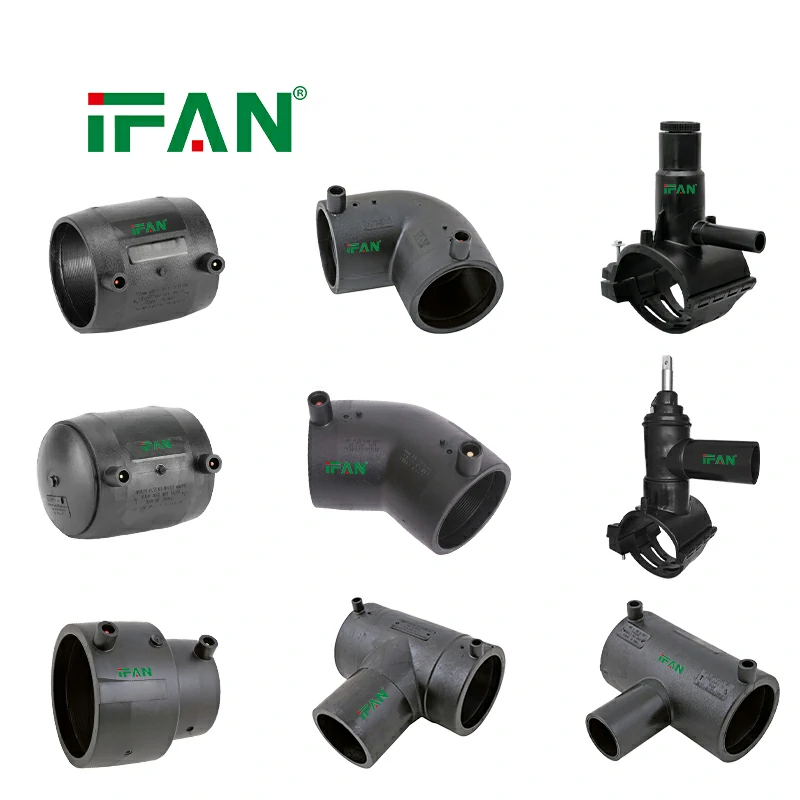
Water infrastructure projects require reliable pipe connections that can withstand long-term operation, changing ground conditions, and demanding installation environments. Choosing the right PE electrofusion fittings manufacturer is therefore an important decision for contractors, distributors, and water engineering companies.
PE electrofusion fittings are widely used in polyethylene water pipeline systems. They connect HDPE pipes through a controlled electric heating process. When correctly installed, the pipe and fitting form a permanent fused joint.
However, product selection involves more than comparing prices and dimensions. Buyers need to evaluate material quality, manufacturing consistency, product specifications, technical documentation, and supplier capabilities.
This article explains what water project buyers should consider when sourcing PE electrofusion fittings from a manufacturer.
1. Why Water Projects Use PE Electrofusion Fittings
Polyethylene pipes are widely used in municipal water distribution, underground water supply, irrigation, and other infrastructure applications.
Electrofusion technology offers a practical connection method for these systems. Each fitting contains an embedded resistance wire. An electrofusion control unit supplies electrical energy to heat the connection area.
The pipe surface and fitting interior soften and fuse together. After the specified cooling period, the joint becomes a permanent part of the pipeline.
Several characteristics make this connection method suitable for water projects.
Reliable Fused Connections
Electrofusion creates a joint through the fusion of compatible polyethylene materials. Correct surface preparation and controlled welding help produce a strong, continuous connection.
This is particularly useful for underground pipelines, where future repairs can be difficult and expensive.
Corrosion Resistance
PE fittings do not suffer from the electrochemical corrosion associated with many metallic pipeline components.
This property makes them suitable for buried water distribution networks and environments where corrosion protection is an important consideration.
Flexible Installation Options
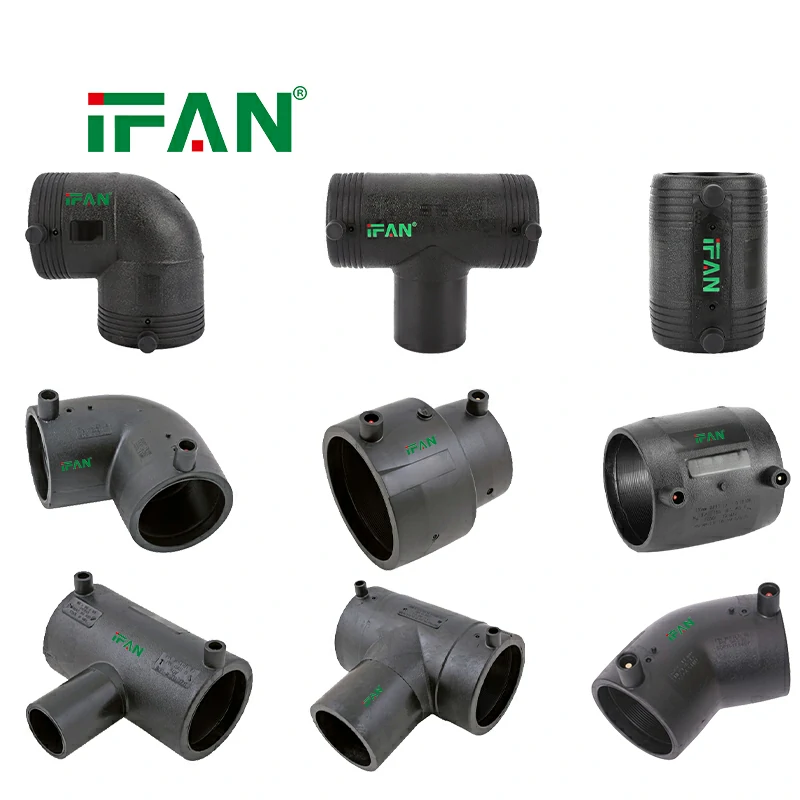
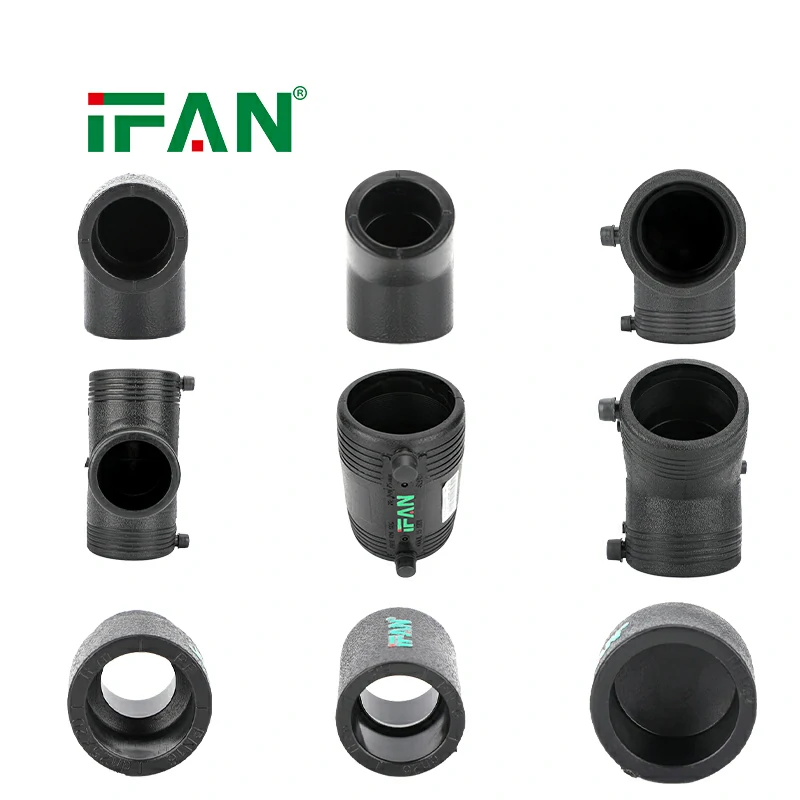
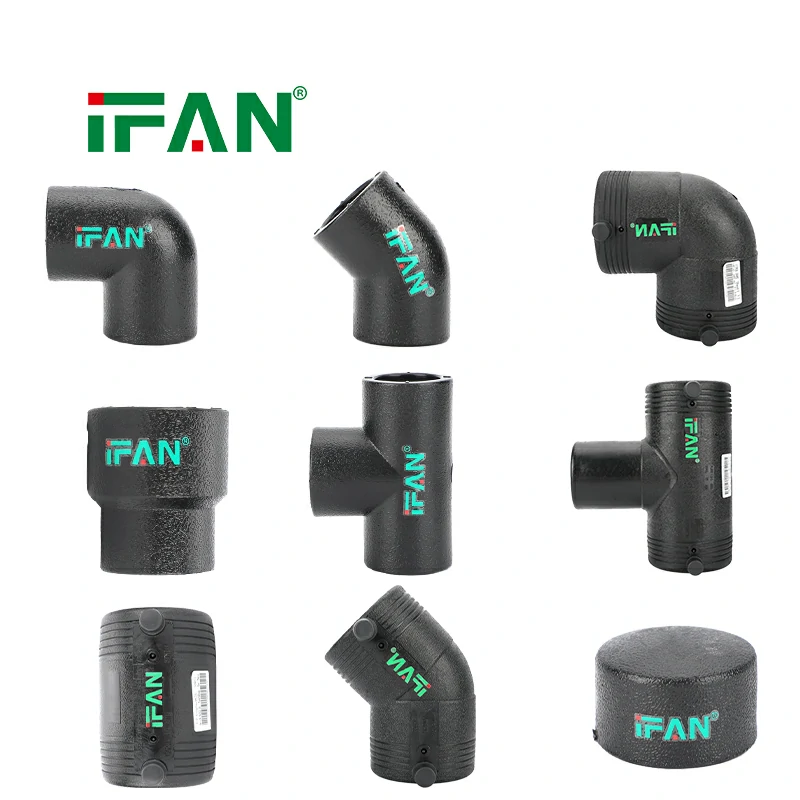
Electrofusion fittings are available in different configurations. They can connect straight pipes, change pipeline direction, reduce pipe diameter, and create branch connections.
They are also useful in locations where other joining methods may be difficult to operate.
Suitable for Different Pipeline Layouts
Water projects rarely use only straight pipes. They often include branches, changes in direction, diameter transitions, and service connections.
A suitable electrofusion fitting range helps contractors complete these different pipeline sections with compatible components.
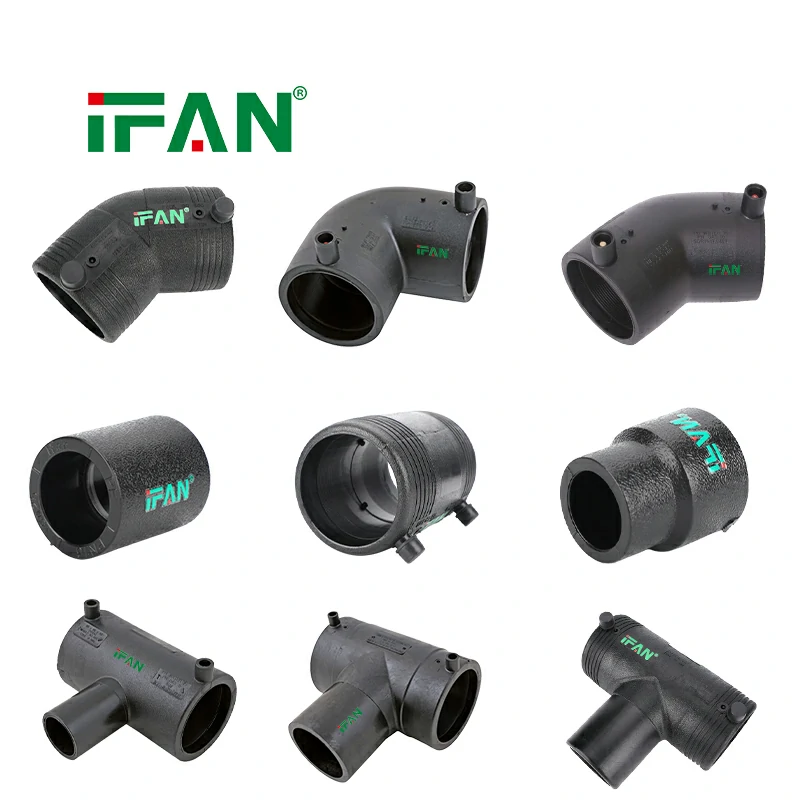
2. Main Types of PE Electrofusion Fittings for Water Projects
A professional manufacturer should offer a product range that supports common pipeline configurations.
The exact range depends on the manufacturer’s production capabilities and product specifications.
Electrofusion Couplings
Electrofusion couplings connect two HDPE pipe ends of the same nominal outside diameter.
They are commonly used in straight pipeline sections, pipe repairs, and underground water distribution networks.
For contractors, consistent dimensions and clearly identified fusion parameters are important when purchasing couplings in large quantities.
Electrofusion Elbows
Electrofusion elbows change the direction of a pipeline.
Common configurations include 45-degree and 90-degree elbows, depending on product availability.
They help engineers design pipeline routes around buildings, roads, underground structures, and other obstacles.
Electrofusion Tees
Electrofusion tees create branch connections from a main water pipeline.
They are useful in municipal distribution networks, irrigation systems, and industrial water supply projects.
Equal tees connect branches with matching nominal diameters. Reducing tees allow a smaller branch connection.
Electrofusion Reducers
Electrofusion reducers connect HDPE pipes with different outside diameters.
They help accommodate changes in pipeline size while maintaining a fused connection.
Buyers should check both connection dimensions and the approved SDR range before ordering.
Electrofusion Tapping Tees
Tapping tees provide a branch connection from an existing main pipeline.
Depending on the design, they may support service connections without requiring the same arrangement as a conventional equal tee.
Some models include an integrated cutter or other tapping mechanism. The exact operating procedure depends on the product design.
3. Material Quality: What Buyers Should Check
Material selection directly affects fitting performance.
For many pressure water pipeline projects, PE100 is a commonly specified polyethylene material grade. It is important to confirm that the fitting material meets the requirements of the intended pipeline system.
When evaluating a manufacturer, buyers should examine several material-related factors.
Polyethylene grade: Confirm whether the fitting is manufactured from PE100 or another specified material. Do not assume that all PE fittings have identical properties.
Raw material consistency: Ask how incoming raw materials are identified, inspected, and controlled.
Material traceability: Check whether the manufacturer can provide relevant batch information and product identification.
Application suitability: Confirm that the material and finished fitting are suitable for the intended water service.
For drinking water projects, additional requirements may apply. These can include local potable water approvals and material migration or hygiene requirements.
A general statement about PE100 material is not a substitute for project-specific approval.
4. Manufacturing Quality and Production Control
A reliable PE electrofusion fittings manufacturer needs consistent production processes.
Small variations in fitting dimensions or heating wire positioning can affect assembly and fusion performance. Quality control should therefore cover the production process rather than focus only on the finished appearance.
Injection Molding Quality
Many PE electrofusion fittings are manufactured through injection molding.
The molding process needs to maintain consistent dimensions and product geometry. Poor control can lead to dimensional variation, surface defects, or problems during pipe insertion.
Buyers should ask about dimensional inspection procedures and production consistency.
Heating Wire Positioning
The resistance wire is a critical component of an electrofusion fitting.
Its position and arrangement influence how heat is distributed during the fusion cycle.
Manufacturers should control the heating element installation process and verify that the finished product meets its specified performance requirements.
Terminal and Barcode Identification
Electrofusion fittings commonly have electrical terminals for connection to a compatible control unit.
Many products also carry barcode labels containing fusion information.
Clear identification helps installers select the correct welding parameters. Buyers should confirm that the product information is compatible with the electrofusion equipment used on their projects.
Finished Product Inspection
A suitable quality control program may include dimensional checks, visual inspection, electrical resistance checks, and product performance testing.
The specific inspection and test requirements depend on the applicable product standards and manufacturer specifications.
For large infrastructure orders, buyers should request relevant inspection records and technical documents before shipment.
5. Standards and Certifications for Water Pipeline Projects
Standards are an important part of supplier evaluation.
For polyethylene water supply systems, ISO 4427 is a key international standard series. ISO 4427-3 covers PE fittings used in water supply and other specified pressure applications.
EN 12201 is another relevant standard series for polyethylene piping systems intended for water supply and other specified applications.
However, buyers should not assume that a manufacturer complies with every standard simply because its catalogue mentions ISO 4427 or EN 12201.
Check the following information:
- The exact standard and edition referenced.
- Whether the standard applies to the fitting or the complete piping system.
- The relevant product type and dimensional range.
- The pressure classification and intended application.
- Available test reports and certificates.
- Any additional approvals required by the destination market.
Different countries and project owners may require additional testing, certification, or product registration.
For drinking water infrastructure, confirm the applicable local requirements before placing an order.
6. How to Select the Right Manufacturer for a Water Project
Choosing a manufacturer is a purchasing decision with long-term consequences.
A low quotation may not represent the best overall value if product specifications, documentation, or delivery arrangements are unsuitable.
Consider the following factors when comparing suppliers.
Product Range and Size Availability
Check whether the manufacturer can supply the fitting types and dimensions required by your project.
A suitable supplier should be able to clarify its available couplings, elbows, tees, reducers, and tapping tees.
For projects with multiple pipe sizes, confirm the available combinations before finalizing the purchasing list.
Technical Documentation
Ask for product catalogues, dimensional drawings, technical data sheets, and applicable test documents.
These materials help engineers verify whether the products match the project specifications.
A manufacturer that provides clear technical information can make procurement and approval work more efficient.
Production Capacity and Delivery Planning
Large water projects often require fittings in several batches.
The supplier should be able to explain its production schedule, stock availability, lead times, and shipping arrangements.
For urgent projects, check which standard products are available from existing inventory.
Customization and OEM Support
Some buyers need customized packaging, labels, product identification, or other OEM arrangements.
Discuss these requirements before production begins.
The manufacturer should confirm which options are available and whether they affect the order quantity or delivery schedule.
Communication and After-Sales Support
Technical questions can arise during product selection, installation, and project inspection.
Responsive communication helps resolve specification issues before they affect construction progress.
Buyers should also clarify the process for handling quality concerns and product claims.
7. Important Purchasing Details for Bulk Orders
When sourcing PE electrofusion fittings for a water project, a clear purchasing specification reduces misunderstandings.
Prepare the following information before requesting a quotation:
| Purchasing Detail | Information to Confirm |
|---|---|
| Product type | Coupling, elbow, tee, reducer, or tapping tee |
| Material grade | PE100 or specified alternative |
| Nominal diameter | Required pipe and fitting sizes |
| SDR compatibility | Approved pipe dimensional range |
| Pressure requirements | Project design pressure and applicable rating |
| Standards | Required product and system standards |
| Application | Drinking water, raw water, irrigation, or other service |
| Quantity | Required quantity for each size and type |
| Documentation | Technical sheets, test reports, and certificates |
| Packaging | Standard or customized packaging |
| Delivery | Required shipment date and destination |
It is also useful to provide the project specification or fitting schedule.
This allows the manufacturer to review the requirements and identify possible compatibility issues before production.
Do not select fittings based on nominal diameter alone. Pipe dimensions, SDR compatibility, pressure requirements, and product approvals must all be checked.
8. Installation Support Is Part of Product Selection
Even a well-manufactured fitting can fail if installation procedures are incorrect.
A professional supplier should provide clear product information to support proper installation.
For electrofusion water pipeline connections, the main installation requirements include:
- Cut the HDPE pipe squarely.
- Mark the required insertion depth.
- Mechanically scrape the fusion area to remove the oxidized surface.
- Clean the prepared area using an approved cleaning method.
- Check pipe roundness and alignment.
- Insert the pipe into the fitting to the specified depth.
- Secure the assembly with suitable clamps.
- Enter or scan the correct fusion parameters.
- Complete the fusion cycle without disturbing the joint.
- Maintain the specified cooling time before further handling.
Fusion voltage, heating time, and cooling time must follow the fitting manufacturer’s instructions and compatible control unit requirements.
Installers should also follow applicable project procedures and local regulations.
9. Why Work with IFAN for PE Electrofusion Fittings?
Selecting a suitable supplier is important for distributors, plumbing wholesalers, contractors, and water infrastructure buyers.
IFAN supplies plumbing and piping products for different international markets. Our product range includes plastic pipes, pipe fittings, valves, and related pipeline components.
For customers sourcing PE electrofusion fittings, product specifications and project requirements should be confirmed before ordering. This includes fitting types, dimensions, material requirements, and intended applications.
IFAN supports OEM and ODM cooperation for customers with specific product and packaging requirements. We can discuss customized sourcing needs and product selection for different markets.
Whether you are purchasing for a municipal water project, expanding a distribution business, or sourcing components for an engineering contractor, clear specifications help build an efficient purchasing process.
Contact IFAN to discuss your product requirements and request further information about available plumbing and piping products.
Conclusion
Finding the right PE electrofusion fittings manufacturer for water projects requires careful evaluation.
Buyers should look beyond the quotation and examine material specifications, product dimensions, manufacturing quality, technical documentation, and delivery capabilities.
A suitable fitting range should cover the pipeline configurations required by the project. Products must also match the pipe system and applicable water supply standards.
By working with a manufacturer that understands product requirements and supports clear technical communication, buyers can improve procurement efficiency and reduce avoidable project risks.
For water infrastructure projects, reliable connections begin with suitable products, accurate specifications, and controlled installation procedures.