The Benefits of Using HDPE Fittings for Water Distribution Systems
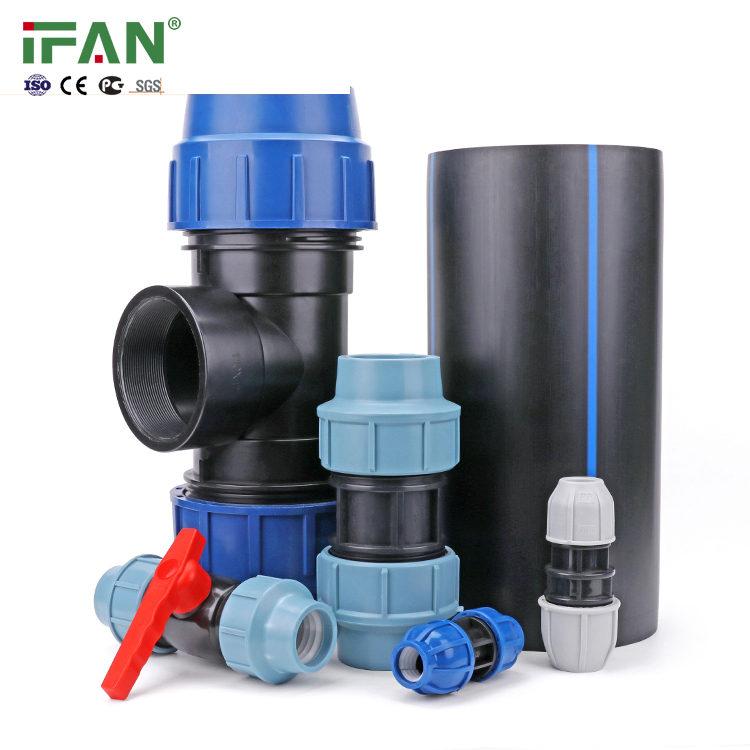
As the use of high-density polyethylene (HDPE) fittings continues to grow in popularity, it is important to understand the benefits they provide for water distribution systems. HDPE fittings are a crucial component of any water distribution system and offer unique features and functions that make them an ideal choice for a variety of applications.
The first and perhaps most significant benefit of HDPE fittings is their resistance to corrosion and wear. Unlike metal fittings, HDPE fittings are highly resistant to corrosion and chemical attacks, making them a durable and long-lasting option for any water distribution system. This is especially important in areas with high levels of acidity, salt, or other corrosive elements, where traditional metal fittings can quickly deteriorate and require frequent replacements.
Another benefit of HDPE fittings is their flexibility and ease of installation. While traditional metal fittings require welding or soldering to install, HDPE fittings use mechanical connections to join pipes, making them quicker and easier to install. This can save time and reduce labor costs, especially in large-scale projects or in applications where space is limited.
Perhaps the most important benefit of HDPE fittings is their ability to maintain consistent flow and pressure. Unlike metal fittings, HDPE fittings do not rust or corrode over time, which can lead to blockages or uneven flow. Additionally, HDPE fittings have a lower coefficient of friction than metal fittings, which means that water can flow more easily and efficiently through the system. This can lead to lower energy costs and increased water savings, particularly in large-scale applications.
Other benefits of HDPE fittings include their compatibility with a wide range of pipe materials, including PVC, copper, and other plastics, as well as their high resistance to impact and repeated bending. Additionally, HDPE fittings are lightweight and easy to transport, making them an ideal choice for remote or hard-to-reach locations.
In conclusion, HDPE fittings offer a wide range of benefits for water distribution systems. Their resistance to corrosion and wear, flexibility and ease of installation, consistency of flow and pressure, and wide range of applications make them a valuable investment for any water distribution project. By choosing HDPE fittings, companies can save time and money on labor and maintenance costs while improving the efficiency and sustainability of their water distribution systems.
IFAN factory started in 1993. And IFAN has workshop 120000 square meter with 610 staff. IFAN can design and produce all plumbing pipe and fitting include PPR,PVC,CPVC PPSU HDPE PEXA PEXB PERT pipe and fitting ,brass fitting, brass ball valve ,heating system , gas system , sanitary faucets and hose, In the past 30 Years, IFAN has never forgotten his mission-To protect health and safety. And IFAN factory use best materials to produce high quality pipe and fittings with automatic production line and high tech quality control machines. The most important,IFAN can guarantee that all pipes and fittings manufactured by IFAN are qualified.
Free Sample(Click Here to Get Free Sample)