
The No-Fuss Solution Pros Actually Use
Why Push Fittings Are a Big Deal If You’ve Done Any Plumbing
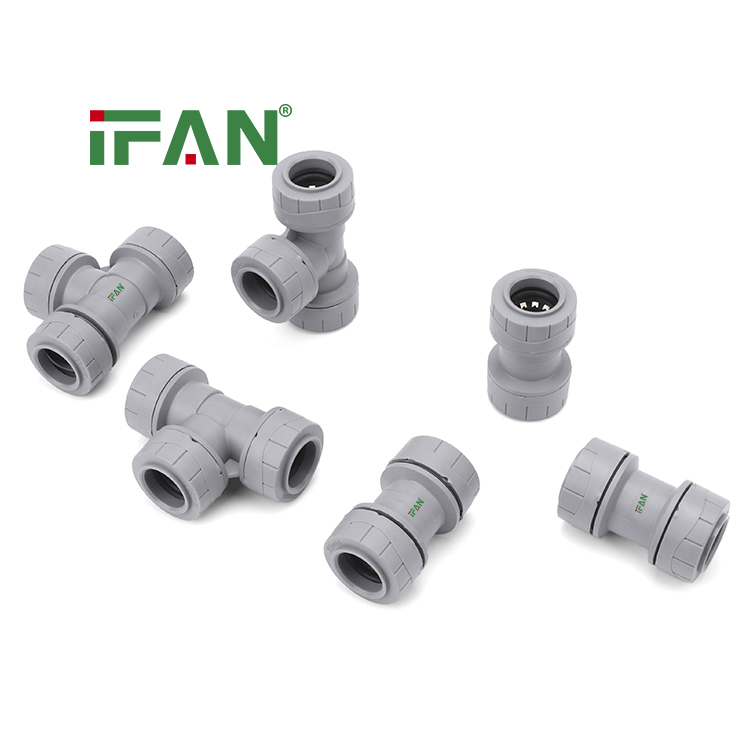
If you’ve ever dealt with traditional hot fusion welding, you know the pain. Carrying the welding machine, controlling the temperature, timing everything perfectly — one slip and the joint is ruined. IFAN Grey PPR Push Fittings flip that whole script. Push it in, it locks, done. Three seconds per joint. No flame, no electricity, no waiting around. Whether it’s a home renovation, a commercial project, or irrigation work, these fittings handle it all. The grey push fittings from IFAN are made from food-grade PPR material — no lead, no heavy metals, completely safe for drinking water systems. If you’ve got kids or elderly family members at home, this matters a lot.
Tools You Need Before You Touch a Pipe
Don’t skip this part. If your tools aren’t ready, everything downstream falls apart. You need a PPR pipe cutter — not a hacksaw, not a pair of scissors, a proper cutter. A depth marker pen to draw the insertion line on the outside of the pipe. A deburring tool to clean up the pipe edge. Gloves and safety glasses. Wipe down both the pipe and the fitting with a dry cloth before you start. Any dust or debris on the contact surface kills the seal.
Three Steps to Install — Follow This and You Won’t Mess Up
Step 1: Cut the pipe clean. Use the PPR cutter for a straight, even cut. Then run the deburring tool around the edge. A rough edge means a bad seal, and a bad seal means leaks later. Don’t rush this.
Step 2: Mark the depth. Use the depth marker pen to draw a line on the pipe. This tells you exactly how far to push. Inside the IFAN fitting, there’s a stainless steel collet with inward-facing teeth. When you push the pipe in far enough, it bites down and locks. Too shallow and it won’t grip. Too deep and you bottom out. The mark keeps you right on target.
Step 3: Push and lock. Align the pipe with the fitting and push it in steadily until you hear a click. The EPDM rubber O-ring inside compresses evenly around the pipe wall, creating a watertight seal that nothing gets through. After that, turn the water on. No curing time, no waiting, no fuss.
Three Mistakes Even Experienced Guys Make
Mistake one: skipping the deburring. A rough pipe edge means the O-ring can’t seat properly, and you’ll get leaks eventually. Mistake two: wrong insertion depth. If you don’t push it to the marked line, the collet doesn’t engage, and under pressure the joint will pull apart. Mistake three: skipping the pressure test after installation. IFAN recommends pressure testing every installation — bring it up to standard pressure, hold it, and confirm there’s no drop before you call it done.
Why IFAN? Because 30 Years of Experience Shows
IFAN has been making piping systems since 1993. That’s over 30 years, a 120,000 square meter factory, and a team of 600-plus people. This isn’t some backyard operation. The grey PPR push fittings use precision injection molding with a stainless steel collet and EPDM seal combination — high pressure, high pull-out resistance, works for both cold and hot water. Sizes run from 20mm all the way to 160mm, and you can customize the color too — green, white, grey, whatever you need. For home plumbing or commercial work, IFAN Grey PPR Push Fittings get the job done right. Pick the fitting that saves you headaches. Reach out to the IFAN team for samples or technical support.





