
IFAN PEX Press Fittings: Pressure Testing Procedures That Actually Save You Money
Skip the Test? You’re Basically Gambling
Every experienced plumber knows one thing — “30% installation, 70% testing.” You can make the prettiest pipe connections in the world, crimp every fitting perfect, but if you don’t pressure test, you’re crossing the road with your eyes closed. Something will go wrong eventually.
Especially with IFAN PEX Press Fittings — the product quality is rock solid out of the factory, but on-site variables are unpredictable. Was the plumber skilled enough? Any scratches on the pipe? Was the crimping tool set to the right force? You can’t tell any of that just by looking. The only way to be sure? Do a proper pressure test.
Today I’m walking you through the entire pressure testing process step by step — especially the details you need to pay attention to when using IFAN PEX Press Fittings.
Before You Test — Do These Prep Steps First
Don’t just start pumping water into the pipes and cranking up the pressure. That’s rookie behavior. Before you test, confirm these things:
First: every IFAN PEX press fitting is fully crimped. How do you know? Use the go/no-go gauge. If the gauge slides into the crimp ring gap, it’s not tight enough — re-crimp it. IFAN includes dedicated gauges with their fittings. If the gauge doesn’t fit, you’re good.
Second: purge all air from the system. Trapped air gives you fake pressure readings. You’ll think you passed the test when you actually didn’t. Open every high-point bleed valve and let water push all the air out until you see solid water with zero bubbles.
Third: open every valve and cap every outlet. You’re testing the whole system’s integrity. Not a single opening should be left unsealed.
Sounds simple, right? But I’ve seen so many guys skip these steps to save time, end up with fake test data, and then get called back for leaks months later.
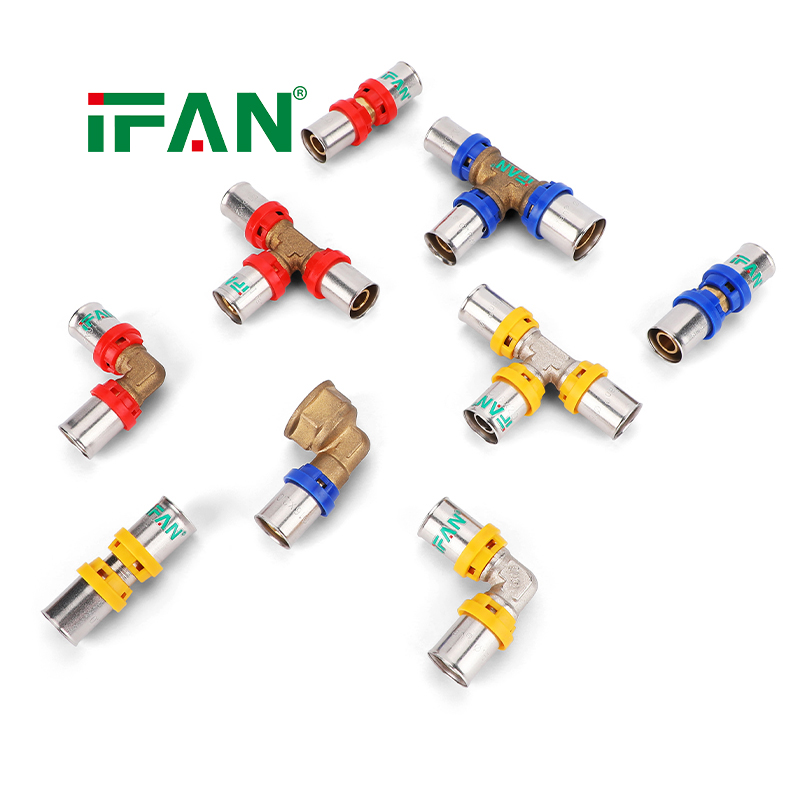
IFAN PEX Press Fittings Test Standards — Memorize These Numbers
Here are the recommended pressure test parameters for IFAN PEX Press Fittings:
| Test Item | Requirement |
|---|---|
| Test Pressure | 1.5× working pressure, minimum 0.6 MPa |
| Hold Time | At least 30 minutes (60 minutes recommended) |
| Allowable Drop | No more than 0.05 MPa in 30 minutes |
| Water Temp | Between 5°C and 40°C |
For example, if your home water pressure is 0.4 MPa, you test at 0.6 MPa. Hold for 30 minutes. If the gauge drops less than 0.05 MPa — you passed.
IFAN PEX Press Fittings use stainless steel collet designs with super strong bite force. In my experience testing hundreds of installations, IFAN fittings have never failed a pressure test. Not once. That’s confidence you can count on.
The Actual Test Procedure — Follow These Steps Exactly
Step 1: Hook up the test pump. Connect the pump to the lowest outlet on your system. Attach a pressure gauge to the pump’s output. Use a gauge with double the range of your test pressure — if you’re testing at 0.6 MPa, use a 1.6 MPa gauge for accurate readings.
Step 2: Pressurize slowly. This is where most people mess up. Don’t slam the pressure up in seconds — that’s the fastest way to blow a fitting apart. Instead, increase by 0.1 MPa per minute. While pressurizing, visually scan every fitting for any signs of seepage.
Step 3: Hit test pressure and start the clock. Say you reach 0.6 MPa — start your timer. Wait 30 minutes. You can go do other things, but stay nearby.
Step 4: Watch the gauge. When 30 minutes is up, check how much pressure you lost. Less than 0.05 MPa? Congratulations, you passed. More than that? You’ve got a leak somewhere.
Step 5: Find the leak. Grab a paper towel and start wiping every IFAN PEX press fitting one by one. Wherever the towel gets wet — that’s your leak point. Re-crimp that fitting, retest, and repeat until everything passes.
Test Failed? Don’t Panic — Do This Instead
If you fail, don’t start ripping everything apart. In 80% of cases, it’s just trapped air. Bleed the system again and retest. The other common cause? An IFAN PEX press fitting that wasn’t fully crimped. Run the go/no-go gauge over every fitting and re-crimp what needs it.
IFAN’s press fittings are designed with deep collet teeth and strong bite force. As long as you use a proper crimping tool, they hold. But if you’re using a cheap knock-off tool? That’s a different story — so use the right equipment.
Final Word — From Someone Who’s Seen Too Many Leaks
Pressure testing takes five minutes. It saves you ten years of headaches. IFAN PEX Press Fittings are already built to last, but without a test, even the best product is a gamble. Treat pressure testing as the final insurance policy after every installation. Do it, and you sleep easy. Skip it, and you’re always wondering.
Spend 30 minutes testing now. Save yourself tens of thousands in repairs later. Go with IFAN, test properly, and live worry-free.





