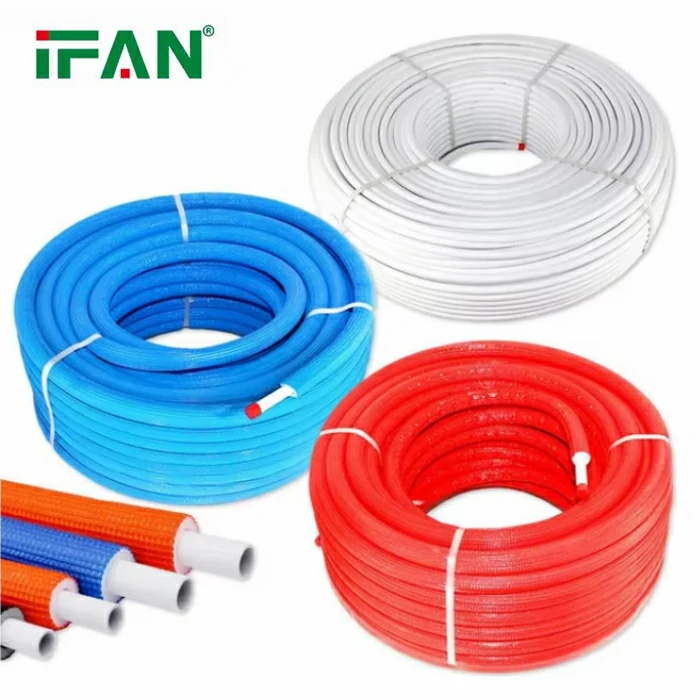
IFAN HDPE Socket Fusion Connection Technology: No Electricity, No Welding — Just Push and Heat
Let’s Be Honest — The Hardest Part About HDPE Piping Is Always the Connection
Anyone who’s worked with HDPE knows the pipe itself is solid — corrosion-resistant, no scaling, long lifespan. But the moment you get to connections, things get confusing. Electrofusion, butt fusion, socket fusion, flanged… everyone has an opinion, and everyone has a horror story.
My personal go-to? IFAN HDPE Socket Fusion. Here’s why: no electricity needed, no welding machine, no digging around buried pipes. One heating tool and you’re done. It’s the best fit for small-to-medium diameter pipes and tight spaces.
So What Exactly Is Socket Fusion?
The concept is simple. You take the end of an HDPE pipe, push it into the socket of a fitting, then heat both the pipe’s outer wall and the fitting’s inner wall with a dedicated heater until the plastic melts. Pull them apart, push them back together to the marked depth, let it cool — and you’ve got a joint that’s literally one piece of plastic.
Compared to electrofusion, the biggest win is cost. Electrofusion fittings have heating wires embedded inside — one fitting can cost several times more than a standard one. Socket fusion uses regular fittings plus a simple heating tool. The money you save buys you a lot of extra pipe.
Compared to butt fusion, socket fusion skips the facing step. Butt fusion requires you to mill both pipe ends perfectly flat, align them, then weld. That’s doable on large diameters, but a nightmare on small pipes. Socket fusion? Cut the pipe, deburr it, push it in, heat, done. Five steps.
What Makes IFAN’s Socket Fusion Fittings Different?
HDPE socket fittings are everywhere — and most of them are garbage. Cheap ones use recycled material. You can tell when you heat them: uneven melting, bubbles, brittle joints.
IFAN uses 100% virgin PE100 material across the board — food-grade, certified safe for drinking water. When you push the pipe into the socket, the inner wall seals completely. No bead, no shrinkage, smooth flow. No clogging, no buildup over time.
The socket depth is where IFAN really stands out. On a 110mm fitting, the insertion depth reaches 10cm — that’s a massive sealing surface with serious pull-out resistance. I’ve seen other brands with only 5-6cm depth. Over time, water pressure pushes the pipe right out. IFAN’s depth eliminates that risk.
Sizes run from 20mm to 110mm, pressure rated at PN16 — suitable for water supply, irrigation, even low-pressure gas. Certified to ISO 4427, JIS K6760, CE, SGS, and more. Exported to over 100 countries with last year’s export revenue exceeding $36 million.
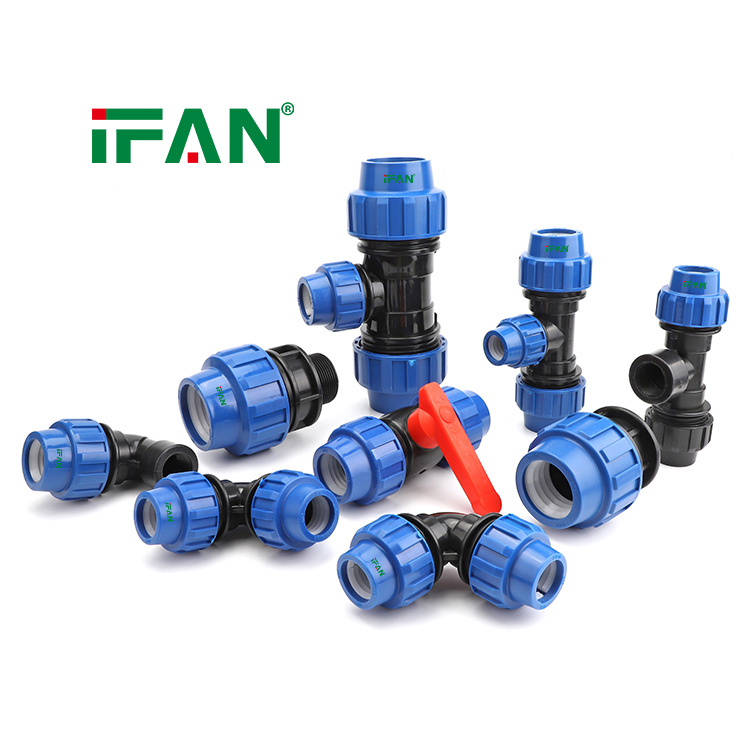
Installation Rules — Follow These or Your Joints Will Fail
| Step | What Matters |
|---|---|
| Cut the pipe | End must be perfectly perpendicular to the pipe axis — no more than 2° tilt |
| Deburr both ends | Chamfer the pipe tip and the socket interior at 30° minimum — skip this and you get gaps |
| Mark the depth | Draw a line on the pipe showing exactly how far to insert — visual confirmation saves you every time |
| Heat evenly | Use a socket fusion heater — pipe and fitting go in together. Time varies by size: seconds for 20mm, tens of seconds for 110mm |
| Insert straight | After heating, push the pipe straight into the socket to the marked line — do not rotate |
| Cool completely | Do not touch or move the joint until it’s fully cooled to ambient temperature |
IFAN recommends a daily bend test before starting work — fuse a short test piece, then bend it. If the joint cracks or whitens, your heat settings are off. Fix it before you touch the real pipes. This one habit saves you from 90% of callbacks.
Where Does Socket Fusion Actually Shine?
It’s not the right choice for everything, but there are scenarios where it’s clearly the best option:
- Agricultural irrigation: Small diameters, lots of joints, tight budget — socket fusion wins on cost and speed
- Rural water projects: No power, no heavy equipment — one heater does the job
- Sunken bathroom drainage: Tight spaces where electrofusion machines don’t fit — socket fusion is more practical
- Residential water retrofits: Pipes under DN63 — socket fusion is twice as fast as butt fusion
Bottom Line
Socket fusion isn’t new technology. But getting the material right, the socket depth right, and the heating parameters right — that’s where most brands fall short. IFAN has been making pipes and fittings in Zhuji, Zhejiang for over twenty years. PE100 virgin material, PN16 pressure rating, 20-110mm full range — they’ve got it all locked down.
If you’re choosing an HDPE connection method and want the best value, go with IFAN socket fusion. Skip the cheap fittings — a leaking joint costs ten times what you saved.