
Let me be real with you — after years of working with pipe systems, the thing I fear most is leaking copper insert PPR fittings. Think about it: plastic and metal are not natural partners. They expand and contract at completely different rates, and over time the joint loosens up. Water seeps out slowly. By the time you notice, your walls are soaked, your floors are warped, and the cost of tearing everything out to fix it is ten times what you saved on cheap fittings.
So today let’s talk about something that actually works — copper insert PPR fittings with leak-proof seals. And I’m going to push IFAN hard because once you use their stuff, you’ll see the difference immediately.
Why Copper Insert PPR Is a Game Changer
Why do standard PPR threaded fittings leak all the time? The brass insert inside is just too weak. Thin walls, smooth surface — when hot and cold water cycle through, the plastic fights against the brass. The insert slowly spins loose, and water follows. In the industry, we call this thread stripping. It’s the number one failure mode in PPR systems.
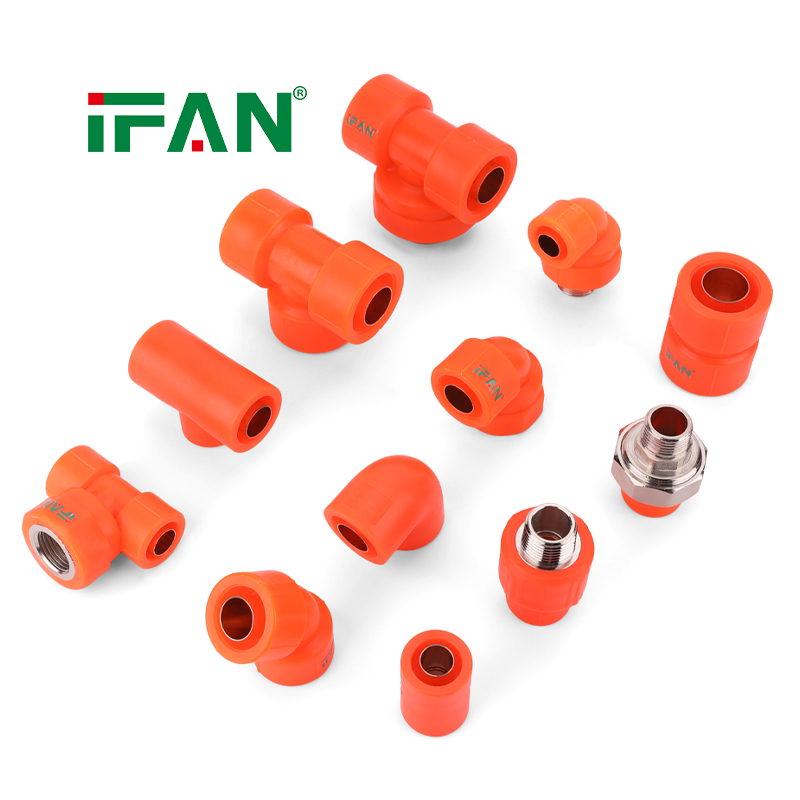
IFAN does it completely different. They use CW617N high-grade brass inserts with deep knurling on the surface. What does that mean? Rough ridges are cut into the brass, and when you fusion weld, the PPR melts right into those grooves and locks tight. You want it to spin? It won’t. Thermal expansion? It holds. That’s what a real leak-proof seal looks like.
Then there’s the seal ring. IFAN uses EPDM material, rated up to 120°C, resistant to long-term water exposure without hardening or deforming. Cheap fittings use regular rubber that turns brittle in two years and crumbles under pressure. No wonder they leak.
What Makes IFAN Copper Insert Fittings Actually Strong?
First, the material is real. IFAN uses imported PPR raw material — not recycled junk. The walls are thick and even, and after fusion welding, the plastic and brass insert become one solid piece. No moving parts, no leak potential.
Second, the size range is insane. From 20mm all the way to 110mm. Residential small pipes, commercial large mains — everything’s covered. You don’t need to mix and match brands or scramble for odd sizes.
Third, the certifications are solid. CE, ISO 9001, DVGW — all there. Meets drinking water standards, no harmful heavy metals. Safe for the whole family, especially kids and elderly.
Fourth, the warranty is aggressive. IFAN offers a 50-year warranty. Not many brands will put that in writing.
When Should You Really Use Copper Insert PPR?
Old house renovation with existing copper pipes — that’s the #1 use case. Your house already has copper water lines, and you want to switch to PPR mains without ripping everything out. Copper insert fittings are the perfect bridge. PPR on one side, copper on the other. No adapters needed, fewer joints, fewer leak points.
Water heater and boiler connections — that’s #2. Most of these devices have copper threaded ports. Screw in an IFAN copper insert PPR fitting directly — full seal rating, way more reliable than wrapping Teflon tape and crossing your fingers.
Commercial water mains — that’s #3. IFAN’s copper insert fittings come in PN16 and PN25 pressure ratings. Cold water, hot water, all covered. Commercial-grade performance, no compromises.
Don’t Cheap Out on Seals
I’ve seen too many people buy cheap fittings to save a few bucks, and a year later they’re tearing walls apart — spending ten times what they saved. IFAN copper insert PPR leak-proof fittings combine deep-knurled brass inserts, EPDM seal rings, and imported PPR material. All three together is what “leak proof” actually means.
Piping systems are hidden inside walls — you can’t see them, but you sure as hell feel them when they leak. Go with IFAN. Get it right the first time, and save yourself decades of headaches.





