Why This Question Matters More Than You Think
Let’s be real. Most people walk into a plumbing store, see rows of PPR fittings, and just grab whatever looks cheap. That’s how leaks happen. That’s how basements flood at 2 AM. The difference between threaded and socket fusion fittings isn’t just technical — it’s the difference between a system that lasts 30 years and one that gives up after 5.
IFAN has been making both types for over 20 years, and trust me, they’ve seen every failure scenario out there. So let me walk you through this the way a real plumber would — no textbook stuff, just what actually works on the job.
What’s the Real Difference Between These Two?
Threaded PPR fittings work exactly like you’d expect — they screw together. Male end goes into female end, you wrap some teflon tape, tighten it up, done. IFAN’s threaded fittings use precision-machined brass inserts molded right into the PPR body. The thread tolerance sits at ±0.1mm, which sounds tiny but makes a huge difference. No cross-threading, no stripping, no “wait let me try again” moments.
Socket fusion fittings are a completely different animal. There are zero threads. Instead, you take a fusion welding machine — IFAN sells their own line that heats to exactly 260°C — and you melt the pipe end and the fitting socket simultaneously. Then you push them together. The PPR material literally becomes one piece. Not glued. Not clamped. Fused. Once it cools, that joint is stronger than the pipe around it.
When Threaded Fittings Make Total Sense
Here’s where people get it wrong — they think threaded is old school and fusion is always better. Not true. Threaded fittings win in specific situations, and ignoring that costs you.
First, connecting PPR to metal. Every water heater, every boiler, every metal valve out there has threaded ports. You can’t hot-fuse metal. You need a threaded adapter. IFAN makes male and female threaded elbows, tees, unions, and direct couplings that screw right onto standard 1/2″ or 3/4″ metal threads. The brass inserts inside won’t corrode or loosen even when you’re cycling hot and cold water dozens of times a day.
Second, renovation work. If you’re ripping out old pipes in a bathroom and half the system is already threaded iron or copper, mixing in fusion fittings means you’d have to cut and re-fuse constantly. Threaded lets you swap sections fast. A plumber with IFAN threaded unions can disconnect, replace, and reconnect in minutes — not hours.
Third, temporary setups. Construction sites, event venues, test rigs — anywhere you might need to take something apart later. Threaded is your friend there. Fusion is permanent. That’s great for new builds, terrible when you need flexibility.
When Socket Fusion Is the Only Right Choice
Now flip the scenario. You’re building a house from the foundation up. Every pipe run is PPR. No metal connections in sight. This is where fusion absolutely destroys threaded in every measurable way.
No threads means no crevices. Threaded joints have tiny gaps between the male and female threads where water sits, bacteria grows, and corrosion starts. IFAN’s socket fusion joints have a smooth inner bore — surface roughness Ra ≤ 0.007mm. That’s smoother than most people’s kitchen countertops. No buildup, no clogs, no biofilm.
The pressure rating tells the story too. IFAN’s socket fusion fittings handle up to 2.5MPa at 70°C continuously. Threaded fittings, even the best ones, start losing seal integrity around 1.6MPa under the same conditions. That gap matters a lot in multi-story buildings where water pressure at the ground floor can spike.
I worked on a project in Shenzhen last year — a 32-story residential tower. The contractor tried threaded fittings on the main riser for the first three floors. Leaks started at week four. Switched everything to IFAN socket fusion from floor four up. Eighteen months later, zero issues. The difference wasn’t close.
What About Installation Cost and Speed?
Fair question. Threaded fittings are faster to install — no machine, no heating, no waiting for cooling. You literally screw and go. For a small repair job, that saves 20-30 minutes easy.
But here’s the thing nobody talks about. Fusion fittings cost more upfront — maybe 15-20% more per fitting. But over a full house installation, you save on labor because fusion goes faster than people think. A skilled plumber with an IFAN fusion machine can do a joint in 8-10 seconds. And you never have to come back and fix a threaded joint that slowly leaked over two years.
The math works out. IFAN even offers free fusion training videos and on-site support for contractors. That alone saves thousands in callbacks.
My Honest Recommendation
Use both. Seriously. Not everything in a plumbing system is the same.
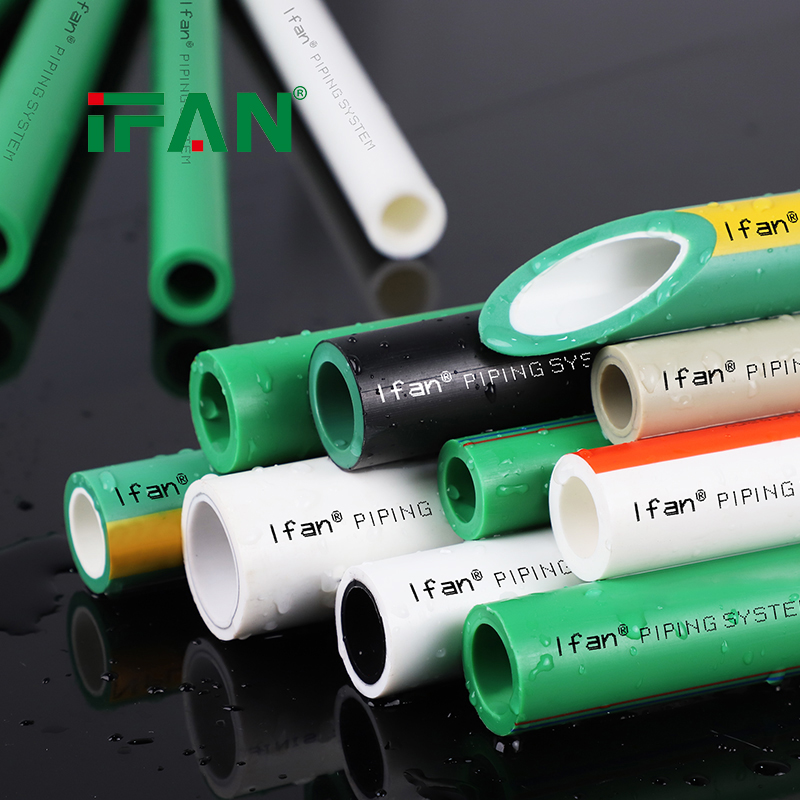
For main water lines, riser pipes, buried sections, and any run where you want zero leak risk — go IFAN socket fusion. Their fusion fittings from 20mm to 160mm cover every residential and commercial application. The green pipe and white fittings look clean, the joint strength is unmatched, and the smooth bore keeps your water flowing without resistance.
For connections to appliances, valves, meters, and any spot where you might need maintenance access — go IFAN threaded. Their brass-insert fittings handle vibration, thermal cycling, and repeated disassembly without degrading.
IFAN makes the complete range. One brand, one quality standard, one supply chain. No mixing brands, no compatibility headaches. And if you’re a contractor or distributor, they ship globally with samples available within 48 hours.
Stop guessing. Match the fitting to the job. And when in doubt, ask IFAN — they’ll tell you exactly which one fits your pipe, your pressure, and your budget. That’s what 20 years of making PPR systems gets you.