IFAN Threaded vs Solder End Brass Ball Valves: Which One Should You Actually Pick?
The Short Answer: There’s No “Best” — Only “Best for Your Situation”
Every time someone asks me whether to go threaded or solder end for a ball valve, I want to ask back — “Where are you installing it? What’s it for?” Because honestly, this question can’t be answered in one sentence.
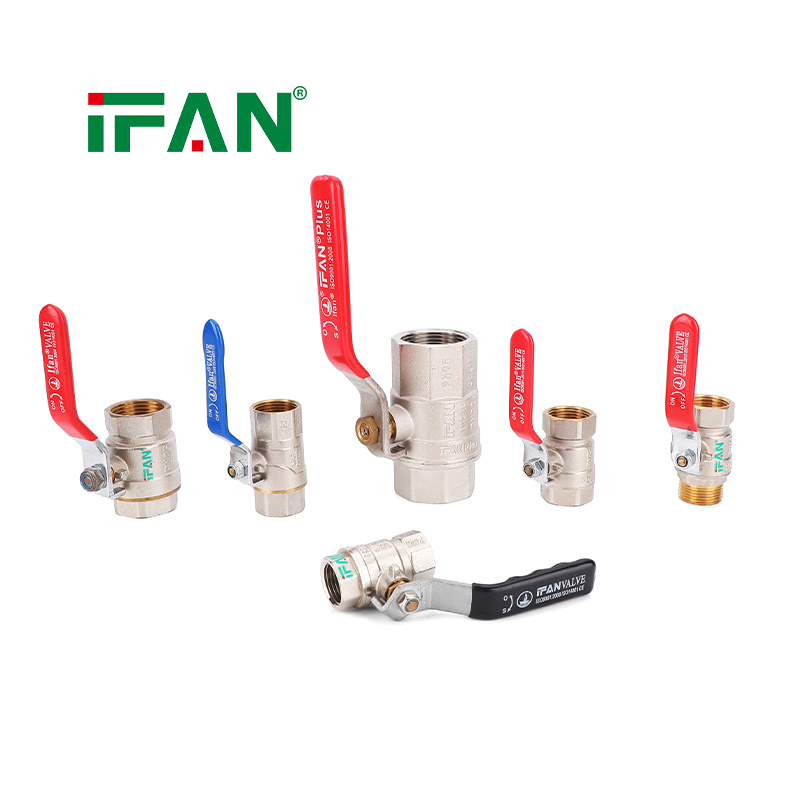
IFAN Threaded End Brass Ball Valves and IFAN Solder End Brass Ball Valves look almost identical, but they behave completely differently in real life. Pick the wrong one, and you’re either stuck with a nightmare installation or dealing with leaks down the road. Let’s break this down properly so you get it right the first time.
Threaded End: Flexible, Easy to Remove — A Plumber’s Best Friend
Threaded end means the pipe has machined threads on the outside. You just screw the valve on — no welding, no heat fusion, just a wrench.
The biggest advantage of IFAN Threaded End Brass Ball Valves? Flexibility. Your kitchen pipe springs a leak? A plumber shows up, unscrews the old valve, slots in a new one, done in ten minutes. Solder end? Shut off the water, cut the pipe, re-solder, re-test pressure — that’s easily an hour or two.
So threaded end is perfect for:
- Exposed piping — kitchens, bathrooms, anywhere you can see the pipes
- Frequently accessed valves — right after the water meter, at water heater connections
- Rentals or temporary setups — you can unscrew and take them with you when you move
IFAN’s threaded valves use precision-cut threads — standard tooth profile, tight fit, no cross-threading. I’ve got IFAN threaded valves under my own kitchen sink. Three years, removed twice for cleaning, threads still perfectly sharp. That’s quality you can actually feel.
Solder End: The Invisible Champion for Hidden Pipes
Solder end means the pipe socket fuses directly with the valve body using heat soldering or copper brazing. Once it’s done, it’s one solid piece — no joint to see, no gap to leak.
IFAN Solder End Brass Ball Valves shine in one area above all else — zero leak risk. Sure, threaded connections are tight when new, but over time the PTFE tape degrades, threads wear, and slow seepage creeps in. Soldered joints? They’re one piece. There’s no seam. There’s nothing to leak.
Solder end is the clear winner for:
- Concealed piping — buried in walls, under floors
- Main-to-branch connections in any piping system
- High-seal demands — underfloor heating manifolds, boiler inlets and outlets
IFAN’s solder end valves have a well-designed socket depth that lets solder fill completely — no cold joints, no voids. A buddy of mine runs underfloor heating projects. His entire house uses IFAN solder ball valves. Five years, zero issues at a single joint. He told me they’re the most worry-free valves he’s ever used.
So How Do You Decide? Here’s the Breakdown
| Factor | IFAN Threaded End | IFAN Solder End |
|---|---|---|
| Installation | Easy — wrench only | Medium — needs soldering tools |
| Removal & Repair | Super easy | Basically permanent |
| Leak Resistance | Good, but not perfect | Top-tier, virtually zero |
| Best For | Exposed, temporary, high-access | Concealed, permanent, high-seal |
| Price | Slightly cheaper | Slightly more |
See? It’s not about which is better — it’s about what your situation demands.
IFAN Does Both, and Does Both Really Well
Some brands only make one type. You want to mix and match in a project? Good luck finding matching pieces. IFAN? They cover both threaded and solder end across the full DN15 to DN50 range. One project, one brand, one consistent quality level — threaded where it’s exposed, solder where it’s hidden. Done.
And here’s what I really respect: whether threaded or solder, every IFAN ball valve uses forged brass bodies and PTFE seals. No cutting corners on one line to save money. Same quality, same standards, no compromises.
Final Word — From Someone Who’s Seen It All
Don’t just pick a valve based on price or what someone told you. Think about where it’s going, how often you’ll touch it, and whether you might need to remove it later. IFAN Threaded End and Solder End Brass Ball Valves are both excellent — the trick is putting the right one in the right spot.
Get it right, and you won’t think about it for a decade. Get it wrong, and it’ll haunt you forever.
Trust me on this: go with IFAN. Threaded or solder — you really can’t go wrong.