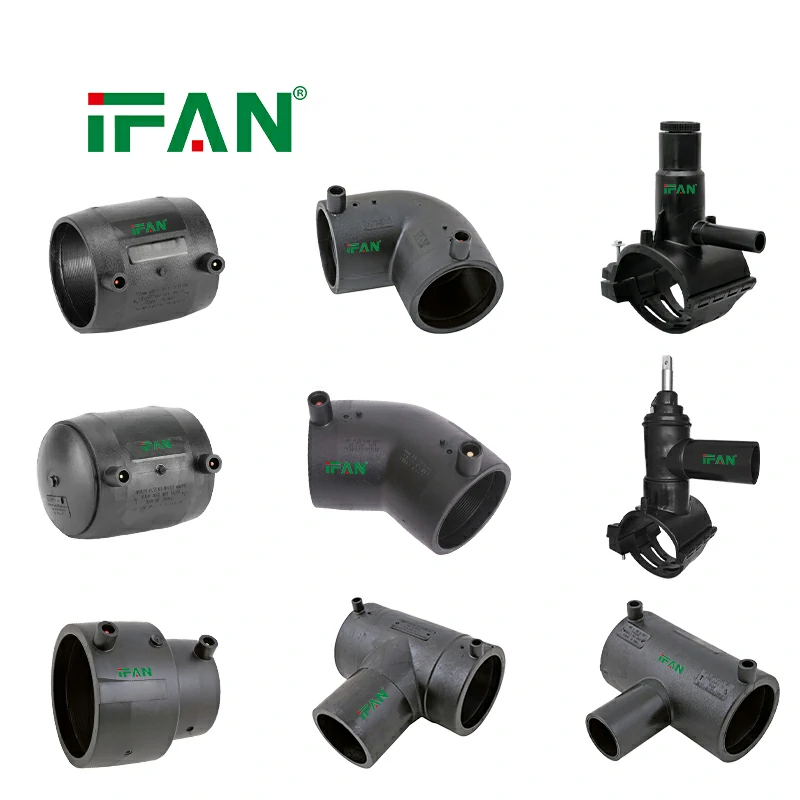
Reliable pipe connections are essential for modern water supply systems. Whether a project involves residential distribution, municipal pipelines, or industrial water networks, every joint must provide a secure and dependable connection.
HDPE electrofusion fittings are widely used in polyethylene water piping systems. They connect HDPE pipes through a controlled electric heating process. This method creates a fused joint between compatible pipe and fitting surfaces.
Compared with some traditional mechanical connections, electrofusion offers a compact connection method with no need for external welding flames. It is especially useful in areas where installation space is limited or where complex pipeline layouts require different fitting configurations.
Understanding fitting types, material compatibility, installation procedures, and quality requirements helps contractors and buyers select suitable products for water supply projects.
What Are HDPE Electrofusion Fittings?
HDPE electrofusion fittings are polyethylene pipe connectors with built-in electrical heating elements. These elements are usually embedded within the fitting’s internal surface.
During installation, the HDPE pipe is inserted into the fitting’s socket. An electrofusion control unit supplies a specified electrical current to the heating wires.
The heat melts the contact surfaces of the pipe and fitting. As the material cools, it forms a fused connection.
Unlike a mechanical joint, the connection does not rely only on external compression or a separate sealing ring. Instead, the compatible polyethylene surfaces become joined through the fusion process.
Common electrofusion fitting materials include PE100 and other grades specified for pressure piping applications. The selected fitting must match the pipe material, dimensions, pressure requirements, and applicable standards.
Why Use Electrofusion Fittings in Water Supply Systems?
1. Reliable Fused Connections
Electrofusion creates a joint by melting and bonding compatible polyethylene surfaces.
When the pipe preparation, fitting installation, and fusion cycle are completed correctly, the joint becomes an integrated part of the piping system.
This is important for water supply networks where leakage prevention is a major project requirement.
2. Suitable for Restricted Installation Spaces
Electrofusion equipment can be useful in locations where there is not enough room for larger butt fusion machines.
The method is commonly considered for repair work, service connections, and complicated pipeline sections.
However, installers still need sufficient space to prepare the pipe surface, position the fitting, and operate the fusion equipment safely.
3. Corrosion Resistance
HDPE is a non-metallic material. It does not rust like steel or iron.
Electrofusion fittings share the corrosion-resistant characteristics of compatible polyethylene materials. This makes them suitable for many buried water supply applications.
Their performance still depends on the surrounding environment, operating conditions, and correct product selection.
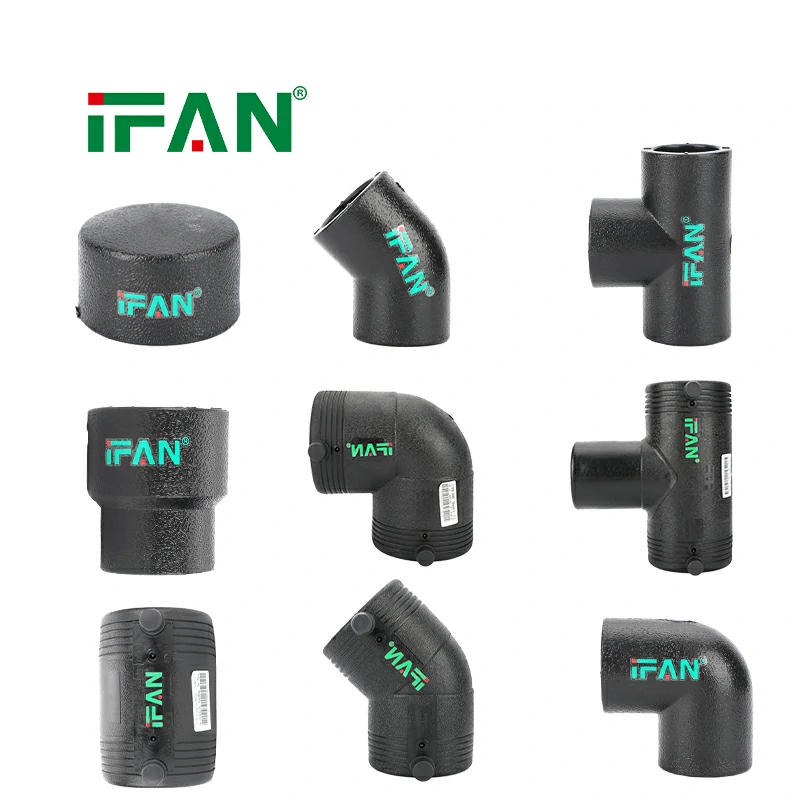
4. Multiple Connection Options
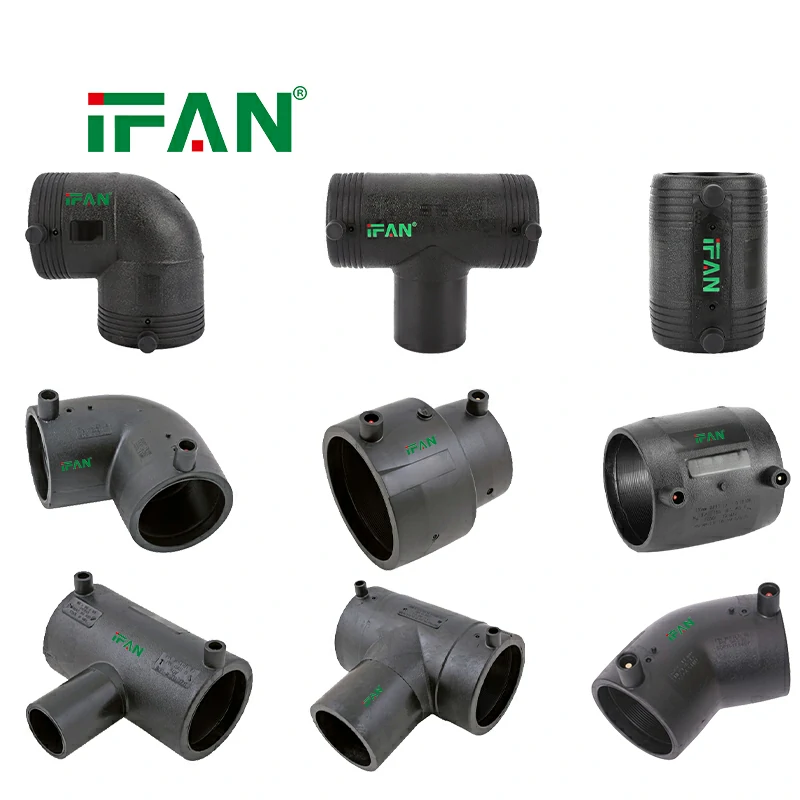
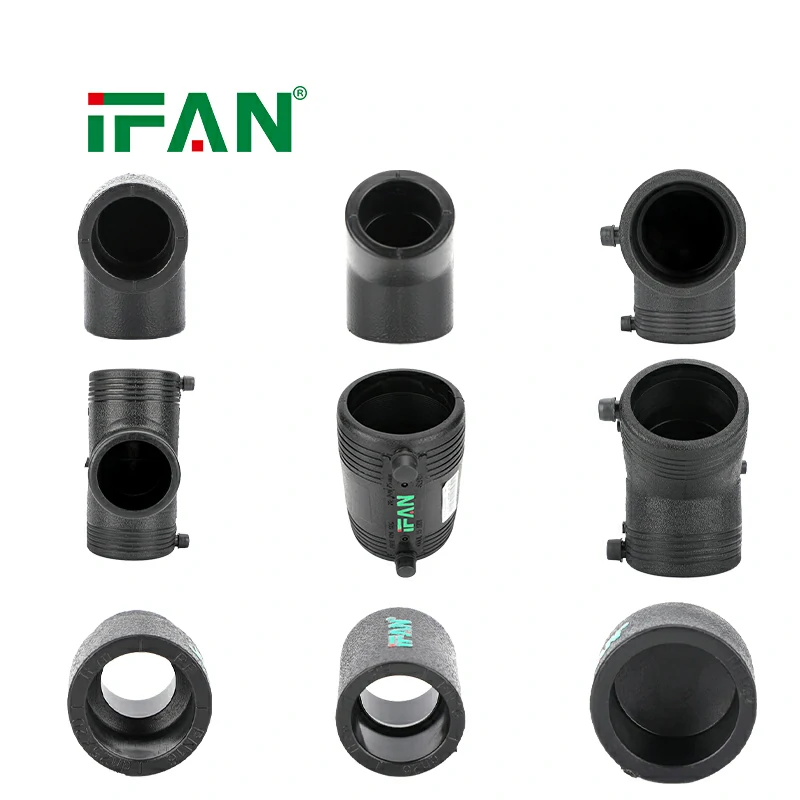
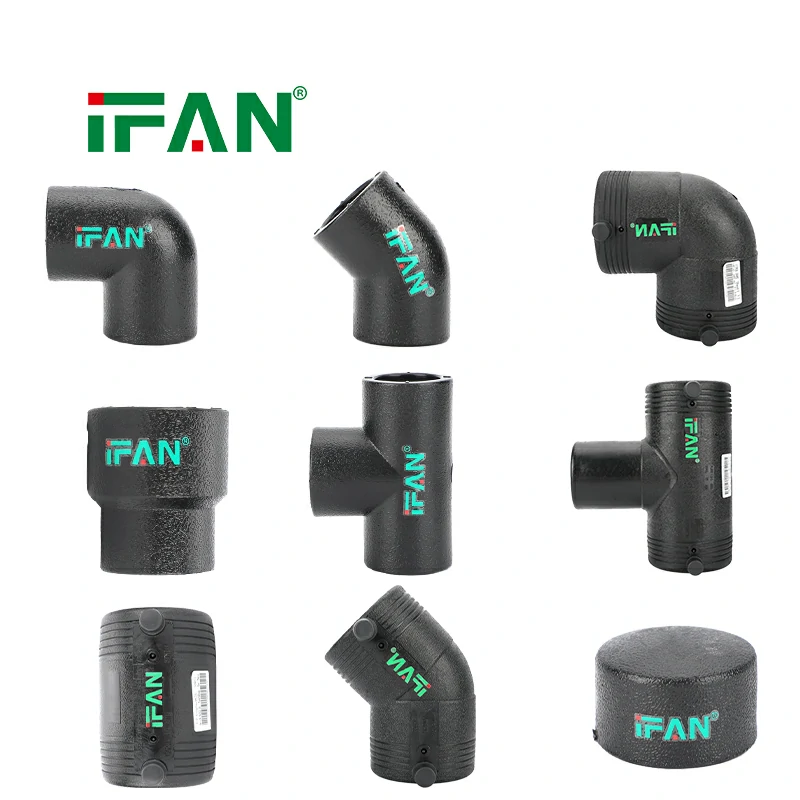
Electrofusion fittings are available in different configurations. They can connect straight pipe sections, create branches, change pipe direction, or provide service connections.
This variety helps contractors build different pipeline layouts without relying entirely on mechanical adapters.
5. Suitable for Underground Pipelines
HDPE electrofusion fittings are commonly used in buried polyethylene water networks.
A properly fused joint can provide a compact connection without a conventional threaded or flanged joint at every connection point.
The fitting and pipe must be approved for the intended buried service. Installation and testing should follow the project specification.
Common Types of HDPE Electrofusion Fittings
Different water supply projects require different fitting configurations. Understanding their functions helps buyers choose the correct components.
Electrofusion Couplers
<AsyncImage query=”HDPE PE100 electrofusion straight coupler fitting black blue barcode” aspectRatio=”16:9″ width=”100%” maxHeight={180}/>
Electrofusion couplers connect two HDPE pipes of the same nominal outside diameter.
They are commonly used to extend pipeline sections or join pipe lengths during installation. Couplers are available in different dimensions to match the selected pipe system.
Electrofusion Elbows
<AsyncImage query=”HDPE electrofusion 90 degree elbow fitting PE100″ aspectRatio=”16:9″ width=”100%” maxHeight={180}/>
Electrofusion elbows change the direction of a pipeline.
Common configurations include 45-degree and 90-degree elbows, depending on the manufacturer’s product range.
They help installers create directional changes while maintaining a fused polyethylene connection.
Electrofusion Tees
<AsyncImage query=”HDPE PE100 electrofusion equal tee fitting black” aspectRatio=”16:9″ width=”100%” maxHeight={180}/>
Electrofusion tees create branch connections from a main pipeline.
They are useful for distributing water to different sections of a network. Equal and reducing configurations may be available.
Electrofusion Reducing Couplers
<AsyncImage query=”HDPE electrofusion reducing coupler fitting PE pipe” aspectRatio=”16:9″ width=”100%” maxHeight={180}/>
Reducing couplers connect pipes with different outside diameters.
They help transition between different pipeline sizes. The reducer must be selected according to the system design and compatible dimensional specifications.
Electrofusion Branch Saddles
<AsyncImage query=”HDPE electrofusion branch saddle tapping tee fitting PE100″ aspectRatio=”16:9″ width=”100%” maxHeight={180}/>
Branch saddles provide an outlet from an existing HDPE main pipe.
Certain tapping saddle designs allow a branch connection without cutting the main pipeline into separate sections. The installation method depends on the saddle design and manufacturer’s instructions.
Electrofusion End Caps
<AsyncImage query=”HDPE PE100 electrofusion end cap fitting” aspectRatio=”16:9″ width=”100%” maxHeight={180}/>
Electrofusion end caps close the end of a polyethylene pipeline.
They are used at selected termination points and during certain pipeline configurations. Their pressure rating and installation requirements should match the connected pipe system.
How HDPE Electrofusion Connections Work
The electrofusion process depends on controlled heating and proper contact between the pipe and fitting surfaces.
A typical installation involves the following stages.
Step 1: Cut the Pipe Squarely
Cut the HDPE pipe at a right angle. The end should be clean and free from significant deformation.
An uneven cut may affect insertion depth and fitting alignment.
Step 2: Remove the Oxidized Surface Layer
Scrape the outer surface of the pipe using an approved mechanical peeling tool.
This step removes the oxidized layer and surface contamination that may interfere with fusion.
The scraped area must cover the full insertion zone. Ordinary sanding should not replace the specified scraping procedure.
Step 3: Clean the Fusion Area
Use a cleaning product approved by the fitting manufacturer.
Keep the prepared surfaces free from dust, grease, moisture, and other contaminants. Avoid touching the cleaned fusion area with bare hands.
Step 4: Mark the Insertion Depth
Mark the required insertion depth on the pipe.
This helps the installer position the pipe correctly inside the fitting. Incorrect insertion can affect the quality of the fused joint.
Step 5: Position and Secure the Components
Insert the pipe into the fitting and use suitable alignment clamps where required.
The pipe and fitting should remain stable during the fusion cycle and cooling period.
Step 6: Start the Fusion Cycle
Connect the electrofusion control unit to the fitting terminals.
Scan the barcode or enter the required fusion parameters according to the fitting specification. The machine then applies the programmed electrical cycle.
Never use an assumed heating time or voltage. Follow the fitting manufacturer’s instructions and the control unit’s approved procedure.
Step 7: Allow the Joint to Cool
Do not move, rotate, or stress the joint during the specified cooling period.
The fitting must remain supported until the manufacturer permits handling or further installation work.
Step 8: Inspect and Record the Connection
Check the fitting for visible defects and confirm that the fusion cycle completed correctly.
Record the required installation data, including fitting identification, machine information, and fusion results where the project specification requires traceability.
Important Factors When Choosing HDPE Electrofusion Fittings
Choosing the right fitting requires more than matching its nominal size to the pipe.
Material Compatibility
Confirm that the fitting material is compatible with the connected HDPE pipe.
PE100 fittings are commonly used with PE100 pressure pipes, but compatibility should be verified through the applicable standards and manufacturer’s documentation.
Do not assume that every polyethylene fitting can be fused to every PE pipe grade.
Pipe Diameter and SDR
The fitting must match the pipe’s outside diameter and dimensional requirements.
SDR, or Standard Dimension Ratio, describes the relationship between a pipe’s outside diameter and wall thickness. It is an important parameter in pressure pipe selection.
Check the pipe and fitting specifications before ordering. Nominal size alone may not provide enough information.
Pressure Rating
The fitting must be suitable for the intended operating pressure and service conditions.
Consider the pipe system’s pressure class, operating temperature, surge conditions, and applicable design requirements.
The pressure rating of the complete system is determined by its components and installation conditions, not by the fitting alone.
Applicable Standards
For water supply projects, buyers may need to check standards such as:
- ISO 4427 for polyethylene piping systems used for water supply
- EN 12201 for polyethylene piping systems for water supply and related applications
- ASTM F1055 for electrofusion-type polyethylene fittings
- Applicable local water authority specifications
The relevant standard depends on the destination market and project requirements. Verify the edition and scope of the standard before purchasing.
Barcode and Fusion Information
Many electrofusion fittings include a barcode containing fusion parameters.
The barcode system helps compatible control units identify the required fusion cycle. Buyers should confirm that the barcode and fitting information are compatible with the equipment used by the installation team.
Quality Control for HDPE Electrofusion Fittings
Fitting quality directly affects pipeline installation and joint performance.
Professional buyers should review more than the external appearance of a product.
Dimensional inspection: Check socket dimensions, insertion depth, terminal position, and other critical measurements.
Material verification: Confirm the polyethylene grade and material documentation.
Electrical element inspection: Verify the heating wire arrangement and relevant electrical characteristics according to the manufacturer’s quality plan.
Fusion performance testing: Review the manufacturer’s testing procedures and applicable product requirements.
Pressure testing: Confirm that products meet the relevant pressure performance requirements for their intended application.
Product traceability: Check whether the fitting carries clear identification, size information, production details, and fusion data.
For large water supply projects, consistent product batches and traceable quality documentation are particularly important.
Applications of HDPE Electrofusion Fittings
HDPE electrofusion fittings are used in a variety of polyethylene water supply systems.
Municipal Water Distribution
Municipal networks use polyethylene pipes to transport water through underground distribution lines.
Electrofusion couplers, tees, elbows, and branch saddles can help connect different sections of the network.
The selected products must comply with the water authority’s technical specifications.
Residential Water Supply
Residential developments require reliable water connections between distribution lines and individual buildings.
Electrofusion fittings can be used in approved underground PE water supply systems, including selected service connections.
Commercial and Industrial Water Networks
Factories, office complexes, and commercial facilities may use HDPE piping for water distribution.
Electrofusion connections provide different configuration options for complex pipeline layouts.
Industrial applications require additional checks for water quality, chemical exposure, temperature, and pressure.
Pipeline Repair and Maintenance
Electrofusion fittings are also used in certain repair and replacement projects.
Their compact design can be useful where installation access is restricted. Repair procedures must be approved for the existing pipe material, dimensions, and operating conditions.
Why Choose a Reliable HDPE Electrofusion Fittings Manufacturer?
For distributors, wholesalers, and engineering contractors, supplier selection is an important part of project procurement.
A dependable manufacturer should provide consistent product dimensions, clear technical specifications, and stable production quality.
Buyers should also consider the available product range. A supplier offering couplers, elbows, tees, reducers, saddles, and other compatible components can simplify sourcing for different pipeline configurations.
Other important factors include:
- Production capacity and delivery arrangements
- Product material and dimensional documentation
- Applicable certifications and test reports
- Packaging suitable for transportation and storage
- OEM and ODM customization capabilities
- Technical communication and after-sales support
IFAN supplies plumbing products for international markets, including pipes, fittings, and valves for different water supply and piping applications.
With manufacturing experience and OEM/ODM support, IFAN works with distributors, wholesalers, and project buyers seeking product supply and customization solutions.
For water supply projects, buyers can discuss fitting specifications, product options, packaging requirements, and supply arrangements with the IFAN team.
Conclusion
HDPE electrofusion fittings are important components in modern polyethylene water supply systems. They provide a controlled fusion connection method for joining compatible HDPE pipes.
Their different configurations support straight connections, directional changes, branch lines, and pipeline terminations. Correct material selection and installation are essential for achieving reliable joints.
Before purchasing, check pipe compatibility, outside diameter, SDR, pressure rating, applicable standards, and fusion equipment requirements.
Working with a reliable manufacturer also helps contractors and distributors maintain consistent product quality and manage long-term water supply projects more efficiently.