HDPE Fittings: Corrosion-Resistant Option for Industrial Use
If you are looking for the perfect fittings for a industrial setting, HDPE fittings are the answer. These fittings are known for their durability, flexibility and corrosion-resistant properties which make them ideal for use in harsh environments. Whether you have a large manufacturing facility, a wastewater treatment plant or a chemical processing plant, HDPE fittings can be used to enhance the efficiency of your operations.
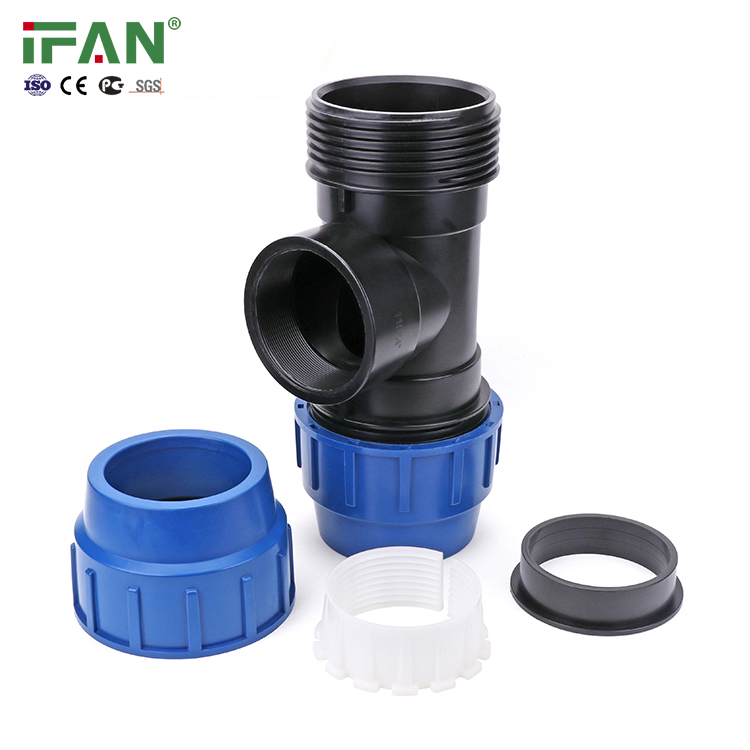
So, what are HDPE fittings and what makes them so unique? HDPE stands for high-density polyethylene, and these fittings are made from a plastic material that is known for its strength and durability. They are specially designed for a variety of applications and industries, including water and gas supply, sewage and drainage systems, and geothermal heating systems. The fittings come in different shapes and sizes, including elbows, tees, couplings, reducers, and even flanges, making them ideal for virtually any industrial application.
One of the most significant benefits of HDPE fittings is their corrosion resistance. Unlike other materials, HDPE does not react with acidic or alkali substances, making it an excellent choice for use in harsh environments. They are also resistant to UV rays, making them ideal for outdoor applications. Additionally, HDPE fittings are lightweight, which makes handling, installation, and maintenance easier and more cost-effective.
HDPE fittings are also an excellent choice for those who are environmentally conscious. HDPE is 100% recyclable, making it a more eco-friendly choice than other materials. This feature is particularly important, given the increasing focus on sustainability in modern business practices. And since HDPE fittings are long-lasting and durable, they offer an excellent return on investment.
In conclusion, HDPE fittings are a valuable option for industrial use. Their durability, flexibility and corrosion-resistant properties make them ideal for use in harsh environments such as manufacturing facilities and wastewater treatment plants. They are lightweight, recyclable, and offer an excellent return on investment, making them not only a cost-effective choice but a sustainable one as well. If you are in the market for fittings, ensure you choose HDPE fittings and experience the benefits that come with it.
IFAN factory started in 1993. And IFAN has workshop 120000 square meter with 610 staff. IFAN can design and produce all plumbing pipe and fitting include PPR,PVC,CPVC PPSU HDPE PEXA PEXB PERT pipe and fitting ,brass fitting, brass ball valve ,heating system , gas system , sanitary faucets and hose, In the past 30 Years, IFAN has never forgotten his mission-To protect health and safety. And IFAN factory use best materials to produce high quality pipe and fittings with automatic production line and high tech quality control machines. The most important,IFAN can guarantee that all pipes and fittings manufactured by IFAN are qualified.
Free Sample(Click Here to Get Free Sample)