Introduction
In the competitive world of plastic piping systems, innovation isn’t limited to material science alone; it extends deeply into manufacturing processes and product range expansion. A significant strategic move for any manufacturer is the integration of larger, more complex components into existing production flows. The decision to add a 2 LR PPR fitting—a large diameter 2-inch Long Radius fitting—to a semi-automated production line represents a major step forward. This expansion is not merely about adding a new product SKU; it’s a calculated enhancement of the entire manufacturing ecosystem. This article explores the technical considerations, market implications, and strategic advantages of integrating a 2 LR PPR fitting into a semi-automated manufacturing line, focusing on the critical PPR fittings that make such systems possible.
Understanding the Components: 2 LR PPR Fitting and Semi-Auto Lines
Before delving into the integration, it’s crucial to understand the key components.
- What is a 2 LR PPR Fitting?
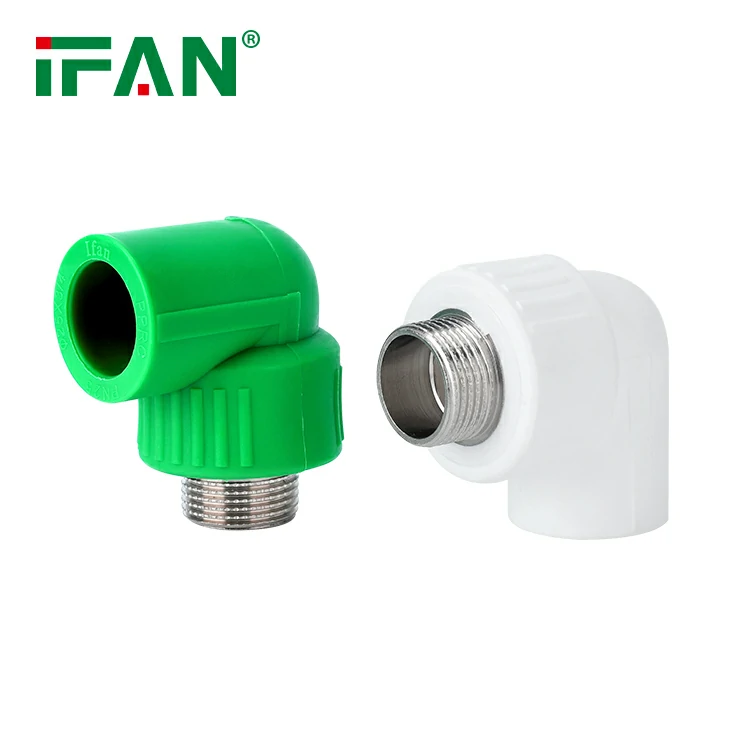
A “2 LR” designation typically refers to a 2-inch Large Radius (or Long Radius) elbow. In piping systems, elbows are used to change direction. A long-radius elbow has a gentler bend, which results in lower pressure drop and reduced friction loss compared to a short-radius elbow. This makes 2 LR PPR fittings essential for commercial and industrial applications where efficient fluid dynamics are critical, such as in large-scale hot water circulation, industrial process lines, and district heating systems. - What is a Semi-Automatic (Semi-Auto) Production Line?
A semi-automated production line for PPR fittings involves machinery that automates the core processes—like injection molding—but may require human intervention for tasks such as loading raw material, changing molds, and performing quality checks. It strikes a balance between the high cost of full automation and the low efficiency of manual production.
The Strategic Rationale for Integration
Adding a large-diameter product like a 2 LR PPR fitting to an existing semi-auto line is a strategic decision driven by several key factors:
- Meeting Market Demand: As construction projects grow in scale (large apartment complexes, hospitals, industrial plants), the demand for large-diameter piping systems increases. Offering a 2 LR PPR fitting allows manufacturers to compete for these lucrative contracts.
- Product Portfolio Diversification: A broader product range makes a manufacturer a one-stop shop for contractors and distributors. By supplying everything from small domestic fittings to large 2 LR PPR fittings, a company strengthens its customer relationships and increases its average order value.
- Optimizing Existing Assets: Integrating the 2 LR PPR fitting into a semi-auto line is often more cost-effective than building a new dedicated line. It maximizes the return on investment from the existing machinery and floor space.
Technical Challenges and Solutions in Production
The production of a large 2 LR PPR fitting presents unique challenges that must be addressed within the semi-auto framework.
- Challenge 1: Mold Design and Clamping Force.
A 2 LR PPR fitting requires a significantly larger and more complex mold than a standard half-inch fitting. The injection molding machine must have sufficient clamping force (measured in tons) to keep this large mold securely closed during the injection of molten polypropylene.- Solution: Upgrading to a higher-tonnage injection molding machine or carefully verifying that the existing machine’s capacity can handle the new, larger mold.
- Challenge 2: Cooling Time and Cycle Efficiency.
Thicker walls in a large 2 LR PPR fitting mean a longer cooling time inside the mold before the part can be ejected. This can slow down the entire production cycle, reducing output.- Solution: Optimizing the mold with conformal cooling channels that follow the shape of the fitting, leading to more uniform and efficient cooling. This reduces cycle time and improves the viability of producing large PPR fittings on a semi-auto line.
- Challenge 3: Quality Control and Consistency.
Large fittings are more susceptible to internal stresses and potential defects like sink marks if the process parameters are not perfectly controlled.- Solution: Implementing rigorous quality control checks, potentially using automated vision systems to check for visual defects, and conducting periodic hydrostatic pressure tests on samples to ensure integrity.
The Role of PPR Fittings in System Performance
The successful production of a high-quality 2 LR PPR fitting is critical because it plays a vital role in the overall piping system. A flaw in a large-diameter fitting can lead to catastrophic failures, given the higher pressures and volumes it carries. The heat-fusion process used to join PPR fittings must be perfectly executed on these large diameters, requiring specialized tools and trained technicians. The reliability of the entire system hinges on the quality of each PPR fitting, making precision manufacturing non-negotiable.
Conclusion: A Sign of Manufacturing Maturity
The decision to add a 2 LR PPR fitting to a semi-automatic production line is a hallmark of a mature and ambitious manufacturer. It demonstrates a commitment to growth, technical capability, and responsiveness to market needs. While the integration requires careful planning, investment in mold technology, and process optimization, the rewards are substantial. It opens doors to new market segments, enhances the company’s technical reputation, and creates a more resilient and diversified business model. By mastering the production of these critical large-diameter PPR fittings, a manufacturer solidifies its position as a leader in the advanced plumbing solutions industry.
Frequently Asked Questions (FAQ)
1. What does “2 LR” stand for in PPR fittings?
“2 LR” stands for 2-inch Long Radius. It refers to a large-diameter elbow fitting where the bend has a gentler curve, reducing pressure loss and making it ideal for commercial and industrial fluid flow applications.
2. What is the advantage of a semi-automatic production line over a manual one?
A semi-auto line offers a significant boost in consistency, output, and efficiency compared to manual production. It reduces human error in the core molding process while retaining flexibility for tasks like mold changes, making it ideal for batch production of different PPR fittings.
3. Can all semi-auto injection molding machines produce large 2-inch fittings?
No. The machine must have sufficient clamping force (tonnage) to accommodate the larger mold required for a 2 LR PPR fitting. Manufacturers must ensure their equipment is capable before attempting production.
4. Why are large-diameter PPR fittings like the 2 LR important?
They are essential for scaling up PPR systems beyond residential use. Large buildings, industrial plants, and municipal projects require larger pipe diameters to handle greater volumes of water or other fluids, and the fittings must scale accordingly.
5. Are the welding techniques different for 2-inch PPR fittings?
The principle of heat fusion is the same, but it requires larger, more powerful welding equipment (socket fusion machines) with appropriately sized heating elements to ensure an even and complete melt of the larger pipe and fitting surfaces.