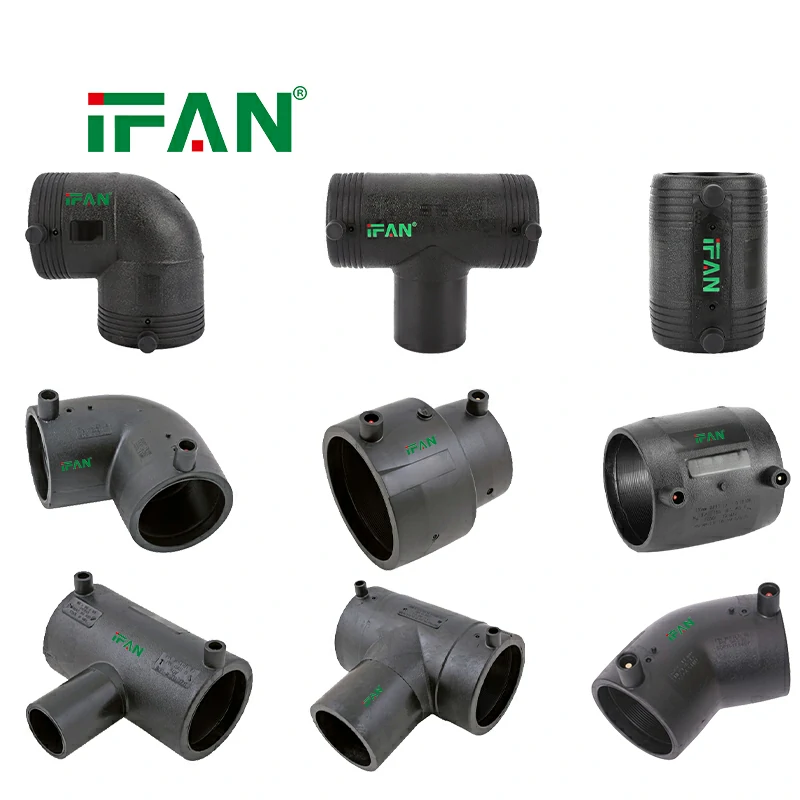
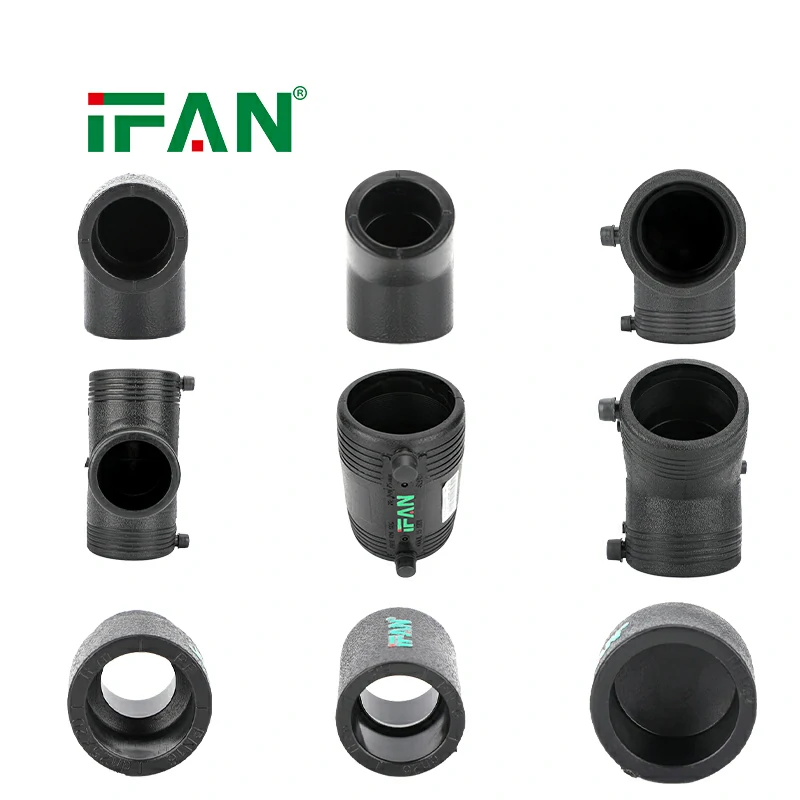
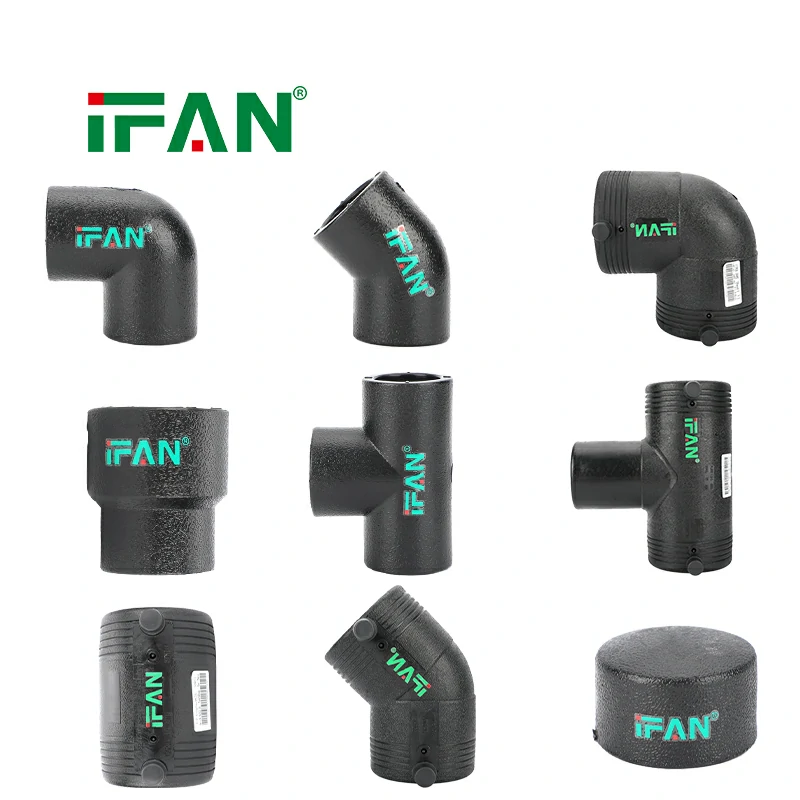
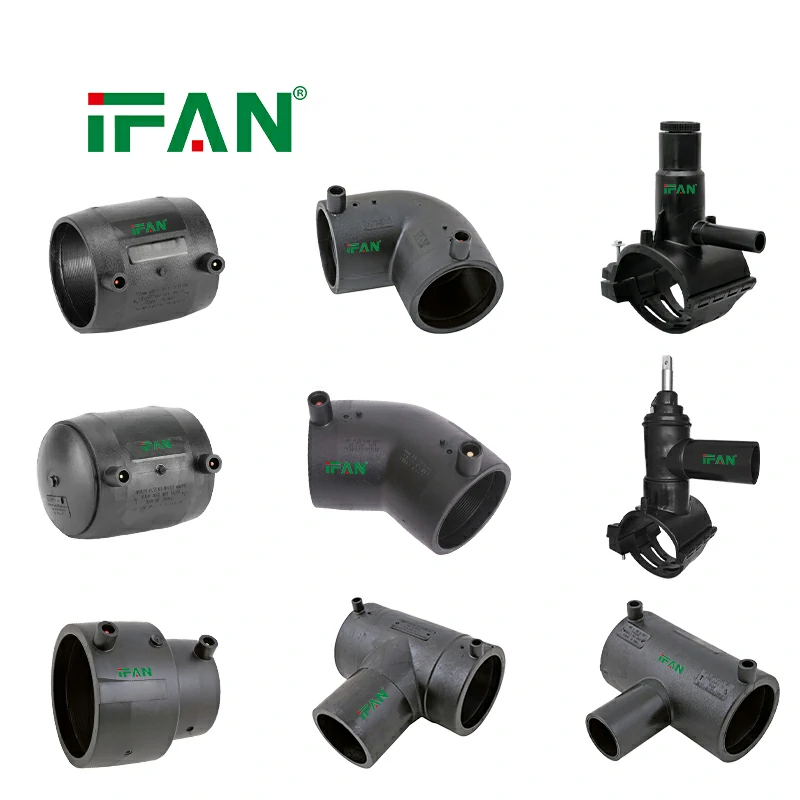
Modern HDPE water distribution networks often require additional branch connections. These connections allow water to flow from a main pipeline to smaller service pipes. An electrofusion tapping tee provides a practical solution for creating these connections.
Unlike a standard electrofusion tee, a tapping tee connects to the outside surface of an existing HDPE main pipe. Its design allows installers to create a branch outlet without cutting the main pipeline into two separate sections.
An electrofusion tapping tee for HDPE water pipes combines a saddle-shaped body, an integrated heating element, and a branch outlet. Some models also include a built-in cutter for making the opening after the fusion process.
This article explains how tapping tees work, their main features, installation considerations, and how to select the right product for water distribution projects.
What Is an Electrofusion Tapping Tee?
An electrofusion tapping tee is a polyethylene fitting designed to create a branch connection on an HDPE main pipe.
Its saddle-shaped base fits against the curved outer surface of the main pipe. Embedded electrical heating elements generate heat during the fusion process.
The fitting and pipe surfaces melt under controlled conditions. After cooling, they form a permanent connection.
Many tapping tee designs include an integrated drilling mechanism. This allows the installer to open the main pipe through the branch outlet after the saddle has been fused and cooled.
The design is particularly useful for water distribution networks that require additional service connections.
Main Components of an HDPE Electrofusion Tapping Tee
<AsyncImage query=”HDPE PE100 electrofusion tapping saddle tee fitting with cutter black polyethylene” aspectRatio=”16:9″ maxHeight={220}/>
Understanding the main components helps buyers identify suitable products for different pipeline requirements.
Saddle Base
The saddle base sits on the outside surface of the main HDPE pipe.
Its curved contact area is designed to match the specified pipe diameter range. Proper positioning is essential for achieving consistent contact during fusion.
Embedded Heating Coil
The fitting contains an electrical resistance wire near the fusion surface.
When connected to a compatible electrofusion control unit, the wire generates controlled heat. This melts the contact surfaces of the fitting and main pipe.
Branch Outlet
The branch outlet connects the main pipeline to a smaller service pipe.
Different outlet diameters are available depending on the product design. Buyers should confirm the outlet size before ordering.
Integrated Cutter
Some electrofusion tapping tees include a built-in cutter or drilling mechanism.
After the fusion joint has completed its required cooling period, the mechanism can be operated according to the manufacturer’s instructions. It creates an opening through the main pipe wall.
Not all tapping saddle designs use the same cutting mechanism. Some require a separate tool or have different operating procedures.
Fusion Terminals
The fitting includes electrical connection terminals for the fusion control unit.
The connector design must match the equipment specified by the manufacturer.
How Does an Electrofusion Tapping Tee Work?
The fitting uses electrical heat to create a permanent saddle connection.
The process has two main stages: fusion and tapping.
Stage 1: Saddle Fusion
The installer prepares the outside surface of the HDPE main pipe.
The tapping tee is positioned and secured against the prepared area. A compatible control unit then supplies the specified electrical energy.
The heating coil melts the contact surfaces. After the fusion cycle, the fitting remains secured during the required cooling period.
Stage 2: Opening the Main Pipe
Once the joint has cooled sufficiently, the installer operates the tapping mechanism according to the product instructions.
The cutter opens the main pipe wall through the branch outlet.
This creates a flow path between the main pipeline and the connected service pipe.
The sequence is important. Tapping must not be performed before the specified fusion and cooling requirements have been satisfied.
Electrofusion Tapping Tee vs. Standard Electrofusion Tee
Both fittings create branch connections, but their structures and installation methods are different.
| Feature | Electrofusion Tapping Tee | Standard Electrofusion Tee |
|---|---|---|
| Main structure | Saddle-shaped body | Three socket connections |
| Main pipe connection | Fuses onto the pipe surface | Connects through pipe ends |
| Branch connection | Outlet with tapping mechanism or specified opening method | Socket branch connection |
| Main pipe preparation | External surface preparation | Pipe-end preparation |
| Typical use | Service connections and branch take-offs | Pipeline branch construction |
| Main pipe cutting | Usually not required before saddle fusion | Main pipe must be cut for assembly |
A tapping tee is useful when a branch needs to be added to a main pipe without separating the pipeline into two sections.
A standard electrofusion tee is more suitable when the pipeline is being assembled from separate pipe sections.
The correct choice depends on the project design and the specific product configuration.
Common Applications in HDPE Water Distribution Systems
Electrofusion tapping tees are used in different water infrastructure projects.
Municipal Water Service Connections
<AsyncImage query=”HDPE municipal water main service connection electrofusion tapping saddle installation” aspectRatio=”16:9″ maxHeight={180}/>
Municipal water networks often require connections between distribution mains and individual service lines.
A tapping tee provides a branch outlet for connecting smaller pipes. This makes it useful in residential and commercial water distribution projects.
Residential Water Supply Networks
<AsyncImage query=”underground polyethylene HDPE residential water service pipe installation” aspectRatio=”16:9″ maxHeight={180}/>
Residential developments may require multiple service connections along a distribution pipeline.
Tapping tees help create these branch points. Their outlet dimensions should match the service pipe specifications.
Commercial and Industrial Water Systems
<AsyncImage query=”industrial HDPE water supply pipeline branch connection installation” aspectRatio=”16:9″ maxHeight={180}/>
Commercial buildings and industrial facilities may use HDPE pipelines for water distribution.
Tapping tees can connect smaller branch lines to larger main pipes. Material compatibility and operating conditions must be checked for the transported water.
Irrigation Water Distribution
<AsyncImage query=”HDPE agricultural irrigation main water pipe branch connection system” aspectRatio=”16:9″ maxHeight={180}/>
Agricultural irrigation systems often distribute water through multiple branch lines.
Electrofusion tapping tees can provide outlets for connecting irrigation zones and secondary pipelines. The fitting must match the system’s pressure and flow requirements.
Advantages of Electrofusion Tapping Tees
Electrofusion tapping tees offer several benefits for HDPE water pipeline construction.
Branch Connections Without Cutting the Main Pipe Into Two Sections
The saddle design connects to the outside surface of the main pipe.
This avoids the need to separate the main pipeline into two pipe ends for a conventional tee installation. It can simplify certain service connection projects.
However, tapping still requires an approved procedure and suitable operating conditions.
Compact Installation Design
The saddle structure occupies less space than some conventional branch assemblies.
This can be useful in underground installations where working space is limited.
Permanent Fusion Joint
The fitting joins the main pipe through heat fusion.
When correctly selected and installed, the fused interface provides an integrated polyethylene connection.
Integrated Tapping Function
Models with built-in cutters combine the saddle connection and opening mechanism in one fitting.
This reduces the need for certain separate components. The exact tools and operating method depend on the product design.
Corrosion Resistance
HDPE materials do not rust like metal components.
This makes compatible tapping tees suitable for many buried water distribution systems. Chemical compatibility and operating conditions should still be considered.
How to Choose the Right Electrofusion Tapping Tee
Selecting the correct product requires checking several technical specifications.
1. Main Pipe Diameter
The saddle base must match the outside diameter of the main HDPE pipe.
Common pipeline sizes vary by project and market. Always confirm the actual pipe dimensions rather than relying only on nominal descriptions.
2. Branch Outlet Diameter
The branch outlet must match the service pipe or secondary pipeline.
For example, a large-diameter main pipe may connect to a smaller service line through a reducing tapping tee.
Check the product drawing for both dimensions.
3. SDR Compatibility
SDR describes the relationship between the nominal outside diameter and wall thickness of a pipe.
The tapping tee must be suitable for the specified main pipe dimensions and SDR range.
Some fittings support multiple pipe wall thicknesses, while others have narrower compatibility requirements. Manufacturer documentation should confirm the approved range.
4. Material Grade
PE100 is commonly used in modern HDPE pressure water systems.
However, buyers should verify the fitting material designation and compatibility with the main pipe. Material classification alone does not establish the complete pressure rating.
5. Pressure Rating
Check the declared pressure capability of the tapping tee and the intended pipeline system.
The operating pressure must account for temperature, design factors, and applicable standards.
Do not assume that every tapping tee has the same pressure rating as the connected pipe.
6. Cutter Design
If the fitting includes an integrated cutter, review its operating mechanism.
Check whether the cutter is operated with a dedicated tool, an integrated screw mechanism, or another specified method.
Clear operating instructions are important for correct installation.
Installation Considerations for HDPE Electrofusion Tapping Tees
Proper installation is essential for connection quality.
The following overview describes the general process. Actual work must follow the manufacturer’s instructions and applicable water utility procedures.
Step 1: Inspect the Main Pipe
Check the pipe outside diameter, material, SDR, and surface condition.
Confirm that the tapping tee is suitable for the intended pipe. The selected installation area should meet the project’s access and clearance requirements.
Step 2: Prepare the Pipe Surface
Clean the installation area according to the manufacturer’s procedure.
Use an approved mechanical scraping tool to remove the specified oxidized surface layer.
The prepared area should remain clean and protected from contamination.
Step 3: Position the Tapping Tee
Place the saddle fitting on the prepared section of the main pipe.
Ensure that the outlet faces the intended branch direction.
Use suitable clamps or positioning equipment to maintain stable contact during fusion.
Step 4: Complete the Fusion Cycle
Connect the fitting to a compatible electrofusion control unit.
Scan the barcode or enter the specified fusion parameters.
Allow the control unit to complete the fusion cycle. Do not disturb the fitting during the process.
Step 5: Observe the Cooling Period
Keep the fitting secured for the manufacturer’s specified cooling time.
Do not operate the tapping mechanism before the required cooling period has ended.
Step 6: Perform the Tapping Operation
Operate the cutter according to the fitting instructions.
The cutter opens the main pipe wall and creates the branch flow path.
The operation must follow the approved project procedure, including any requirements concerning pipeline pressure and service conditions.
Step 7: Connect and Inspect the Branch
Connect the service pipe using the specified method.
Inspect the completed assembly and record the required installation information.
Any pressure testing, flushing, or commissioning must follow the applicable utility requirements and project specifications.
Standards and Quality Requirements
HDPE electrofusion tapping tees should meet the requirements relevant to their intended application.
Commonly referenced standards include:
- ISO 4427: Polyethylene piping systems for water supply and pressure drainage applications.
- EN 12201: Plastic piping systems for water supply and drainage under pressure.
- ASTM F1055: Electrofusion-type polyethylene fittings for outside diameter-controlled polyethylene pipe and tubing.
The exact applicability of these standards depends on the product type and market.
Buyers should request relevant technical documentation. Important quality checks include dimensional accuracy, material consistency, fusion performance, pressure testing, and product traceability.
Local water utility specifications may impose additional requirements.
Common Problems to Avoid During Installation
Several installation mistakes can affect the quality of a tapping tee connection.
- Using a saddle with an incompatible main pipe diameter.
- Skipping the required mechanical scraping process.
- Allowing the prepared surface to become contaminated.
- Positioning the fitting incorrectly.
- Moving the fitting during fusion or cooling.
- Operating the cutter too early.
- Using unsuitable fusion equipment or parameters.
- Ignoring the manufacturer’s tapping instructions.
Correct product selection and trained installation personnel help reduce these risks.
IFAN: Plumbing and Piping Products for Global Markets
IFAN supplies a range of plumbing and piping products for international customers. Its product range includes plastic pipes, pipe fittings, and valves.
With manufacturing experience and OEM/ODM support, IFAN works with customers on different product specifications and customized requirements.
For distributors and project buyers, selecting the correct fitting begins with the application, pipe dimensions, material grade, and pressure requirements.
Contact IFAN to discuss your product specifications and explore suitable supply options for your market.
Conclusion
Electrofusion tapping tees provide a practical way to create branch connections on HDPE water mains. Their saddle-shaped design connects to the outside surface of the main pipe, while models with integrated cutters allow the branch opening to be made after fusion.
Compared with standard electrofusion tees, tapping tees are particularly useful for service connections and certain network extensions.
Before purchasing, check the main pipe diameter, branch outlet size, SDR compatibility, material grade, and pressure requirements. Proper surface preparation, fusion, cooling, and tapping procedures are equally important.
Choosing a suitable electrofusion tapping tee helps support reliable connections in modern HDPE water distribution systems.