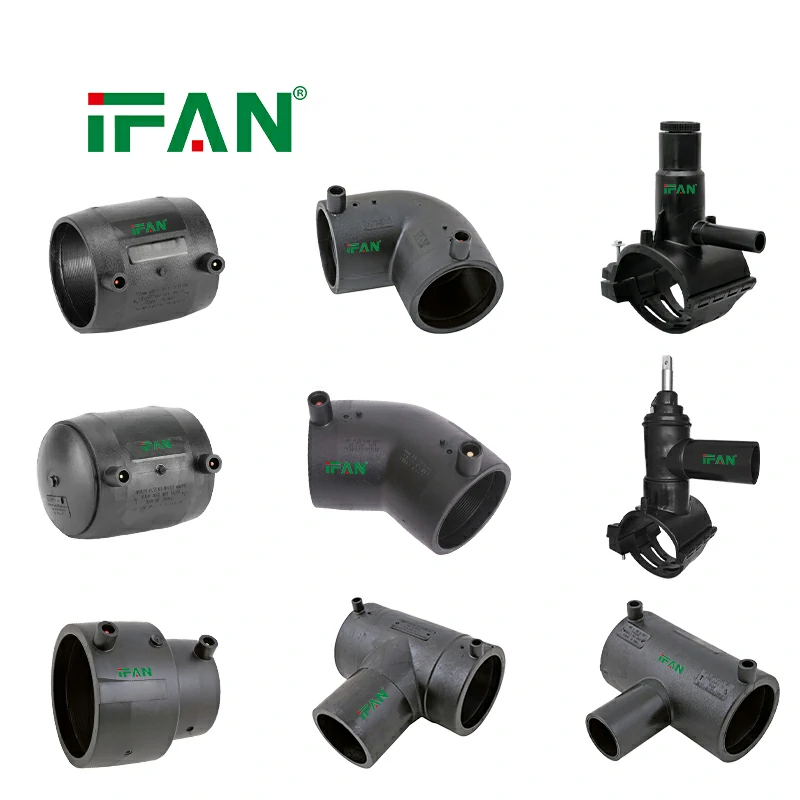
HDPE pipelines are widely used in water supply, gas distribution, industrial systems, and underground infrastructure. Their flexible structure makes them suitable for complex pipeline layouts. However, straight pipe connections are not enough for every installation.
Pipeline networks often require branches, direction changes, and connections between different sections. HDPE electrofusion tee and elbow fittings provide practical solutions for these requirements.
Electrofusion tees help create branch connections. Electrofusion elbows change the direction of a pipeline. Both use embedded heating elements to join compatible polyethylene pipes through a controlled fusion process.
Understanding their differences helps contractors, engineers, and distributors select suitable fittings for different projects.
What Are HDPE Electrofusion Tee and Elbow Fittings?
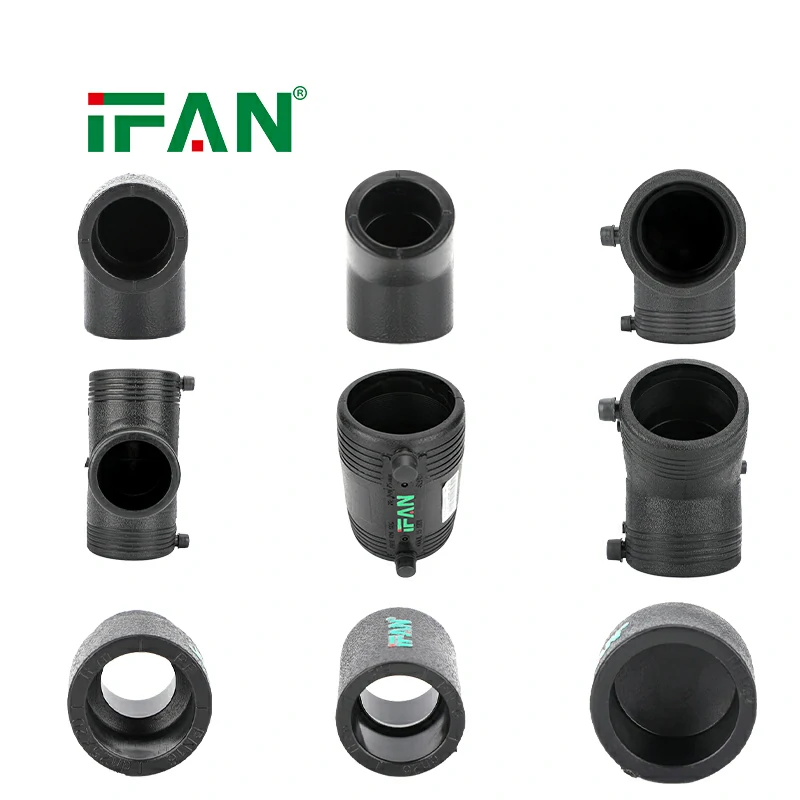
HDPE electrofusion fittings are polyethylene components designed to connect compatible HDPE pipes using electrical heat.
Each fitting contains an embedded resistance wire. When connected to a compatible electrofusion control unit, the wire generates heat at the joining surface.
The prepared pipe and fitting surfaces melt under controlled conditions. After the specified cooling period, they form a permanent fusion joint.
Tee and elbow fittings use the same basic joining technology. Their main difference is their function in the pipeline layout.
HDPE Electrofusion Tee
<AsyncImage query=”black HDPE electrofusion tee fitting polyethylene pipe fitting” aspectRatio=”16:9″ maxHeight={200}/>
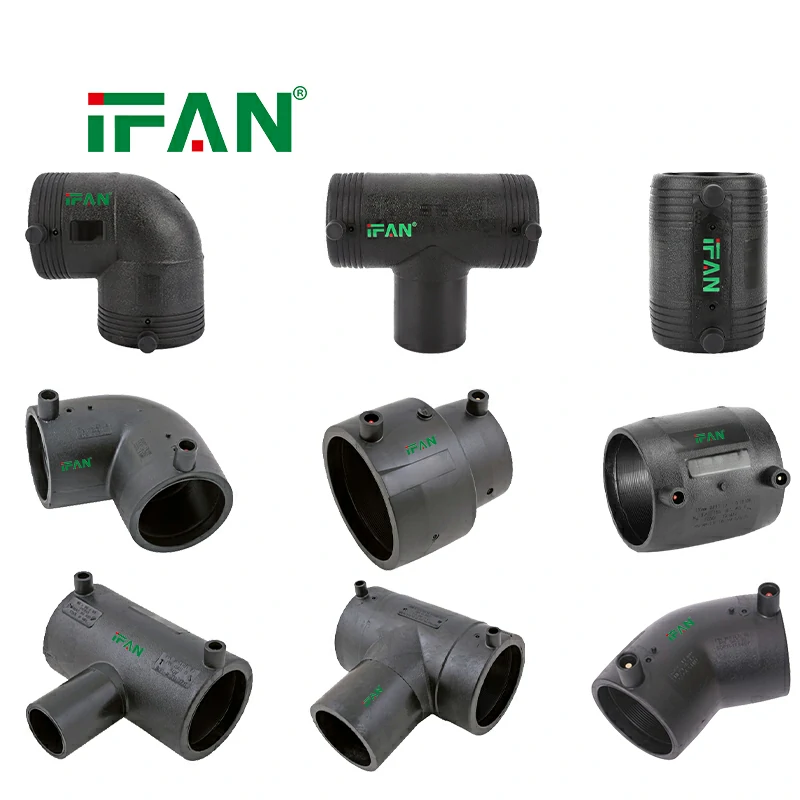
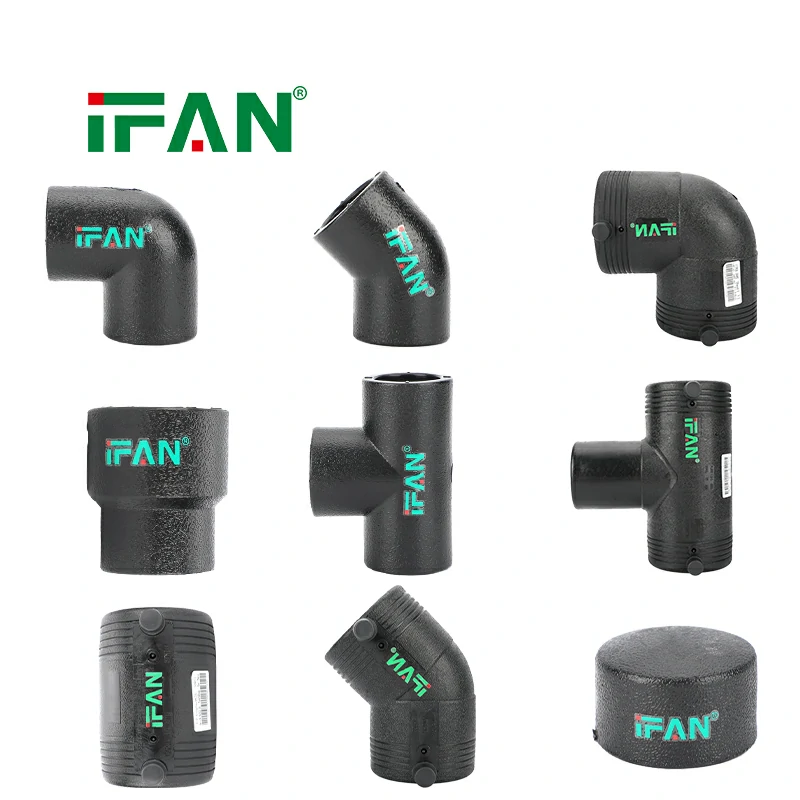
An electrofusion tee connects three pipe sections. It allows a branch to extend from a main pipeline.
Common configurations include equal tees and reducing tees. An equal tee has three connection ends of the same nominal size. A reducing tee has a smaller branch connection.
These fittings are useful in water distribution networks, industrial pipelines, and other compatible pressure systems.
HDPE Electrofusion Elbow
<AsyncImage query=”black HDPE electrofusion elbow fitting 90 degree polyethylene” aspectRatio=”16:9″ maxHeight={200}/>
An electrofusion elbow changes the direction of a pipeline.
Common configurations include 45-degree and 90-degree elbows. Other angles may be available depending on the manufacturer and product range.
Elbows help pipeline designers manage obstacles, fit available installation spaces, and follow the required route.
Key Differences Between Electrofusion Tees and Elbows
Although both fittings use electrofusion technology, they serve different purposes.
| Feature | Electrofusion Tee | Electrofusion Elbow |
|---|---|---|
| Main function | Creates a branch | Changes pipe direction |
| Connection ends | Three | Two |
| Common designs | Equal tee, reducing tee | 45°, 90° |
| Typical application | Branch distribution | Pipeline routing |
| Design consideration | Branch diameter and flow | Angle and alignment |
The choice depends on the pipeline layout.
A tee is required when one pipeline needs to supply another section. An elbow is more suitable when the pipeline must turn without creating a branch.
Using the correct fitting helps simplify installation and maintain the intended system configuration.
Common Types and Configurations
Different projects require different fitting dimensions and connection arrangements.
Equal Electrofusion Tee
An equal tee connects three pipes with the same nominal outside diameter.
It is commonly used in distribution networks where the main line and branch line have matching dimensions.
This configuration provides a straightforward way to divide a pipeline into separate sections.
Reducing Electrofusion Tee
A reducing tee connects a larger main pipeline to a smaller branch.
It is useful when a distribution network supplies smaller service lines or secondary branches.
Before purchasing, confirm all three connection dimensions. The branch size should match the project design.
90-Degree Electrofusion Elbow
A 90-degree elbow creates a right-angle turn.
It is commonly used where pipeline routes change direction sharply. Its compact layout can help in installations with limited space.
45-Degree Electrofusion Elbow
A 45-degree elbow provides a more gradual change in direction.
It can be useful when the engineering design requires a less abrupt route change.
The selected fitting angle must follow the approved pipeline drawings.
Where Are HDPE Electrofusion Tee and Elbow Fittings Used?
These fittings support different pipeline configurations across several industries.
Municipal Water Supply Networks
<AsyncImage query=”underground HDPE municipal water distribution pipeline installation” aspectRatio=”16:9″ maxHeight={180}/>
Water distribution networks contain main lines, branch connections, and changes in direction.
Electrofusion tees connect distribution branches to the main pipeline. Elbows help route pipes around roads, buildings, and other underground infrastructure.
Their corrosion resistance makes compatible HDPE systems suitable for many buried water applications.
Gas Distribution Systems
<AsyncImage query=”HDPE polyethylene natural gas distribution pipeline construction” aspectRatio=”16:9″ maxHeight={180}/>
Polyethylene piping is widely used in gas distribution networks.
Tees can provide branch connections, while elbows help manage changes in pipeline direction.
However, not every HDPE fitting is suitable for gas service. Gas projects require fittings with the appropriate application approvals and compliance documentation.
Industrial Piping Systems
<AsyncImage query=”industrial HDPE polyethylene process water piping system” aspectRatio=”16:9″ maxHeight={180}/>
Industrial facilities use HDPE pipelines for various compatible fluids.
Tees help distribute fluids between equipment and production areas. Elbows support routing around machinery and structural elements.
Chemical compatibility, operating temperature, and pressure requirements must be checked before selecting a product.
Agricultural Irrigation
<AsyncImage query=”HDPE agricultural irrigation water distribution pipeline installation” aspectRatio=”16:9″ maxHeight={180}/>
Agricultural irrigation systems often require multiple branch lines.
Electrofusion tees help divide water between different irrigation zones. Elbows allow pipelines to follow field boundaries and installation routes.
The fitting specifications should match the irrigation system’s pressure and flow requirements.
Advantages of Using Electrofusion Tee and Elbow Fittings
Electrofusion technology offers several practical advantages for HDPE pipeline construction.
Permanent Fusion Connections
Electrofusion joins the pipe and fitting through heat fusion.
When the correct procedure is followed, the connection forms an integrated polyethylene joint. It does not rely on conventional threaded connections or external rubber seals.
Flexible Pipeline Design
Tees and elbows support different network layouts.
Engineers can create branches and directional changes without relying only on mechanical connectors. This makes them useful for complex underground installations.
Corrosion Resistance
HDPE materials resist rust and many common forms of soil-related corrosion.
This property is especially useful in buried pipeline networks. The suitability of the material still depends on the transported medium and surrounding conditions.
Controlled Joining Parameters
Compatible electrofusion control units can regulate the fusion cycle.
Some fittings use barcode identification to provide the required fusion parameters. This helps standardize the joining process.
However, equipment compatibility and proper pipe preparation remain essential.
How to Choose the Correct HDPE Electrofusion Tee and Elbow
Selecting a fitting involves more than identifying its shape.
The following specifications should be checked before procurement.
1. Pipe Outside Diameter
Confirm the nominal outside diameter of every pipe connected to the fitting.
For a reducing tee, check the main-line and branch dimensions separately. For an elbow, confirm that both connection ends match the intended pipe size.
2. SDR Compatibility
SDR describes the relationship between a pipe’s outside diameter and wall thickness.
Different fittings may support different SDR ranges. Buyers should check the manufacturer’s compatibility table before ordering.
Matching nominal diameter alone does not guarantee compatibility.
3. Pressure Requirements
Confirm the system design pressure and the fitting’s declared pressure capability.
Operating temperature, material classification, and applicable design factors may affect pressure performance.
Do not assume that all fittings made from HDPE have the same pressure rating.
4. Material Grade
Check the fitting material designation and its compatibility with the pipe material.
PE100 is commonly used in pressure pipeline systems. However, the actual product specification must meet the intended application requirements.
5. Application and Certification
Water, gas, and industrial applications may require different product approvals.
Review the relevant standards and local regulations. A fitting approved for water service should not automatically be treated as suitable for gas distribution.
6. Fusion Equipment
Check the fitting’s fusion connector and parameter identification system.
The control unit must support the manufacturer’s specified fusion procedure. Using incompatible equipment or settings can compromise the joint.
HDPE Electrofusion Tee and Elbow Installation Process
Correct installation is essential for reliable connections.
The following steps provide a general overview. Actual work must follow the fitting manufacturer’s instructions and applicable project procedures.
Step 1: Inspect the Pipe and Fitting
Check the fitting for visible damage and confirm its dimensions.
Verify the pipe material, outside diameter, SDR range, and intended application.
Step 2: Cut and Prepare the Pipe
Cut the pipe squarely using suitable equipment.
Mark the required insertion depth. Remove the specified oxidized surface layer with an approved mechanical scraping tool.
Clean the prepared surfaces according to the manufacturer’s procedure.
Step 3: Assemble the Connection
Insert each pipe into the correct fitting socket.
For a tee, check the alignment of the main and branch connections. For an elbow, ensure that the pipe direction matches the design.
Use suitable clamps to prevent movement.
Step 4: Perform Electrofusion
Connect the fitting to a compatible control unit.
Scan the barcode or enter the manufacturer’s specified fusion parameters.
The control unit supplies electrical energy to the embedded heating wire. The process must not be interrupted unless the approved procedure allows it.
Step 5: Allow Proper Cooling
Keep the joint secured throughout the specified cooling period.
Do not move or load the connection prematurely. Cooling requirements depend on fitting design and manufacturer instructions.
Step 6: Inspect and Record
Inspect the finished connection according to the project quality procedure.
Record the required fusion data and inspection results. Pipeline testing and commissioning must follow applicable standards and local requirements.
Standards and Quality Requirements
HDPE electrofusion fittings should meet the standards relevant to their intended application.
Commonly referenced standards include:
- ISO 4427: Polyethylene piping systems for water supply and pressure drainage applications.
- EN 12201: Plastic piping systems for water supply and drainage under pressure.
- ISO 4437: Polyethylene piping systems for the supply of gaseous fuels.
- ASTM F1055: Electrofusion-type polyethylene fittings for outside diameter-controlled polyethylene pipe and tubing.
These standards cover different applications and requirements. Buyers should verify the current edition and the exact scope of the product documentation.
Quality evaluation should also consider dimensional accuracy, material consistency, heating wire placement, fusion performance, and product traceability.
Why Choose a Reliable HDPE Fittings Manufacturer?
The quality of an electrofusion fitting affects both installation efficiency and pipeline performance.
A capable manufacturer should maintain consistent production standards and provide clear technical information.
Before selecting a supplier, consider:
- Product range and available dimensions.
- PE material specifications.
- SDR and pressure compatibility.
- Manufacturing quality control.
- Relevant test reports and approvals.
- Fusion instructions and technical support.
- OEM/ODM and customized supply options.
For distributors and project buyers, a stable supply of compatible fittings can simplify procurement and inventory management.
IFAN: Your Partner for Plumbing and Piping Products
IFAN supplies a range of plumbing and piping products for international markets. Its product range includes plastic pipes, pipe fittings, and valves.
With manufacturing experience and OEM/ODM support, IFAN works with customers on different product specifications and customized requirements.
Whether you are sourcing pipe fittings for distribution or project supply, clear technical specifications are important. Confirm the required material, dimensions, pressure rating, and application before placing an order.
Contact IFAN to discuss your product requirements and explore suitable supply options.
Conclusion
HDPE electrofusion tee and elbow fittings serve two important functions in polyethylene pipeline systems. Tees create branch connections, while elbows change pipeline direction.
Both fitting types use controlled heat fusion to connect compatible HDPE pipes. Their performance depends on material compatibility, correct dimensions, suitable fusion equipment, and proper installation.
For water supply, gas distribution, irrigation, and industrial projects, selecting the right configuration is essential. Reviewing technical documents and following approved installation procedures helps support reliable pipeline construction.