High-pressure polyethylene pipeline systems require carefully selected pipes, fittings, and joining methods. Every component must meet the design requirements of the network. A weak or incompatible connection can affect the safety and reliability of the entire pipeline.
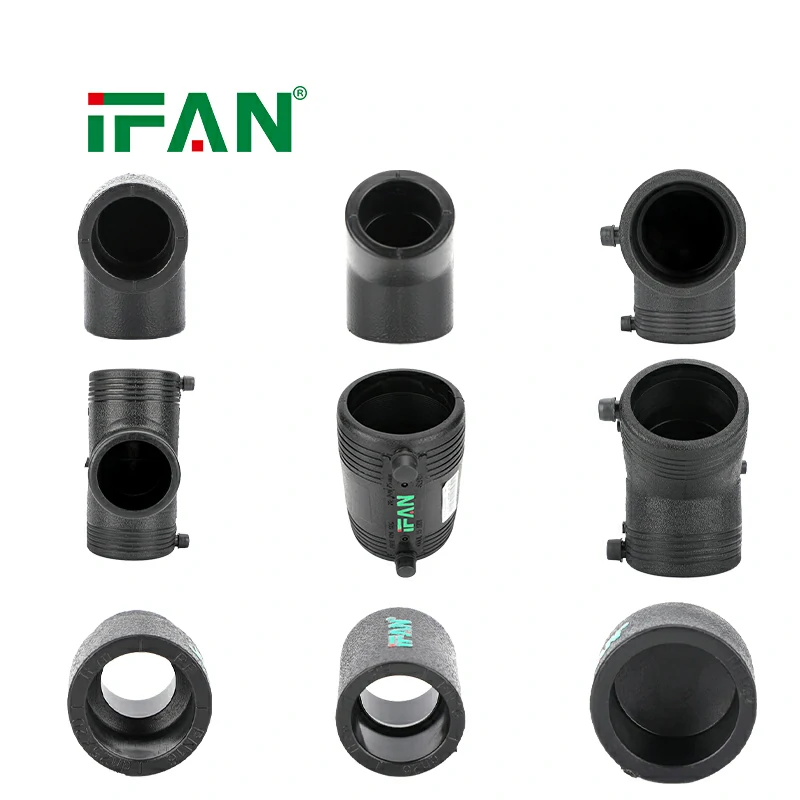
PE100 electrofusion fittings are widely used in polyethylene piping systems for water distribution, gas networks, and industrial applications. They connect compatible PE pipes through a controlled electrical fusion process.
PE100 material offers high resistance to internal pressure when used within its specified design conditions. Electrofusion technology creates a permanent joint between the pipe and fitting. Together, these features make PE100 electrofusion fittings an important option for demanding pipeline projects.
This article explains their pressure performance, connection technology, product types, and selection considerations.
What Makes PE100 Suitable for High-Pressure Pipes?
PE100 is a high-performance polyethylene material classification. It is commonly used in modern pressure pipe systems.
Its material properties make it suitable for applications that require strength, flexibility, and long-term resistance to internal pressure.
High Hydrostatic Strength
PE100 has a minimum required strength (MRS) classification of 10 MPa. This value is used in the design classification of polyethylene pipe materials.
It does not mean that a PE100 pipe can operate at 10 MPa. The actual allowable operating pressure depends on the pipe’s SDR, design coefficient, operating temperature, and applicable standards.
Resistance to Slow Crack Growth
Pipeline systems may experience long-term mechanical stress. Small defects can develop into cracks if the material cannot resist crack growth.
PE100 materials are designed to provide improved resistance to slow crack growth. This property supports long-term performance in properly designed pressure networks.
Corrosion Resistance
Unlike metallic pipes, polyethylene does not rust. It also offers resistance to many chemicals and substances found in soil.
This makes PE100 suitable for many buried pipeline applications. The exact chemical compatibility must still be checked for industrial service.
Flexibility and Impact Resistance
PE100 pipes can accommodate certain levels of ground movement and installation stress. Their flexibility can be useful in underground pipeline construction.
However, installation must still follow the specified minimum bending radius and handling requirements. Excessive bending or impact can damage the pipe.
Understanding PE100 Pressure Ratings and SDR
Pressure rating is one of the most important factors when selecting PE100 electrofusion fittings.
Buyers should understand how pipe dimensions relate to pressure performance.
SDR stands for Standard Dimension Ratio. It describes the relationship between a pipe’s nominal outside diameter and its wall thickness.
[
SDR = \frac{d_n}{e_n}
]
Where:
- (d_n) is the nominal outside diameter.
- (e_n) is the nominal wall thickness.
A lower SDR means a thicker pipe wall relative to its outside diameter. Under comparable design conditions, lower-SDR pipes generally support higher operating pressure.
Common PE100 SDR Values
The following table shows commonly encountered PE100 pipe classifications. Pressure values are indicative reference values for water at 20°C, using a design coefficient of 1.25. They are not universal operating limits.
| PE100 pipe SDR | Approximate PN |
|---|---|
| SDR 11 | PN 16 |
| SDR 13.6 | PN 12.5 |
| SDR 17 | PN 10 |
| SDR 21 | PN 8 |
| SDR 26 | PN 6 |
Actual pressure ratings must be verified against the applicable product standard and manufacturer’s documentation.
For gas applications, the allowable operating pressure is determined using different design requirements and safety factors. Water PN values should not be transferred directly to gas pipelines.
How PE100 Electrofusion Fittings Create Strong Joints
Electrofusion is a thermal joining method that uses electrical resistance to generate controlled heat.
PE100 electrofusion fittings contain embedded heating coils. When connected to a compatible fusion control unit, these coils generate heat at the interface between the fitting and pipe.
The prepared polyethylene surfaces soften and melt. Under the specified fusion conditions, the materials form a permanent connection.
After the fusion cycle, the joint must cool without movement. This allows the fused area to develop its required strength.
Why Joint Preparation Matters
The quality of an electrofusion joint depends on several factors:
- Correct pipe and fitting compatibility.
- Accurate pipe cutting and insertion depth.
- Proper removal of the oxidized pipe surface.
- Clean and protected fusion surfaces.
- Correct fusion parameters.
- Stable positioning during heating and cooling.
The PE100 material classification alone does not guarantee a successful joint. Installation quality remains equally important.
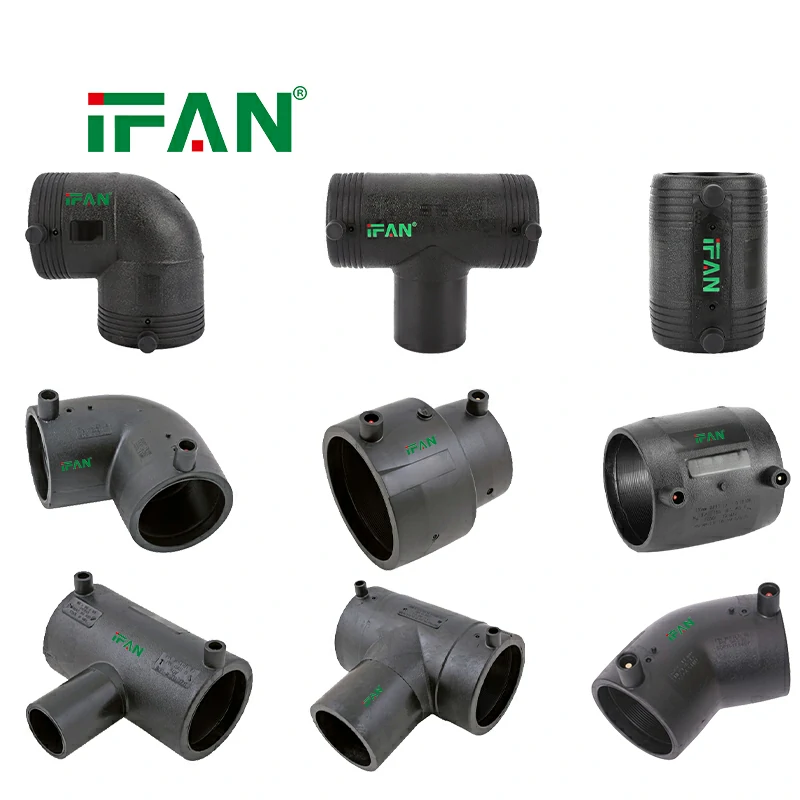
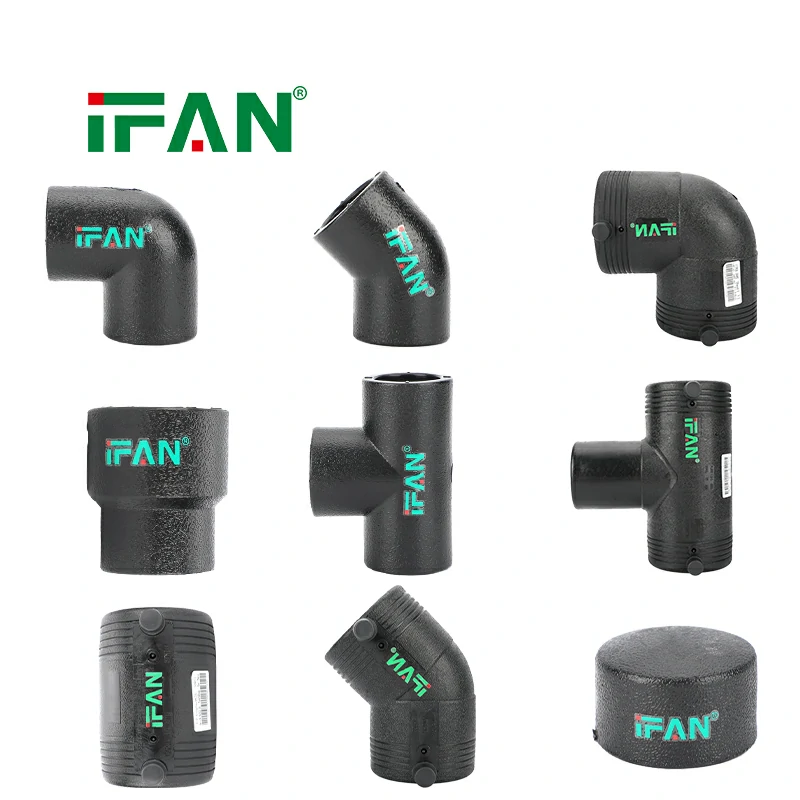
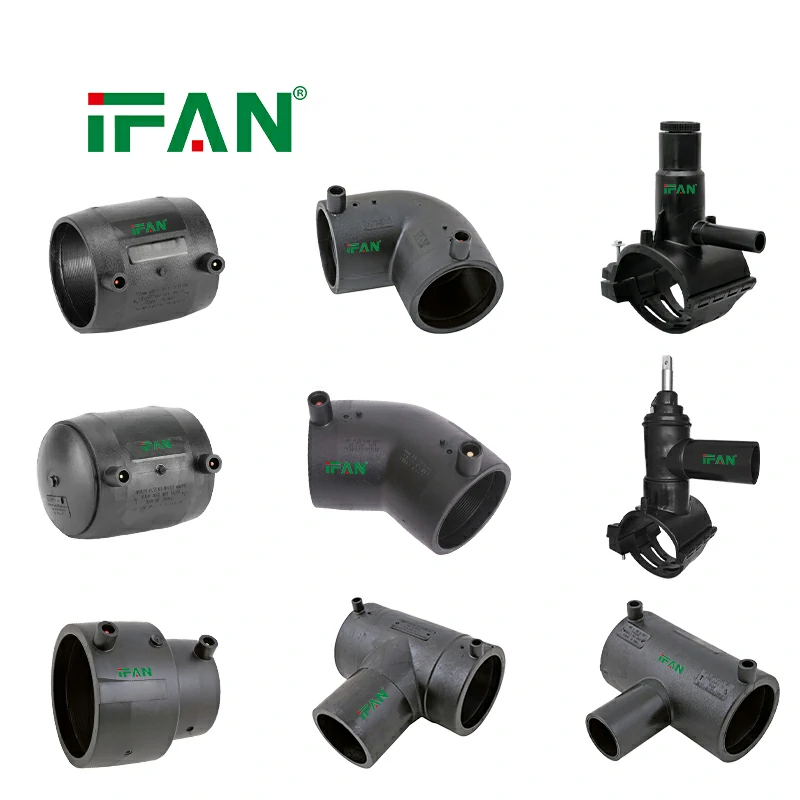
Main Types of PE100 Electrofusion Fittings
Different pipeline layouts require different connection components. PE100 electrofusion fittings are available in several configurations.
PE100 Electrofusion Couplings
<AsyncImage query=”PE100 HDPE electrofusion straight coupling black polyethylene fitting” aspectRatio=”16:9″ maxHeight={180}/>
Electrofusion couplings connect two compatible polyethylene pipe ends.
They are commonly used in straight pipeline sections, extensions, and approved repair applications. The coupling size and SDR compatibility must match the pipe system.
PE100 Electrofusion Elbows
<AsyncImage query=”HDPE PE100 electrofusion elbow fitting black polyethylene” aspectRatio=”16:9″ maxHeight={180}/>
Electrofusion elbows change the direction of a pipeline.
They are useful where the pipeline design requires a controlled change in direction. The fitting angle and dimensional specifications should match the engineering drawings.
PE100 Electrofusion Tees
<AsyncImage query=”PE100 HDPE electrofusion tee fitting” aspectRatio=”16:9″ maxHeight={180}/>
Electrofusion tees create branch connections.
They connect a main pipeline with another compatible pipe. Different branch sizes are available depending on the network design.
PE100 Electrofusion Reducers
<AsyncImage query=”HDPE electrofusion reducer fitting PE100″ aspectRatio=”16:9″ maxHeight={180}/>
Reducers connect pipes with different outside diameters.
They are used when pipeline dimensions change between sections. Buyers should confirm the reducer’s dimensional range and pressure suitability.
PE100 Electrofusion Branch Saddles
<AsyncImage query=”PE100 HDPE electrofusion branch saddle fitting” aspectRatio=”16:9″ maxHeight={180}/>
Branch saddles provide a connection point on a main pipeline.
Some designs allow a branch connection without cutting the main pipe into separate sections. Their installation and tapping procedures depend on the specific product design.
Applications in High-Pressure Pipeline Systems
PE100 electrofusion fittings support a range of pressure pipeline applications.
Municipal Water Distribution
Water distribution networks use PE100 pipes for underground mains and service connections.
Electrofusion fittings help connect pipe sections and create branches. Their corrosion resistance is useful in buried infrastructure.
Industrial Water Systems
Industrial facilities may use PE100 piping for process water, cooling water, and other compatible fluids.
The fitting material must be suitable for the transported medium. Temperature and chemical exposure should be considered during selection.
Gas Distribution Networks
PE100 is also used in polyethylene gas distribution systems.
However, gas applications require fittings specifically approved for the intended service. Product certification, local regulations, and utility requirements must be verified before installation.
Infrastructure and Construction Projects
Large infrastructure projects often include long underground pipe routes and multiple connection points.
Electrofusion fittings provide a practical joining option where compatible fusion equipment and trained installers are available.
How to Select PE100 Electrofusion Fittings for High-Pressure Pipes
Selecting the right fitting requires more than checking its material name.
The following factors should be reviewed before procurement.
1. Confirm the Required Pressure Rating
Start with the pipeline design pressure and applicable operating conditions.
Check the pipe and fitting pressure specifications. Consider temperature, surge pressure, and the design coefficient required by the relevant standard.
A fitting should not be selected based on its PE100 designation alone.
2. Match the Pipe Diameter and SDR
Confirm the pipe’s nominal outside diameter and SDR.
Some fittings are designed for specific SDR ranges. Others have broader compatibility, but this must be supported by manufacturer documentation.
Never assume that all PE100 fittings are compatible with every PE100 pipe.
3. Check Material Compatibility
The fitting and pipe should use compatible polyethylene materials and meet the requirements of the intended application.
Review material designations and product technical data. For demanding projects, request relevant test reports and quality documentation.
4. Evaluate Fusion Equipment Compatibility
Electrofusion fittings must work with suitable control units.
Check the barcode system, fusion parameter format, connector type, and equipment requirements. The control unit should support the fitting manufacturer’s specified fusion procedure.
5. Review Product Standards
Commonly relevant standards include:
- ISO 4427: Polyethylene piping systems for water supply and pressure drainage and sewerage applications.
- EN 12201: Plastic piping systems for water supply and drainage under pressure.
- ISO 4437: Polyethylene piping systems for the supply of gaseous fuels.
- ASTM F1055: Electrofusion-type polyethylene fittings for outside diameter-controlled polyethylene pipe and tubing.
The correct standard depends on the application and target market. Buyers should verify the current edition and product scope.
Installation Practices That Affect Pressure Performance
Even a correctly specified fitting can fail if the installation process is poorly controlled.
For this reason, PE100 electrofusion installation requires qualified personnel and approved procedures.
Pipe Surface Preparation
The pipe must be cut squarely and prepared using the specified mechanical scraping method.
This removes the oxidized outer layer. The prepared surface should remain clean until the fitting is installed.
Accurate Insertion and Alignment
Mark the insertion depth before fitting assembly.
Insert the pipe to the specified position. Use suitable clamps to prevent movement during fusion.
Incorrect insertion or misalignment can reduce the quality of the joint.
Controlled Fusion Parameters
Use the manufacturer’s specified fusion settings.
Many fittings use barcode-based parameter identification. The control unit should be compatible with the fitting and operating procedure.
Do not estimate voltage, heating time, or cooling time.
Cooling and Joint Inspection
Allow the joint to cool for the specified period. Do not move or load it prematurely.
Inspect the connection according to the approved quality procedure. Record the required fusion information for traceability.
Pipeline pressure testing and commissioning must follow the applicable project specifications and local requirements.
Why Manufacturer Quality Matters
High-pressure pipeline projects require consistent components.
Small differences in fitting dimensions, heating coil positioning, or material properties can affect installation and performance.
When evaluating a manufacturer, buyers should consider:
- Consistency of raw material specifications.
- Accurate fitting dimensions.
- Stable heating coil placement.
- Product marking and traceability.
- Relevant pressure and performance test records.
- Clear technical documentation.
- Production and delivery capabilities.
A dependable supplier should be able to explain product compatibility and provide documentation for the intended application.
IFAN: Manufacturing Experience and Customized Supply
IFAN supplies a range of plumbing and piping products for international markets. Its product range includes plastic pipes, pipe fittings, and valves.
With manufacturing experience and OEM/ODM support, IFAN works with customers on different product specifications and customized requirements.
For distributors, contractors, and project buyers, product selection should always begin with the actual application and technical specification. PE100 electrofusion fittings for high-pressure systems require particular attention to pressure rating, SDR compatibility, and applicable approvals.
Contact IFAN to discuss your sourcing requirements and explore suitable product options.
Conclusion
PE100 electrofusion fittings are important components in modern polyethylene pressure pipeline systems. Their design supports permanent fusion connections between compatible pipes.
However, high-pressure performance depends on more than the PE100 material classification. Pipe SDR, fitting compatibility, operating conditions, installation quality, and applicable standards all influence the final result.
For water, gas, and industrial pipeline projects, buyers should verify technical specifications before ordering. Selecting suitable fittings and following approved installation procedures helps build reliable pressure pipeline systems.